




A Dallas-Fort Worth thunderstorm can turn a small gutter clog into overflowing water in minutes. When leaves, pine needles, roof grit, and seed pods block the channel, rain can spill over the gutter edge, soak landscaping, stain siding, and collect near the foundation. Finding the best gutter protection options homeowners can rely on starts with understanding what actually lands on your roof, how much rain your home handles, and whether the existing gutter system is in good condition.
Gutter guards are not a replacement for every bit of maintenance. They are a practical way to reduce the amount of debris entering the system, lower the frequency of cleanings, and help rainwater move where it should. The right choice depends on your roofline, nearby trees, gutter size, budget, and willingness to schedule occasional professional service.
Why gutter protection matters in North Texas
North Texas weather puts gutters through more than one kind of stress. Heavy spring storms and sudden downpours demand fast water flow. Oak tassels, pine needles, leaves, shingle granules, and windblown debris can form dense clogs that basic open gutters cannot handle for long.
Overflow is more than a cosmetic concern. Water that repeatedly runs behind gutters or over their front edge can affect fascia boards, soffits, exterior paint, and the soil around your foundation. Clogged, water-filled gutters can also become heavy enough to pull away from the roofline. For homeowners who already manage busy schedules and seasonal maintenance, protection can prevent a simple cleaning issue from becoming a costly repair.
Before installing any guard, make sure the gutters are properly pitched, firmly attached, and free of existing damage. A guard installed over a sagging gutter will not correct drainage problems. In some cases, gutter replacement or repairs should come first.
The best gutter protection options homeowners should compare
There is no one gutter guard that is right for every property. Each style manages debris and water differently, so the best decision comes from matching the product to the home instead of choosing based on a broad promise of “maintenance-free” gutters.
Gutter screens
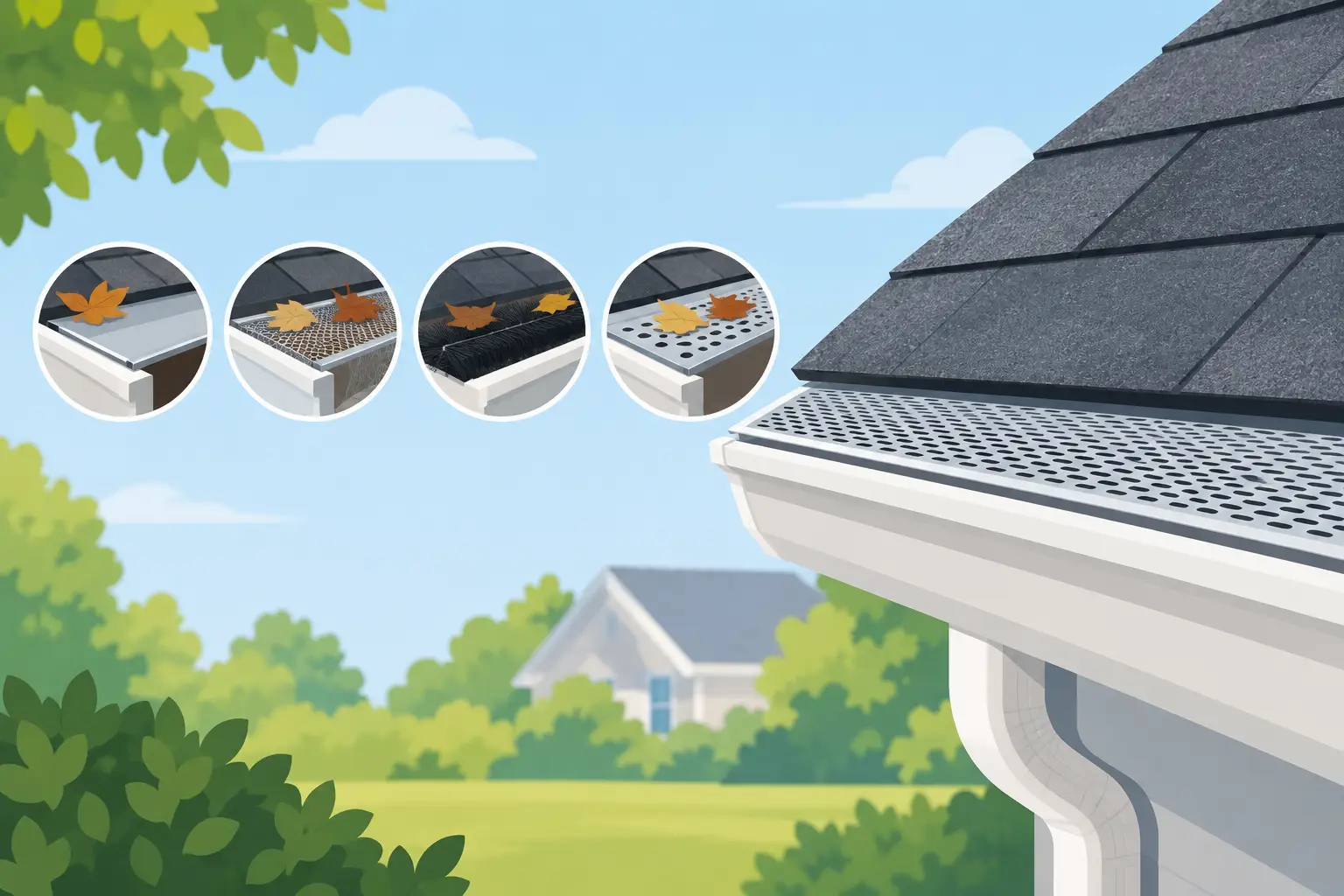
Gutter screens are typically rigid panels made from aluminum, steel, or plastic that sit on top of the gutter. Their larger openings keep leaves and larger debris out while allowing water to pass through.
Screens are often one of the more affordable options and can work well on homes with mostly large, dry leaves. They are also easier to remove when a professional needs to inspect or clean the gutter channel. The trade-off is that small debris, roof grit, and pine needles may still get through the openings. Debris can also sit on top of a screen and require periodic brushing or rinsing.
Plastic screens are inexpensive but may become brittle under prolonged Texas heat and sun exposure. Metal screens usually hold up better, provided they are securely installed and do not interfere with the roof shingles.
Fine micro-mesh guards
Micro-mesh guards use a much finer metal screen to filter out smaller debris. This design is especially useful around pine trees, where thin needles can slip through larger screen openings and create stubborn clogs. Fine mesh can also block a significant amount of roof grit and small seed debris.
For homes with heavy tree coverage, micro-mesh is often among the strongest all-around choices. Quality matters, though. A poorly fitted mesh system can allow debris to collect at the roof edge, and low-quality products may warp or separate over time. During an intense downpour, some systems may allow water to overshoot if the guard design or gutter capacity does not match the roof’s runoff volume.
Professional installation helps ensure the guard is secured correctly, water flows into the gutter, and the system does not create gaps where debris can enter.
Reverse-curve or surface-tension guards
Reverse-curve guards guide water around a curved front edge and into a narrow opening, while leaves and larger debris are meant to fall to the ground. These systems are usually built into or attached tightly to the gutter, giving the roofline a finished appearance.
When properly designed and installed, surface-tension guards can handle large leaves effectively. However, they are not ideal for every roof. Their performance depends on roof pitch, rainfall intensity, and the way water leaves the shingles. In a fast Texas storm, a system that is not correctly sized or positioned may let some water pass over the edge rather than into the gutter.
They also tend to cost more than basic screens or mesh. Homeowners should ask how the system performs in heavy rain, whether it changes the gutter’s capacity, and how future cleaning or repairs will be handled.
Foam inserts
Foam inserts fit inside the gutter channel. Water flows through the porous material while leaves remain on top. They are easy to install and have a lower upfront cost, which can make them appealing for a quick improvement.
Their limitation is that debris often remains on the foam surface and can break down over time. Fine particles may settle into the material, reducing water flow. Foam also experiences regular sun, heat, and moisture exposure, so its lifespan may be shorter than metal guard options. It can be a temporary solution, but it is usually not the best long-term choice for homes beneath mature trees.
Brush-style inserts
Brush guards look like long, cylindrical bristles placed inside the gutter. They stop larger leaves while allowing water to flow through the bristles. Like foam, they are simple to install and can be relatively inexpensive.
The challenge is cleaning. Leaves, needles, and roof debris can become tangled in the bristles, so the insert may need to be removed and cleaned periodically. Brush guards can make sense where debris is light and easy to clear, but they are not the lowest-maintenance option for heavily wooded lots.
Choose based on debris, rainfall, and your gutter condition
The product name alone should not decide the job. A home near tall pines has different needs than a home surrounded by broadleaf trees. A steep roof sheds water quickly, while a large roof area can send a major volume of water toward a short gutter run. The guard and gutter must work together.
Start by looking at what has been clogging your gutters. Large leaves may be handled well by a sturdy screen or reverse-curve design. Pine needles, seed pods, and shingle grit usually call for fine micro-mesh. If your gutters overflow even when they are clean, the issue may be undersized gutters, poor pitch, inadequate downspouts, or a drainage problem rather than a lack of protection.
Appearance matters as well. Some homeowners prefer a low-profile guard that is barely visible from the ground. Others prioritize easy access for cleaning. A qualified technician can explain which options fit the roof edge without damaging shingles or making future maintenance harder.
What professional installation helps prevent
DIY guards can seem straightforward, but the details affect performance. Guards installed at the wrong angle can shed water over the gutter. Fasteners placed improperly can damage the gutter or roof edge. A system that is too tightly tucked under shingles can create concerns with certain roofing warranties.
Professional installation begins with cleaning the gutters and downspouts, checking for loose hangers, confirming proper slope, and identifying damaged sections. The installer can then fit the protection system to the gutter type and roofline. This approach is especially helpful for two-story homes, steep roofs, or properties with recurring overflow issues.
At On Time Home Experts, gutter services are approached as part of protecting the home from avoidable water damage. A professional evaluation can determine whether cleaning, repair, replacement, or a guard system is the most sensible next step – without treating every home as if it needs the same solution.
Gutter guards still need occasional attention
No guard can guarantee that you will never need gutter service again. Wind can place leaves and branches on top of guards, fine debris can collect along edges, and downspouts can still clog. Occasional inspections are the practical way to catch issues before a storm exposes them.
Check the roofline after major weather events and watch for water spilling over the gutter edge, staining on siding, gutters pulling away from the house, or pooling water near the foundation. If you see any of these signs, arrange a professional inspection rather than waiting for the next heavy rain.
The best gutter protection is the one that fits your property, manages local debris, and is installed on a clean, properly functioning drainage system. A little planning before storm season can keep rainwater moving away from your home, where it belongs.