

A heavy North Texas downpour can expose a drainage problem in minutes. Water spilling over a gutter, pooling beside the slab, or cutting channels through a flower bed is more than an inconvenience. It can put pressure on your foundation, damage landscaping, stain exterior surfaces, and create the damp conditions pests prefer. Thoughtful gutter drainage planning for homes gives rainwater one clear job: move safely away from the house.
For Dallas-Fort Worth homeowners, that plan deserves attention before storm season rather than after water has already found its way to the wrong place. A clean gutter alone is helpful, but it is only one part of a working drainage system.
Start With Where Water Goes, Not Just the Gutters
The best drainage plan begins at ground level. Walk around your home after a normal rainfall and look for the water’s path. Are puddles forming near the foundation? Is mulch washing out? Does water run toward a patio, garage, or neighboring property? These clues identify where the system is falling short.
Gutters collect water from the roof. Downspouts carry it down. The final discharge point determines whether that water becomes a problem. If a downspout ends directly beside the foundation, even a properly sized gutter can contribute to soil saturation around the home.
Texas clay soils make this especially relevant. Clay expands when wet and contracts as it dries. Repeated swings in moisture near a foundation can contribute to movement over time. No gutter system can solve every drainage or structural issue, but directing roof runoff away from the perimeter helps maintain more consistent conditions around the home.
A practical rule is to carry water several feet away from the foundation and release it where the ground slopes away. The exact distance depends on your lot, grading, landscaping, and local drainage conditions. The goal is simple: water should not return to the house after it leaves the downspout.
Gutter Drainage Planning for Homes in North Texas
A drainage plan should fit the roof, the lot, and the weather patterns your home actually experiences. North Texas can see long dry stretches followed by intense rain, so systems need to handle a high volume of water without overflowing or dumping it against the house.
Match gutter capacity to the roof
A larger or steeper roof sends more water into the gutter system. Long roof runs, valleys, and areas where multiple slopes meet can concentrate runoff quickly. If water routinely spills over the front edge of a gutter during moderate rain, the issue may be a clog, poor gutter pitch, too few downspouts, or a gutter size that does not fit the roof’s runoff volume.
Adding a downspout can sometimes improve performance more than replacing the entire gutter run. In other cases, worn, undersized, or poorly installed gutters should be replaced. A professional inspection can separate a simple maintenance issue from a design issue, saving homeowners from paying for the wrong fix.
Make sure gutters have proper pitch
Gutters should have a subtle slope toward each downspout. Too little pitch allows water to sit, collect debris, and eventually overflow. Too much pitch can look uneven and may reduce how well the gutter catches water along the roofline.
Standing water inside a gutter is a warning sign. So are separated seams, rust, sagging sections, and water marks on the fascia board. These conditions can lead to leaks behind the gutter, where damage may stay hidden until wood begins to deteriorate.
Give each downspout a safe exit route
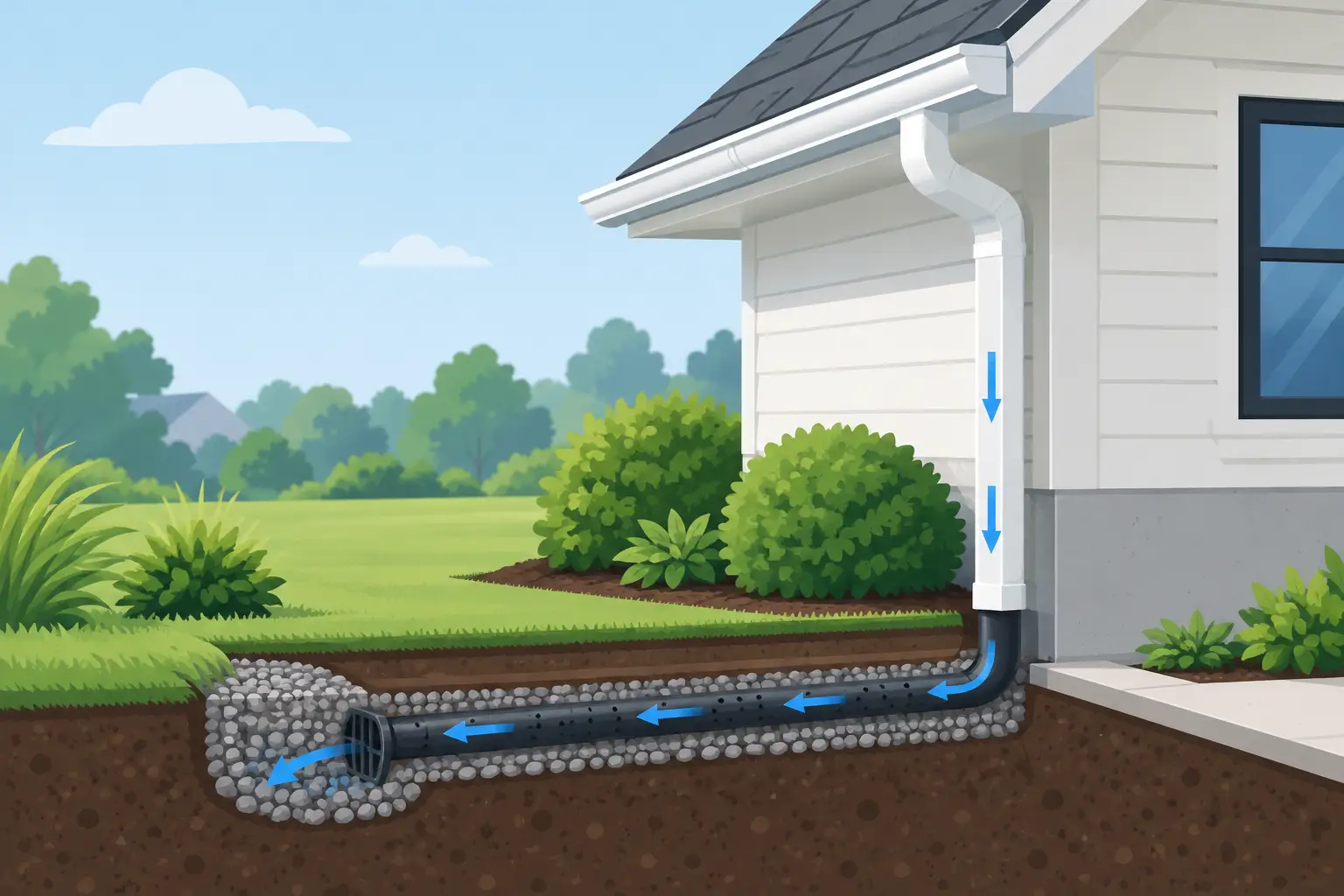
Downspout extensions, splash blocks, buried drain lines, and properly designed swales can all direct runoff away from the home. The right choice depends on the property.
An above-ground extension is often the simplest option. It is easy to inspect and less likely to hide a blockage, but it can be inconvenient across a walkway or lawn. A buried drain line offers a cleaner appearance and may better suit a landscaped yard, though it needs proper slope, a suitable outlet, and occasional maintenance. Water should never be routed toward a neighbor’s property, a driveway where it can create a hazard, or an area that drains back toward the foundation.
Check the Grade Around the Foundation
Gutters cannot compensate for negative grading. If the soil, mulch, or hardscape slopes toward the house, water from rain and irrigation may collect at the foundation even when the downspouts are working correctly.
Look for low spots along the exterior walls, settled soil near the slab, and beds built high against brick or siding. Ideally, the ground should gradually slope away from the home. Landscaping should support that slope instead of trapping water against the structure.
Be cautious with quick fixes. Piling soil against exterior walls without considering weep holes, siding clearance, and existing drainage can create moisture problems of its own. If grading changes are needed, a qualified professional can help identify a solution that protects both drainage and the building exterior.
Keep Water Flowing With Routine Maintenance
Even the best layout fails when debris blocks the path. Leaves, roofing grit, twigs, nests, and windblown dirt can collect in gutters and downspouts. Once water backs up, it may overflow over the gutter edge or run behind the gutter toward the fascia.
For most homes, gutter cleaning should be considered at least twice a year, typically before heavy spring rain and again after the main leaf drop. Homes with mature trees nearby may need more frequent service. A quick visual check after a storm is also worthwhile, especially if you notice water stains, overflowing sections, or a downspout that appears dry while the gutter above it is full.
During service, the focus should go beyond scooping out leaves. Gutters should be checked for secure fasteners, proper pitch, leaking joints, crushed downspouts, and discharge points that have shifted or become blocked. This is where professional maintenance provides more value than a one-time cleanout.
Know When Gutter Guards Help and When They Do Not
Gutter guards can reduce the amount of larger debris entering a gutter, particularly around trees. They are not a maintenance-free promise. Fine debris, roof grit, and organic buildup can still collect on top of or beneath some guard styles. Poorly installed guards may also affect how water enters the gutter during a hard rain.
For homeowners tired of frequent leaf buildup, guards may be a worthwhile addition after the gutters are repaired, correctly pitched, and cleaned. They should not be used to cover a system that already has poor drainage, loose sections, or undersized downspouts. Fix the water path first, then consider whether guards make sense for your property.
Watch for Signs Your Drainage Plan Needs Attention
Some warning signs are easy to dismiss until the next major storm makes them worse. Pay attention if you see recurring puddles near the foundation, erosion below downspouts, overflowing gutters, peeling exterior paint, mildew on soffits, or water entering a garage or crawl space.
Inside the home, musty odors, new cracks, or moisture concerns may have several causes and should not automatically be blamed on gutters. Still, exterior drainage is one of the first systems worth checking because it has such a direct effect on the building perimeter.
A trained technician can inspect the full route from roof edge to discharge area and explain what needs cleaning, repair, replacement, or adjustment. On Time Home Experts provides professional gutter cleaning and replacement with straightforward service focused on protecting your home from avoidable water damage.
Before the next heavy rain, take a few minutes to watch where water lands and where it travels. That small observation can be the first step toward a drier foundation, cleaner exterior, and a home better prepared for Texas weather.