





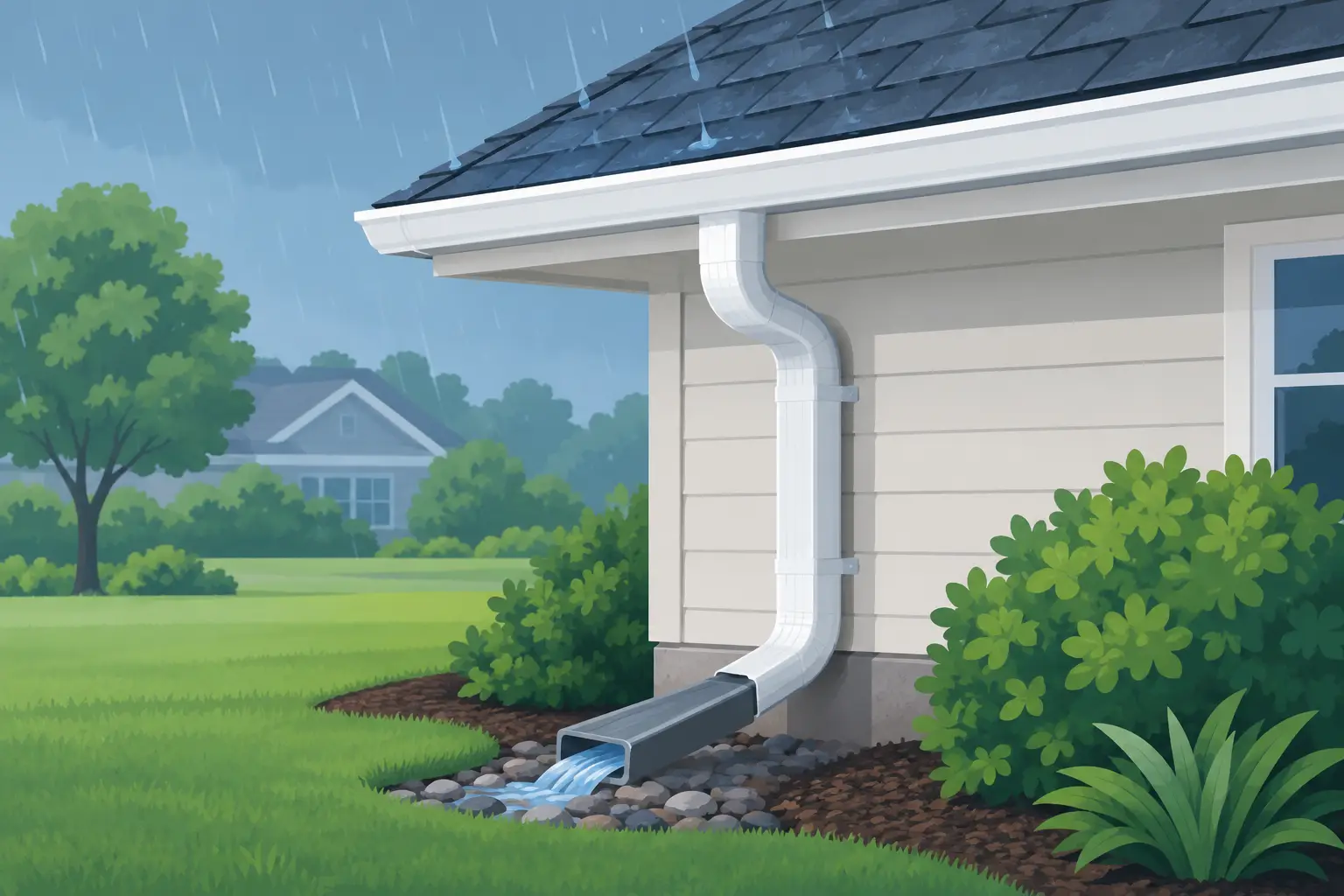
A fast North Texas downpour can send hundreds of gallons of water off a typical roof in a matter of minutes. Without effective rain gutter drainage solutions, that water can pool near your foundation, cut channels through landscaping, soak exterior walls, and find its way into places it does not belong. Gutters are a small part of the home, but when they fail, the repairs can become expensive quickly.
For Dallas-Fort Worth homeowners, drainage deserves attention before the next heavy storm arrives. Long dry stretches, windblown leaves, oak debris, and sudden rainfall all create conditions that put gutters and downspouts to the test.
Why Rain Gutter Drainage Matters in North Texas
Your gutter system has one job: capture roof runoff and move it safely away from the house. When water spills over the gutter edge or exits a downspout directly beside the foundation, it creates a concentrated flow of water where your home is most vulnerable.
Foundation movement is a serious concern throughout much of North Texas because expansive clay soil changes as its moisture level changes. Too much water near the foundation can cause soil to swell. Extended dry conditions can cause it to shrink. While gutters are not the only factor in foundation performance, consistent drainage helps reduce one avoidable source of moisture imbalance around the home.
Poor drainage can also damage flower beds, stain brick, rot fascia boards, encourage mosquito activity, and create slippery walkways. If water is repeatedly overflowing near doors, windows, or siding, it may eventually contribute to moisture intrusion inside the home as well.
Start With Clean, Properly Sized Gutters
Many drainage problems begin with a simple blockage. Leaves, pine needles, roof grit, seed pods, and nesting material collect in the gutter channel. Water then backs up until it spills over the front or rear edge, often in the exact places where homeowners notice the deepest landscaping washout.
Professional gutter cleaning removes debris from the gutters and downspouts, but it should also include a close look at the system’s condition. Sagging sections, loose hangers, separated seams, rust, and improper slope can keep a gutter from moving water efficiently even when it appears clean.
The gutter must be large enough for the roof area and local rainfall conditions. Standard gutters work well for many homes, but larger roof planes, steep roof pitches, or valleys that send heavy volumes of water to one point may need wider gutters, additional downspouts, or upgraded downspout sizing. Adding a downspout is often more effective than expecting one crowded outlet to handle all the runoff.
Watch for Signs That Your System Is Overwhelmed
Overflow during a major storm does not always mean the gutter system is failing. An unusually intense rain event can briefly exceed the capacity of almost any residential system. However, repeated overflow is a warning sign worth addressing.
Look for water pouring over the same section of gutter, staining along the siding, standing water near the foundation, mulch washed out of beds, or visible erosion beneath downspout outlets. Water marks on fascia boards and gutters pulling away from the roofline also deserve prompt attention.
Downspout Extensions Are Often the Missing Piece
A clean gutter cannot protect the foundation if the downspout empties water right beside the house. The discharge point matters just as much as the gutter channel itself.
Downspout extensions direct runoff farther into the yard, where the water can spread out and soak in more gradually. In many cases, directing water several feet away from the foundation makes a meaningful difference. The right distance depends on the slope of the yard, soil conditions, nearby hardscaping, and whether water could affect a neighbor’s property.
Above-ground extensions are affordable and easy to inspect, but they can be visible and may interfere with mowing or foot traffic. Buried drain lines offer a cleaner appearance and can carry water to a safer outlet, but they require correct slope, durable materials, and a clear discharge location. A buried line that ends in a low spot or becomes clogged simply moves the drainage problem out of sight.
Flexible corrugated pipe can be useful for some short runs, but smooth-wall pipe usually allows water and debris to move more freely over longer distances. A professional can help determine which option makes sense for your property rather than installing a one-size-fits-all fix.
Match the Solution to Your Yard
The best rain gutter drainage solutions account for what happens after water leaves the downspout. A flat lot needs a different approach than a sloped lot, and a small urban yard may have fewer discharge options than a larger property.
If the yard naturally slopes away from the home, a properly placed extension may be all that is needed. When the area around the foundation is low or holds water, grading may need correction so surface water drains away instead of returning toward the house. In some situations, a shallow swale can guide water across the yard without creating an unattractive trench.
French drains can help manage groundwater and persistent soggy areas, but they are not automatically the right answer for roof runoff. They must be designed with the correct pipe, gravel, fabric, slope, and outlet. Connecting roof downspouts to an undersized or poorly installed French drain may cause backups during a hard storm.
Catch basins and surface drains can be useful near patios, driveways, or low areas where water collects. These components need regular cleaning, too. A drainage system works only when its inlets and outlets remain clear.
Gutter Guards: Helpful, but Not Maintenance-Free
Gutter guards can reduce the amount of large debris entering the gutter. For homes surrounded by mature trees, they may reduce how often the system needs cleaning and make seasonal maintenance more manageable.
They do come with trade-offs. No guard blocks every type of debris, and fine roof grit or small organic material can still accumulate. Some guard styles may allow water to overshoot the gutter during very heavy rain if they are poorly matched to the roof edge or installed incorrectly. Guards also do not solve issues with bad gutter slope, missing downspouts, or drainage outlets that sit too close to the foundation.
Before installing guards, make sure the existing gutters are secure, clean, properly pitched, and in good condition. Covering a damaged gutter system only makes future repairs more difficult.
When Gutter Repair or Replacement Is the Better Choice
Cleaning is a smart first step, but it cannot correct structural problems. Replacement may be the better investment when gutters have extensive corrosion, frequent leaks at multiple seams, major sagging, or repeated overflow caused by poor design.
Seamless aluminum gutters are a common choice because they have fewer joints than sectional systems. Fewer seams can mean fewer potential leak points, although corners and downspout connections still require quality installation. The right gutter replacement plan should include placement of downspouts, secure fastening, proper pitch, and drainage extensions – not just new material along the roofline.
Do not overlook fascia damage. Gutters fastened to soft or rotted fascia may pull loose again, even if the new gutter itself is high quality. Repairing the supporting wood before installation helps protect the entire system.
A Practical Maintenance Schedule
Most homes benefit from gutter cleaning at least twice a year, commonly in spring and fall. Homes beneath heavy tree cover may need more frequent service, especially after strong winds or seasonal leaf drop. It is also wise to inspect gutters after a major storm if you notice overflow, branches on the roof, or water collecting around the home.
A useful inspection should check more than visible leaves. The technician should confirm that downspouts flow freely, gutters are pitched correctly, hangers are secure, seams are not leaking, and drainage extensions are directing water away from the foundation. This preventive work is usually far less disruptive than repairing water-damaged wood, landscaping, or interior moisture issues later.
Working from a ladder near roof edges carries real risk, particularly when gutters are wet or the ground is soft. Professional service gives homeowners a safer way to maintain the system while identifying problems that are easy to miss from the ground.
Protect the Home Before the Next Heavy Rain
Reliable gutter drainage is not about adding the most equipment. It is about giving rainwater a clear, controlled path from the roof to a safe area away from the home. Clean gutters, functioning downspouts, correct extensions, and thoughtful grading work together to protect your property.
If you have noticed overflow, erosion, loose gutters, or water near the foundation, do not wait for another storm to make the issue worse. A professional gutter inspection and cleaning can provide a clear picture of what your home needs and help you act with confidence before the next Texas downpour.