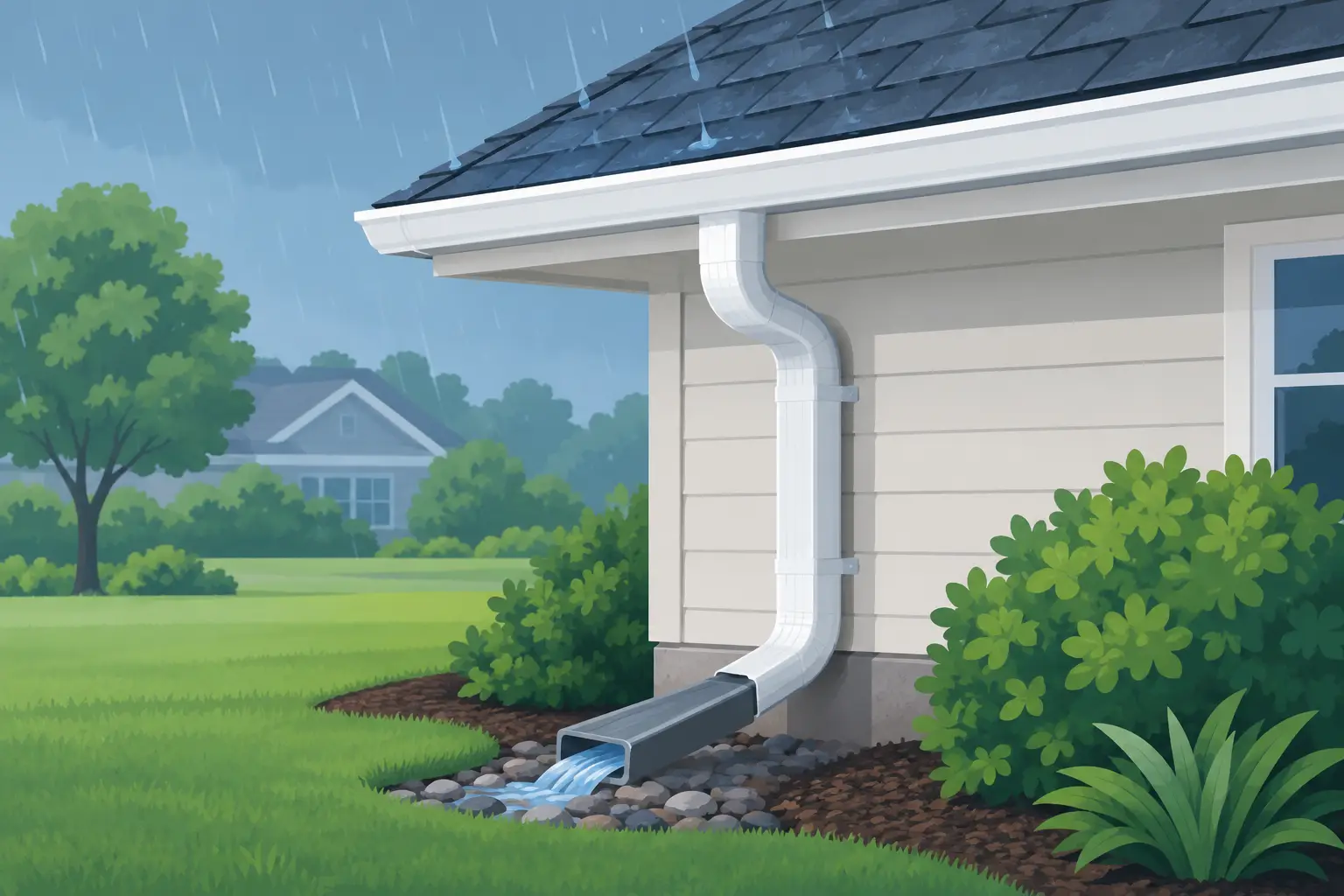






A clogged gutter can turn one strong North Texas storm into a costly home repair. Water that should move safely away from your roofline can spill over the sides, soak fascia boards, flood landscaping, and collect near the foundation. This gutter maintenance guide gives Texas homeowners a practical way to protect their property before small drainage problems become major damage.
Why Gutter Maintenance Matters in Texas
Gutters do much more than keep rain from pouring over your front entry. They direct water off the roof, into downspouts, and away from the house. When that path is blocked by leaves, pine needles, roof grit, nests, or standing debris, the water has to go somewhere else.
That often means it runs behind the gutter, beneath shingles, down exterior walls, or toward the foundation. In the Dallas-Fort Worth area, sudden downpours can overwhelm a neglected gutter system quickly. A few minutes of heavy rain may reveal an issue that has been building for months.
Proper gutter care helps protect several expensive parts of your home at once: the roof edge, siding, soffit and fascia, landscaping, foundation, and walkways. It can also reduce mosquito breeding areas, discourage pests from nesting near the roofline, and prevent slippery puddles around entrances.
Your Seasonal Gutter Maintenance Guide
Texas weather does not always follow a neat seasonal schedule, so it is smart to inspect gutters after major storms as well as at regular intervals. For most homes, cleaning and inspecting gutters at least twice a year is a good baseline. Homes surrounded by mature trees, especially oak, pine, pecan, or cedar trees, may need service three or four times annually.
Spring: Clear Winter Debris and Check Drainage
Spring storms can arrive fast and hard. Before the rainy season picks up, remove accumulated leaves, twigs, seed pods, and roof granules from the gutter channels. Check that downspouts are open and direct water several feet away from the foundation.
Look closely for loose hangers, sagging sections, separated joints, and rust spots. Even a small gap at a gutter seam can send a steady stream of water behind the system. If you see staining on siding or peeling paint along fascia boards, water may already be escaping where it should not.
Summer: Watch for Storm Damage and Pest Activity
Summer heat, wind, and sudden thunderstorms can expose weak points. Walk around your home after a heavy rain and observe where water flows. Overflowing gutters, water pouring from a joint, or a downspout that barely drains are clear signs that attention is needed.
Also watch for insects, birds, and rodents. Gutters filled with wet organic debris can become an attractive nesting or breeding area. Standing water may support mosquito activity, while leaves and twigs can give pests a protected place near your attic and roofline.
Fall: Prepare for Leaf Drop
Fall is often the busiest period for gutter cleaning. Leaves may not fall all at once, particularly in Texas, so a single cleaning early in the season may not be enough. If your gutters sit below trees, check them again after the majority of leaves have dropped.
Do not overlook downspout openings. A gutter can look clear from above while a compacted clog sits at the top of the downspout. Water then backs up through the gutter channel and spills over the edge during the next rainfall.
Winter: Check for Slow Drainage and Loose Components
North Texas winters can bring cold rain, freezing temperatures, and occasional ice. Gutters that hold standing water are more likely to develop strain at joints and hangers when temperatures drop. Inspect for pooling water on a dry day, and make sure the system slopes gently toward each downspout.
Winter is also a good time to look for damage caused by wind or falling branches. A bent downspout or partially detached gutter may not look urgent, but it can fail when the next storm arrives.
What to Look for During a Gutter Inspection
You do not need to climb onto the roof to identify every gutter concern. A careful ground-level inspection often reveals whether professional attention is needed. Check for these common warning signs:
- Water spilling over gutter edges during rain
- Gutters pulling away from the fascia or visibly sagging
- Dark streaks, peeling paint, or soft wood near the roofline
- Downspouts draining too close to the foundation
- Erosion, mulch washout, or puddling around the home
- Plants, moss, nests, or insects growing in the gutter channel
Inside the home, water stains on ceilings or exterior-facing walls can also point to roofline drainage trouble. The source is not always a gutter issue, but it is worth inspecting gutters, downspouts, and roof flashing before damage spreads.
How to Clean Gutters Safely
Gutter cleaning is simple in concept but can be risky in practice. Ladder falls are a serious concern, particularly when homeowners try to reach too far, work alone, or clean gutters after a storm. Never lean a ladder against the gutter itself, and avoid gutter work in wet, windy, or icy conditions.
If you choose to handle light cleaning, use a stable ladder on level ground, wear gloves and eye protection, and have another adult nearby. Remove loose debris by hand or with a small scoop, then flush the channel with a garden hose. Start at the end farthest from the downspout and work toward it so you can confirm that water moves freely.
If water backs up, disconnect the lower downspout section if accessible and flush the blockage from the bottom out. For stubborn clogs, damaged sections, second-story gutters, steep rooflines, or heavy buildup, professional service is the safer choice. The goal is not simply to make gutters look clean. It is to confirm the entire drainage system works correctly under real rainfall.
Do Gutter Guards Eliminate Maintenance?
Gutter guards can reduce the amount of leaves and large debris entering the system, but they do not eliminate maintenance. Fine roof grit, pine needles, seeds, and shingle particles can still collect on top of or beneath certain guard designs. Guards may also make it harder to see a developing clog.
Whether guards are worthwhile depends on your tree coverage, roof design, gutter size, and willingness to schedule routine inspections. For a home with heavy leaf drop, quality guards may reduce cleaning frequency. For a home with little tree cover, regular cleaning may be the more practical and cost-effective option.
When Cleaning Is Not Enough
A clean gutter cannot solve a system that is undersized, poorly sloped, leaking, or pulling away from the house. Repairs or replacement may be needed when gutters repeatedly overflow despite being clear, seams leak, fascia boards show rot, or downspouts cannot move water far enough from the foundation.
Pay attention to recurring foundation-area moisture. Texas clay soil expands when wet and contracts when dry, so consistent drainage management matters. Gutters should carry roof runoff away from the home, not release it beside the slab. Downspout extensions and proper grading can make a meaningful difference.
Professional technicians can assess the full system, including hidden clogs, loose mounting hardware, damaged downspouts, and areas where water is entering behind the gutter. On Time Home Experts provides trained, insured service for homeowners who want dependable gutter cleaning and replacement without taking unnecessary ladder risks.
Make Gutter Care Part of Your Home Maintenance Plan
Add gutter inspection to the same calendar you use for HVAC filter changes, dryer vent cleaning, and seasonal home checkups. Taking care of drainage before the next storm is usually faster, safer, and less expensive than dealing with water damage afterward. A clear path for rainwater is one of the simplest ways to keep your home protected through every Texas season.