




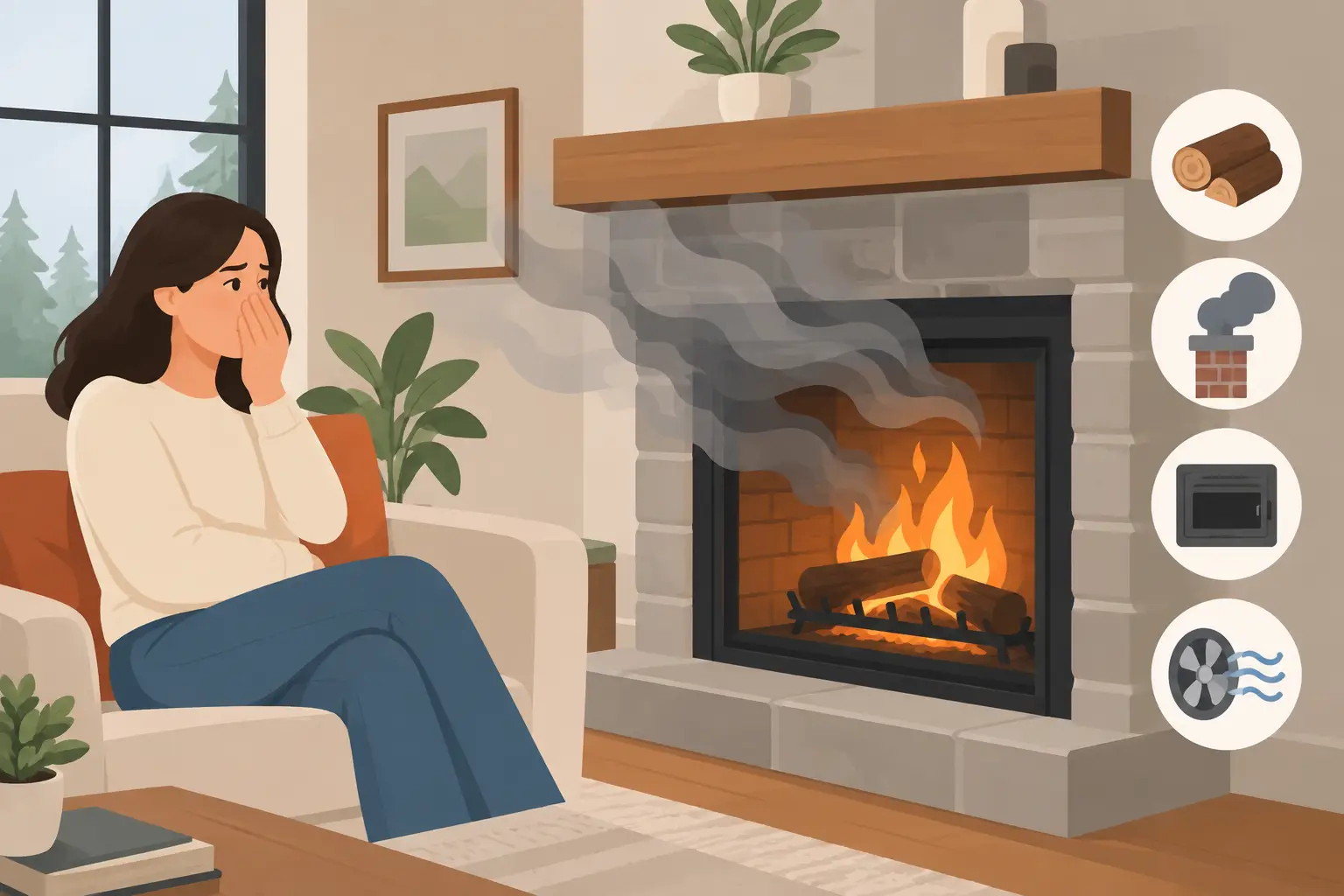
A fireplace should make a room feel warm and comfortable, not leave your living area smelling like a campfire hours later. The question “why does fireplace smell smoky” usually comes up when smoke enters the room during a fire, but the odor can also appear when the fireplace is cold. In either case, a smoky smell is worth investigating. It can point to a draft problem, moisture, buildup inside the chimney, or a condition that affects fire safety and indoor air quality.
Why Does a Fireplace Smell Smoky When It Is Not in Use?
When no fire is burning, a smoky fireplace odor often means air is moving down the chimney and into the house. Your chimney is open to the outdoors, even with the damper closed, and shifting pressure can pull odors from the firebox, flue, and chimney walls indoors.
This is especially common in North Texas, where humid weather, strong wind, and frequent temperature swings can affect how a chimney drafts. A home that is tightly sealed for energy efficiency may also create negative pressure. Exhaust fans, clothes dryers, range hoods, and HVAC systems can pull indoor air out, making replacement air more likely to enter through the chimney.
Creosote is often part of the problem. This dark, sticky material forms when wood smoke cools and condenses inside the flue. It has a sharp, smoky odor, and humidity can make that odor more noticeable. A dirty firebox, ash left from past fires, or soot on the damper can add to it.
A closed damper can reduce the smell, but it does not always solve the underlying issue. It should never be sealed in a way that prevents proper venting when the fireplace is used. A professional inspection can identify whether the odor is coming from normal downdrafting, excessive creosote, an improperly fitting damper, or a separate chimney issue.
Why Does a Fireplace Smell Smoky During a Fire?
Smoke entering the room while a fire is burning is more urgent. A fireplace needs a clear path for smoke to travel up and out. When that path is restricted or the chimney cannot establish a strong upward draft, smoke can spill back into the room.
The damper may be closed or only partly open
Before lighting a fire, confirm that the damper is fully open. It is an easy item to overlook, particularly if it is located above the firebox and hard to see. A partially open damper can restrict airflow enough to cause smoke backup.
If the damper is open but difficult to move, does not open fully, or does not stay in position, do not force it. Corrosion, soot buildup, or a damaged component may be the cause.
A cold chimney can create a temporary draft problem
Cold air naturally settles, and a cold flue may initially push air downward into the firebox. When you light a fire quickly, smoke can meet that cold air column and roll back into the room before the chimney warms up.
You may notice this most often at the start of a fire. Use dry kindling and small pieces of seasoned firewood to build a hot, controlled flame first. Avoid piling large logs into the firebox immediately. A gradual start helps warm the flue and establish draft.
The chimney may be blocked or restricted
Bird nests, leaves, twigs, animal activity, damaged flue liners, and heavy creosote deposits can all interfere with airflow. A chimney cap helps keep debris and animals out, but caps can become damaged or clogged themselves.
Never attempt to look up a chimney while a fire is active, and do not use the fireplace if you suspect a blockage. A restricted flue can send smoke and combustion gases into your living space instead of safely outside.
Wet or unseasoned firewood creates excess smoke
Firewood should be properly seasoned before it is burned. Wet wood uses much of the fire’s energy to evaporate moisture instead of burning cleanly. The result is more smoke, more creosote, and a weaker fire.
Good firewood feels lighter than freshly cut wood, has cracks on the ends, and makes a sharper sound when two pieces are knocked together. Wood stored directly on the ground or left exposed to rain can absorb moisture even if it was dry when purchased. Store it off the ground and under a cover that still allows air to circulate.
The home may be under negative pressure
A fireplace depends on air from inside the home to feed the fire and move smoke upward. When powerful exhaust equipment is running, it may compete with the chimney for that air. Kitchen exhaust fans, bathroom fans, dryers, and some HVAC conditions can make smoke backup worse.
As a simple test, turn off nearby exhaust fans and slightly open a window in the same room before lighting the fireplace. If the draft improves, home pressure may be contributing to the problem. This does not replace a professional evaluation, but it can help explain what is happening.
Other Causes of a Smoky Fireplace Odor
Not every smoky smell comes from a current fireplace issue. Sometimes the source is old residue or moisture inside the chimney system.
Water entering through a damaged chimney cap, cracked crown, missing flashing, or deteriorated masonry can combine with soot and creosote to produce a strong stale-smoke odor. You may also notice damp stains near the fireplace, crumbling mortar, rust on the damper, or a musty smell along with smoke odor. These signs deserve prompt attention because moisture can damage the chimney from the inside out.
Animals can create similar odor concerns. A nest or deceased animal in the chimney may cause a smoky, earthy, or foul smell that becomes stronger when outdoor conditions change. If an odor seems unusually strong or has appeared suddenly, avoid using the fireplace until it has been inspected.
Gas fireplaces can also smell unusual, although they do not produce wood smoke. Dust burning off after a long period of nonuse can create a temporary odor, but a persistent smell, visible soot, yellow lazy flames, or any gas odor should be treated as a service concern. Turn off the unit and contact a qualified fireplace professional. If you smell gas, leave the area and follow your gas provider’s emergency guidance.
What Homeowners Should Do Right Away
If smoke is actively entering the room, stop adding wood and allow the fire to die down safely. Do not close the damper while hot embers remain, since smoke and gases need a path out. If you can do so safely, open a window to improve ventilation and move family members, especially children, older adults, and anyone with breathing conditions, away from the smoky area.
Do not try to solve recurring smoke problems by burning hotter fires or adding chemical cleaners to the fireplace. More intense fires can worsen a chimney fire risk when creosote is present. Household cleaners and scent products only mask the odor, and they can introduce additional chemicals into the air.
Make sure your home has working smoke alarms and carbon monoxide alarms. Carbon monoxide has no odor, so a smoky smell is not a reliable warning system for this dangerous gas. Test alarms regularly and replace batteries as needed.
When to Schedule Chimney and Fireplace Service
A fireplace should be inspected and cleaned on a regular schedule, especially if you use it throughout the cooler months. Annual inspection is a practical baseline for many homeowners, but the right frequency depends on how often you burn wood, the type of fuel used, the age and condition of the chimney, and whether you have noticed performance changes.
Schedule professional service promptly if smoke enters the room, the fireplace suddenly drafts poorly, the odor persists when the unit is cold, or you see heavy black buildup in the firebox. You should also call for help after animal activity, a chimney leak, storm damage, or a suspected blockage.
Professional chimney and fireplace cleaning removes soot, ash, and creosote buildup while giving a trained technician the opportunity to inspect the flue, damper, cap, firebox, and accessible chimney components. That combination matters. Cleaning without identifying the reason for the smoke may leave the original problem in place.
For Dallas-Fort Worth homeowners, On Time Home Experts provides professional fireplace and chimney cleaning with a focus on cleaner indoor air, reliable service, and clear communication about what your system needs. A properly maintained fireplace lets you enjoy the comfort of a real fire without wondering where that smoky smell is coming from.
Before your next fire, trust what your home is telling you. A fireplace that smells smoky is often asking for attention before a minor maintenance issue turns into a frustrating mess or a preventable safety concern.