

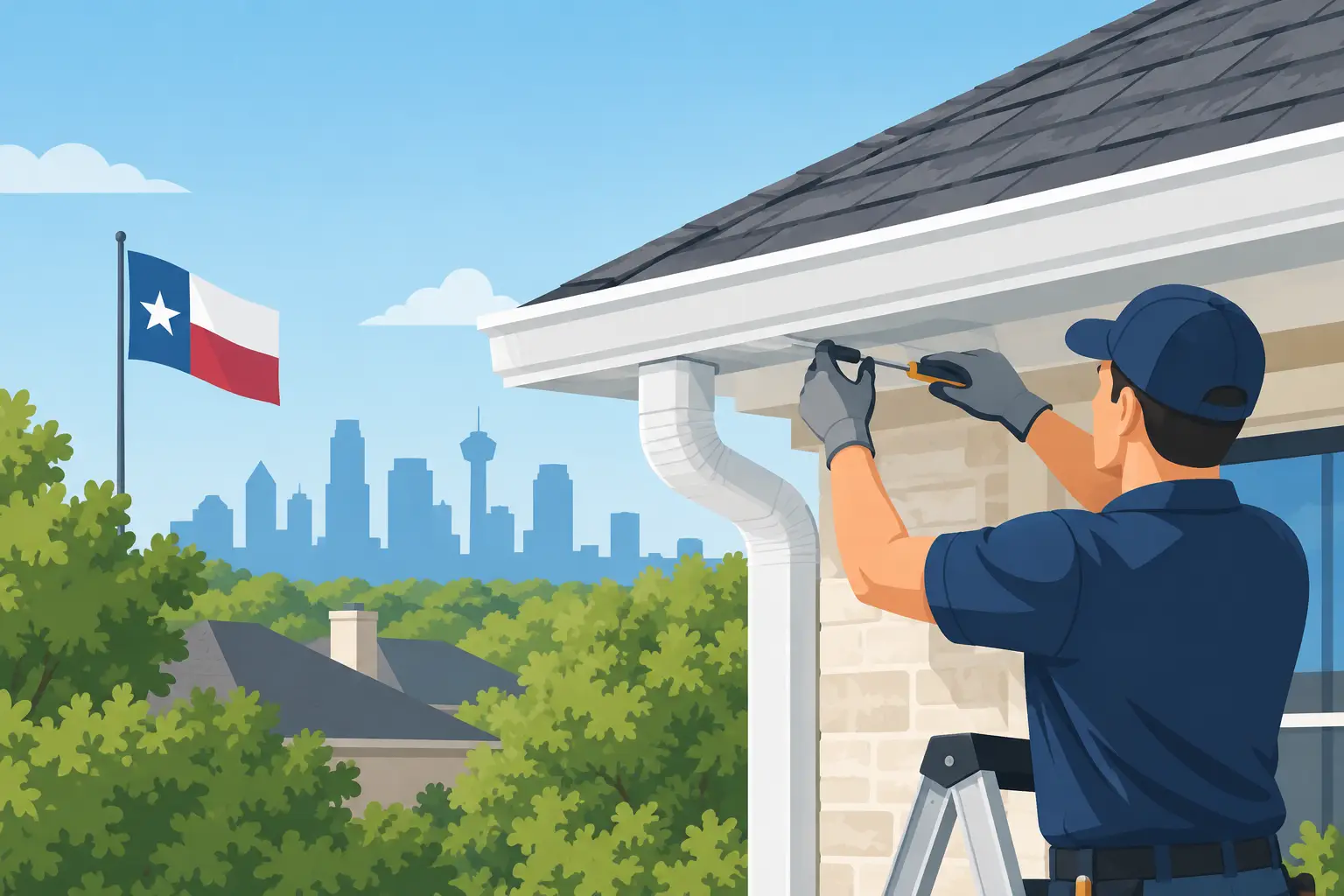
A single Texas downpour can expose a gutter problem that has been building for months. Water spilling over the side, pooling near the foundation, or streaking down exterior walls is not just an eyesore. Timely gutter repair helps protect your roof, siding, landscaping, and foundation from expensive water damage.
For Dallas-Fort Worth homeowners, gutters work hard through spring storms, heavy summer rain, falling leaves, and windblown debris. When they are clogged, loose, cracked, or incorrectly sloped, rainwater follows the wrong path. Addressing the issue early is usually simpler and more affordable than waiting for signs of structural damage inside or outside the home.
Why Gutter Damage Should Not Wait
Your gutter system has one job: collect roof runoff and direct it safely away from your home. When any part of that system fails, water can collect where it should not. It may run behind fascia boards, soak the soil around your foundation, erode mulch beds, or find its way into a crawl space or attic.
Foundation concerns are especially relevant in North Texas, where expansive clay soil can shift as moisture levels change. Too much water near the home can contribute to uneven soil movement. While gutters are not the only factor in foundation performance, properly directing runoff away from the structure is an important part of responsible home maintenance.
Damaged gutters can also create conditions that attract mosquitoes, encourage mold growth around damp exterior materials, and shorten the life of roof-edge components. A small leak at a gutter seam may seem minor, but repeated exposure to water can rot wood behind the gutter and turn a straightforward repair into a larger restoration project.
Signs You May Need Gutter Repair
Some gutter issues are obvious during a rainstorm. Others develop gradually and are easier to miss from the ground. Pay attention to water behavior around your home, particularly after a heavy rain.
Overflowing water is one of the clearest warning signs. The cause may be a clog, but it can also indicate gutters that are too small for the roof area, improperly pitched, or sagging under the weight of debris. Water should move steadily toward each downspout, not pour over the front edge like a waterfall.
Look for gutters that pull away from the roofline, sections that visibly sag, rust spots, cracks, pinholes, or separated seams. Peeling paint and dark stains on siding beneath the gutter can point to frequent overflow or leaking joints. You may also notice water collecting near the foundation, washed-out landscaping, or downspouts that discharge too close to the home.
Inside the house, ceiling stains near exterior walls, musty attic odors, and damp insulation can sometimes be tied to roof or gutter failures. These symptoms need a professional assessment because several issues can cause them. The goal is to identify where water is entering and correct the source instead of covering up the damage.
Common Gutter Problems and the Right Fix
Not every problem requires replacing the entire system. The right solution depends on the material, age, overall condition, and how well the gutters were installed.
Clogs and overflowing gutters
Leaves, roof granules, twigs, nesting material, and windblown dirt can create dense blockages. A clogged downspout is particularly troublesome because water backs up through the gutter channel and can spill behind it. Thorough cleaning may solve the problem when the gutters themselves are still sound.
However, cleaning alone will not correct a gutter that repeatedly holds standing water. That usually indicates poor slope, a sagging section, or an issue with the hangers. A trained technician can clear the system and check whether water is moving in the proper direction.
Loose hangers and sagging sections
Gutters rely on securely fastened hangers to hold their shape and maintain proper pitch. Over time, heavy debris, ice in rare cold snaps, wind, and loose fasteners can cause a section to pull away from the fascia. Sagging gutters collect water and debris, placing even more weight on the system.
In some cases, replacing fasteners and resetting the gutter slope is enough. If the fascia board behind the gutter has deteriorated from prolonged moisture, that wood may need attention before the gutter can be securely reattached. Simply driving in another screw without checking the underlying material is rarely a lasting solution.
Leaking seams, end caps, and corners
Sectional gutters have joints where pieces connect, and those seams can eventually fail. Leaks commonly appear at corners, end caps, and downspout connections. A professional-grade sealant can be an appropriate repair when the metal is in good condition and the joint is properly prepared.
If there are widespread leaks, corrosion, or multiple failed seams, replacement may offer better long-term value. Seamless gutter systems reduce the number of joints along the run, but they still require maintenance and can develop issues at corners and outlets.
Cracks, rust, and storm damage
Small cracks in vinyl or aluminum may sometimes be patched, depending on their location and extent. Rust on steel gutters deserves prompt attention because it can spread and create holes. Dents, bent sections, and detached downspouts after a storm may also affect drainage even when they do not look severe.
A repair is a sensible choice when damage is limited and the rest of the system is functioning well. Replacement becomes more practical when repairs would be scattered across several sections or when the gutter material has reached the end of its serviceable life.
Repair or Replacement: How to Make the Call
Homeowners often ask whether they should repair a damaged area or replace the gutters entirely. There is no one-size-fits-all answer. A newer system with one loose downspout or leaking seam is a good candidate for repair. An older system with repeated clogs, sagging runs, corrosion, and water stains may cost more to keep fixing than to replace.
Consider the pattern, not just the visible defect. If you have needed the same repair more than once, water still pools in the gutters after cleaning, or the system no longer handles heavy rain, it is worth discussing replacement options. Proper sizing, secure installation, and well-positioned downspouts can make a noticeable difference during severe weather.
Also consider the condition of the roof edge and fascia. Gutters cannot perform correctly if the components behind them are damaged. A thorough evaluation should look beyond the immediate leak and identify whether moisture has affected adjacent materials.
Why DIY Gutter Repair Has Limits
Replacing an end cap or tightening a visible bracket may look simple, but gutter work often involves ladder hazards, unstable footing, sharp metal edges, and hidden water damage. The risk increases on two-story homes, steep rooflines, or when the work is performed after rain.
DIY repairs can also create drainage problems if the slope is off by even a small amount. Too little pitch leaves standing water. Too much pitch can make the gutter line look uneven and may reduce its ability to catch fast-moving runoff. A downspout extension placed incorrectly can simply move water from one problem area to another.
There is a reasonable middle ground for homeowners: watch for changes, keep the area around downspout outlets clear, and schedule routine gutter cleaning. Leave climbing, drainage corrections, damaged fascia, and extensive repairs to trained professionals with the right equipment.
Preventing Future Gutter Problems
The most effective gutter repair is the one you avoid through regular care. In the Dallas-Fort Worth area, many homes benefit from cleaning before the rainy season and again after heavy leaf drop or storm activity. Homes near mature trees may need more frequent service.
During maintenance, the entire system should be checked, not just cleared of visible debris. That means confirming water flow, inspecting seams and hangers, checking downspouts for blockages, and making sure runoff reaches away from the foundation. Gutter guards can reduce the amount of debris entering the system, but they are not maintenance-free. Their value depends on the type of trees around your property, roof design, and the guard product itself.
At On Time Home Experts, homeowners can arrange professional gutter cleaning and replacement support alongside other essential home maintenance services. A professional visit can help you understand whether a problem calls for cleaning, a targeted repair, or a more durable replacement plan, with clear recommendations and no unnecessary complexity.
When rain is already pouring over the gutter edge, waiting for the next dry weekend can be costly. Pay attention to where water travels after a storm, and address small gutter concerns before they gain access to the parts of your home that are much harder to protect.