


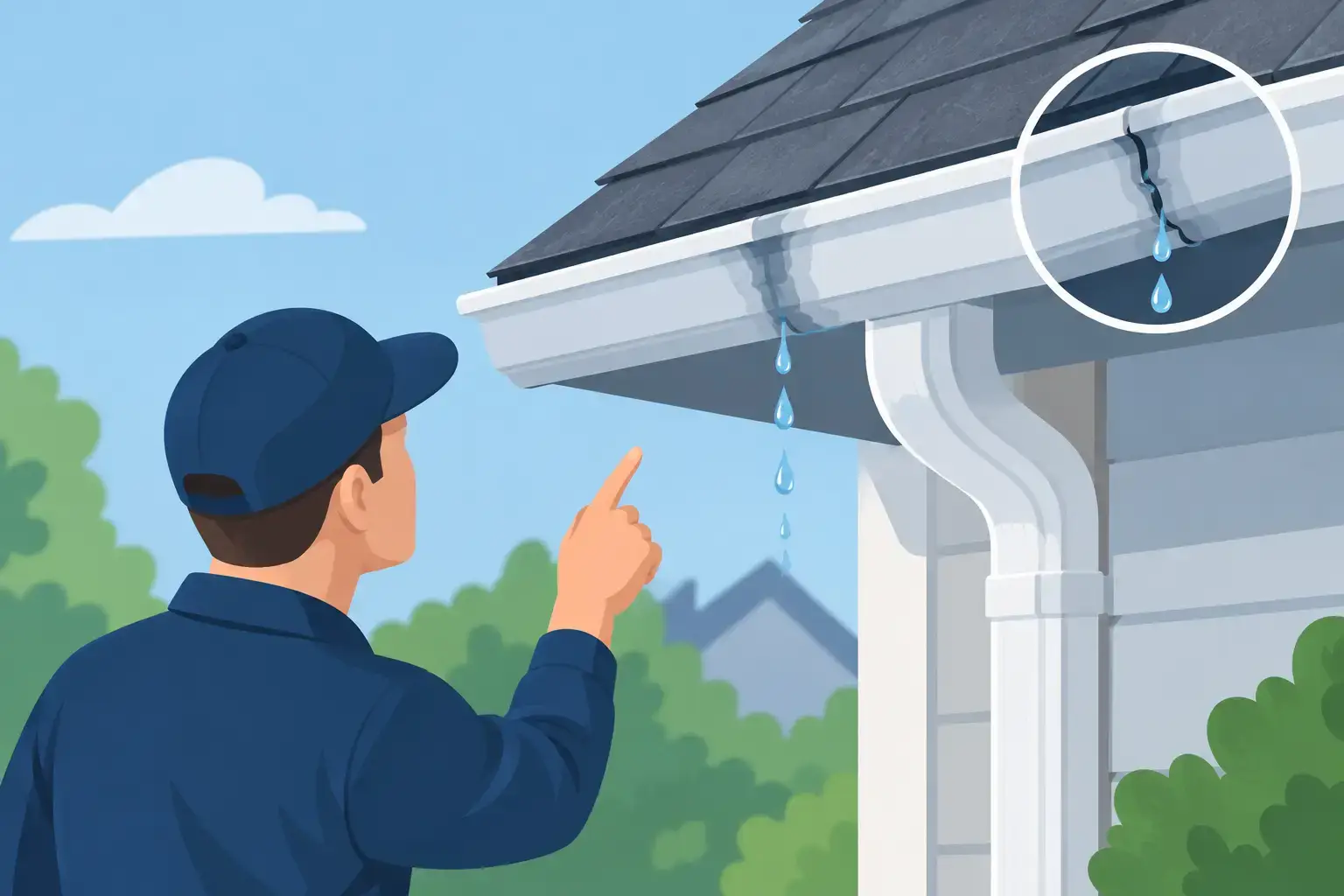
A gutter leak can start as a small drip during a North Texas downpour and turn into costly exterior damage long before it gets your attention. Knowing how to spot leaky gutters helps you act before water reaches your fascia boards, siding, landscaping, foundation, or attic. The good news is that most leaks leave clear clues when you know where and when to look.
Why a Small Gutter Leak Can Become a Big Problem
Gutters have one job: collect roof runoff and carry it safely away from your home. When a seam opens, a fastener loosens, or debris forces water over the edge, that runoff starts landing where it should not.
In the Dallas-Fort Worth area, heavy rain can expose a weak gutter system quickly. Water repeatedly hitting the same spot can stain brick, rot wood trim, erode soil, damage planting beds, and allow moisture to gather near the foundation. For homes with poor drainage already, even a minor gutter leak can add to standing-water problems around the property.
A leak does not always mean the entire system needs replacement. Some gutters need cleaning, resealing, or a section repaired. Others are sagging, corroded, improperly pitched, or too damaged to perform reliably. A careful inspection helps determine the right solution without paying for work you do not need.
How to Spot Leaky Gutters During and After Rain
The easiest time to identify a gutter leak is during a steady rain, as long as you can observe safely from the ground. Do not climb a ladder during wet or stormy conditions. Walk around the outside of your home and look at how water moves through the gutter line and downspouts.
Pay attention to water dripping from the middle of a gutter run rather than from a downspout outlet. A steady drip from a joint, corner, end cap, or seam is one of the most direct signs of a leak. Water pouring over the front or back edge can also signal a problem, although the cause may be a clog or poor slope rather than a hole.
After the rain stops, look for fresh wet spots beneath the gutters. If one area of soil is repeatedly soaked while the rest of the perimeter is dry, inspect the gutter directly above it. Mud splatter on siding, mulch washed away from a flower bed, or a narrow trench in the soil can also point to uncontrolled runoff.
Drips at Seams, Corners, and End Caps
Gutter sections connect at seams, and these joints are common failure points. Sealant can dry out over time, especially under Texas heat and changing weather. Corners and end caps are also vulnerable because they hold water longer and experience pressure when the system is full.
Look for dark streaks beneath these connections, peeling sealant, rust around the joint, or water marks on the fascia. If you see a drip after rain has ended, water may be trapped behind debris or leaking slowly through a failed seam.
Overflow That Looks Like a Leak
Not all water escaping from gutters comes through a crack. Clogged gutters often overflow during a storm because leaves, twigs, roof grit, and nesting material block the flow to the downspout. Water then spills over the front edge, often in several places.
Overflow can be just as harmful as a true leak. The added weight of trapped water and wet debris may pull gutters away from the fascia, creating gaps and loose hardware. Cleaning the system may solve the issue, but it is wise to inspect for damage afterward.
Sagging or Pulling Away From the Roofline
A gutter should sit securely along the roof edge with a subtle slope toward the downspout. If it sags in the middle, leans outward, or separates from the fascia board, water can pool in that low area and eventually spill or leak through stressed seams.
From the ground, look along the gutter line for dips or uneven sections. You may also notice visible gaps behind the gutter, exposed fasteners, or water running down the face of the trim board. These signs deserve prompt attention because the issue may involve both the gutter and the wood supporting it.
Warning Signs on Your Home, Not Just the Gutters
Some gutter leaks are difficult to see from the ground, particularly on a two-story home or where trees block the view. In those cases, the damage below the gutter may reveal the problem first.
Water stains on exterior walls, peeling paint near the roofline, and soft or discolored fascia boards are common warning signs. On brick homes, look for unusually dark areas, white mineral deposits, or persistent streaking beneath a gutter seam. These marks do not always confirm a leak, but they indicate that water has been repeatedly traveling down the wall.
Inside the home, a gutter problem can sometimes contribute to moisture near exterior walls or ceilings. If water is backing up behind damaged fascia or entering a roof edge, you might see ceiling discoloration, damp insulation, or a musty odor in the attic. Roof leaks can cause similar symptoms, so professional inspection is the safest way to identify the source.
Foundation and Landscaping Clues
Your gutters should direct water well away from the foundation through properly placed downspouts and extensions. When that does not happen, you may see puddles near the home, soil erosion, displaced mulch, or plants that are struggling in one concentrated area.
Texas soils can expand and contract with changing moisture levels. While gutter maintenance is not the only factor in foundation performance, preventing repeated runoff near the home is a practical part of protecting the property. A leaking gutter combined with a short, disconnected, or clogged downspout can create a drainage issue that gets worse with each storm.
Common Causes of Leaky Gutters
Age is one cause, but it is not the only one. Debris buildup is especially common around homes with mature trees. When water cannot move freely, it can stand in the gutter and strain joints, hangers, and seams.
Other frequent causes include cracked sealant, loose fasteners, rust or corrosion, storm damage, and gutters that were installed with the wrong pitch. Vinyl gutters can crack under heat and weather exposure, while metal gutters can develop holes from corrosion over time. Seamless gutters reduce the number of joints, but they can still leak at corners, end caps, and outlets.
It also depends on the condition of the fascia. If wood behind the gutter is rotted, the gutter may no longer have a stable surface for secure attachment. Simply resealing a seam will not provide a lasting fix if the system is pulling away from damaged wood.
What to Do When You Find a Leak
Start by taking note of the location and what you observed. Is water dripping from a seam? Is the gutter overflowing? Is the downspout backing up? These details make diagnosis faster and help distinguish a cleaning issue from a repair or replacement need.
Avoid using caulk as a quick fix without checking for clogs, sagging, and loose hardware. Sealant may temporarily stop a small seam leak, but it will not correct standing water, a poorly pitched section, or failing fascia. Likewise, pressure washing a gutter is not always appropriate because it can force debris into downspouts or disturb weak connections.
For a safe, complete assessment, have a trained professional inspect the gutter line, joints, hangers, downspouts, and drainage path. On Time Home Experts can help homeowners identify whether gutter cleaning, targeted repair, or replacement is the most practical next step. A professional team also has the equipment to inspect elevated sections without the risks of a DIY ladder job.
When to Schedule Gutter Service
A good rule is to inspect gutters at least twice a year, usually in spring and fall, and after major storms. You may need more frequent cleaning if your home sits beneath oak trees, pine trees, or other heavy-dropping vegetation.
Schedule service sooner if you notice active drips, overflowing water, sagging gutters, water stains, or erosion near the foundation. Waiting for the next season can allow water damage to spread into trim, siding, landscaping, or roof-edge materials.
Your gutters do quiet work until they fail. A few minutes spent watching where rainwater goes can protect far more than the gutter itself and give you a chance to correct a small problem before the next Texas storm makes it expensive.