


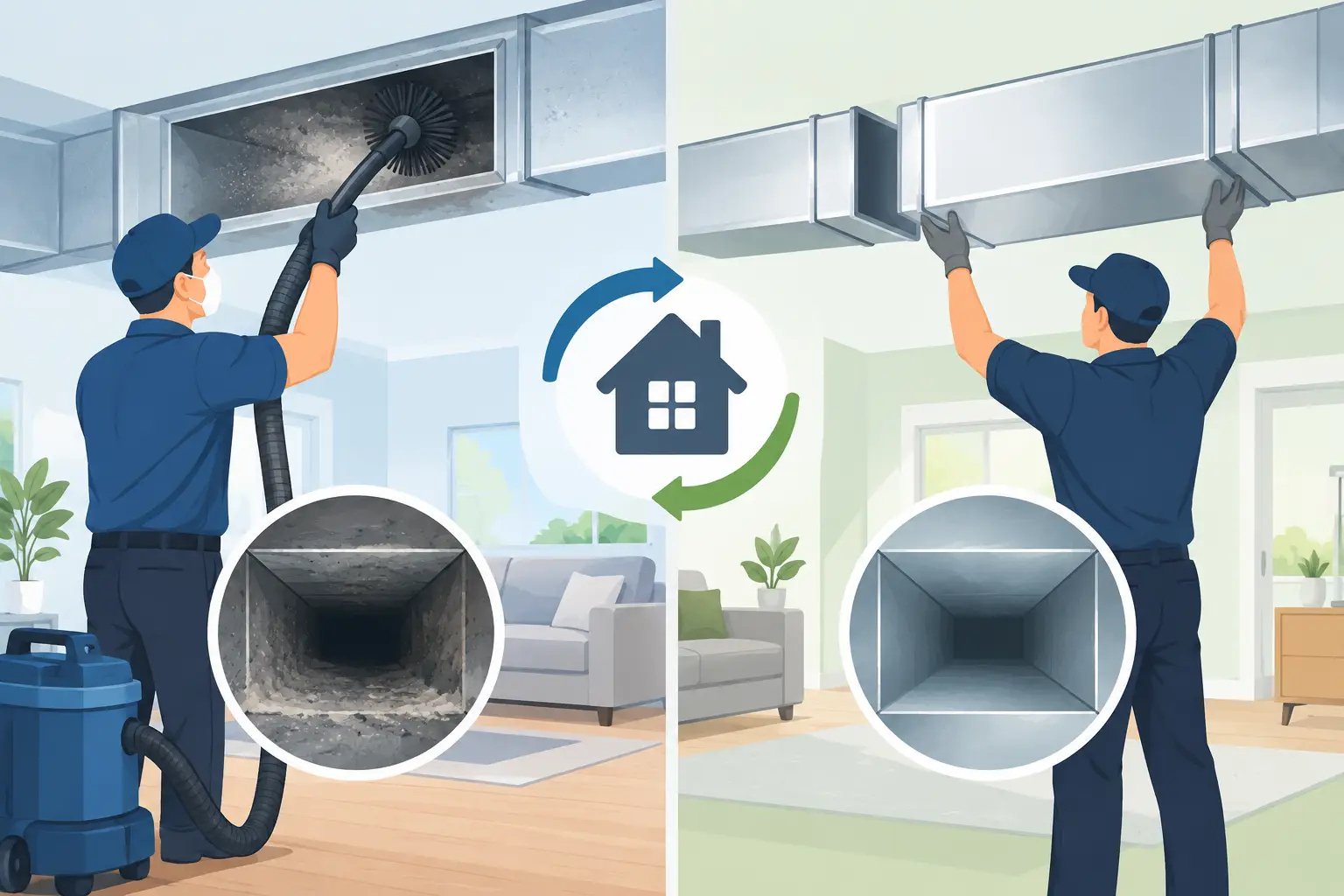
A dusty vent cover does not automatically mean your ductwork needs to be replaced. In many Dallas-Fort Worth homes, the right answer in the duct cleaning versus replacement decision depends on what is inside the system, how old the ductwork is, and whether it is still moving conditioned air where it belongs.
Ductwork is largely out of sight, so problems can build quietly. You may notice rooms that never feel comfortable, rising utility bills, musty odors when the HVAC system starts, or dust returning soon after you clean. Those signs deserve attention, but they do not all call for the same solution. A professional inspection helps separate a cleanable buildup from damaged ductwork that is costing your home comfort, efficiency, and air quality.
When Professional Duct Cleaning Makes Sense
Air duct cleaning is designed to remove accumulated dust, pet hair, debris, and other loose material from accessible parts of the duct system. It can be a practical service after a remodeling project, following a pest issue that has been fully resolved, or when heavy visible buildup is present around supply and return vents.
It is also worth considering if your home has experienced unusually high indoor dust, if family members are sensitive to airborne irritants, or if you have recently moved into a home with an unknown maintenance history. Texas homes can collect plenty of dust through long cooling seasons, open doors, active households, and construction in nearby neighborhoods.
Cleaning is most useful when the ductwork itself is structurally sound. If air is traveling through intact, properly connected ducts, removing debris can improve cleanliness within the system and support better HVAC performance. The service should include more than a quick vacuum at the vent opening. Qualified technicians use professional equipment to address the ducts and accessible system components thoroughly while protecting your home.
However, cleaning has limits. It cannot repair crushed flex ducts, seal failing joints, reconnect separated runs, or correct poorly designed duct layouts. If the problem is damaged ductwork rather than dirt, cleaning alone may only delay the repair your home needs.
Duct Cleaning Versus Replacement: The Key Difference
The simplest distinction is this: cleaning addresses contamination and buildup, while replacement addresses condition and performance. One removes material inside the ducts. The other resolves ducts that are leaking, deteriorated, undersized, disconnected, or no longer dependable.
A cleaning service is usually the more affordable option when the ducts are in good shape. Replacement is a larger investment, but it can be the smarter long-term choice when old or damaged ductwork is allowing cooled air to escape into the attic, crawlspace, or wall cavities.
In North Texas, that difference matters. Attic temperatures can become extreme in summer. Leaky ducts in an attic force your HVAC system to work harder while sending expensive conditioned air into a space no one uses. When duct insulation has broken down or duct connections have failed, a clean interior does not solve the energy loss.
Signs Your Ducts May Need Replacement
Age alone does not determine whether ductwork needs to be replaced. Well-installed ducts can last for years, while poorly installed materials can fail much sooner. Still, certain warning signs point to repairs or replacement rather than cleaning.
If you have persistent hot and cold spots from room to room, air may not be reaching the vents evenly. A sharp drop in airflow at one or more registers can signal a kinked, collapsed, disconnected, or damaged duct run. Whistling sounds, rattling, or air noises inside walls and ceilings can also indicate leakage or loose connections.
Pay close attention to insulation and moisture concerns. Ducts with torn outer jackets, compressed insulation, or visible condensation may lose efficiency and create conditions that need prompt attention. Water damage, repeated pest activity, or suspected mold growth can require replacement of affected materials, especially when the duct lining or insulation cannot be properly restored.
Replacement may also be appropriate when ducts contain older materials that have become brittle, sagging, or difficult to seal. Flexible ducts that droop between supports can restrict airflow. Metal ducts may be more durable, but loose joints and failed seals can still cause major leakage.
A professional assessment should explain what was found and why cleaning, repair, partial replacement, or full replacement is recommended. Homeowners should not feel pressured to replace an entire duct system without clear evidence of its condition.
When Repair Is the Better Middle Ground
The choice is not always limited to cleaning or replacing every duct. In many homes, targeted repair is the most sensible option. A technician may be able to reconnect a separated section, seal accessible leaks, replace a short damaged run, add support to sagging flexible ducts, or improve insulation around vulnerable areas.
This approach can be especially helpful when most of the system is sound but one attic section has been damaged by pests, foot traffic, moisture, or age. Repairing the affected area and cleaning the rest of the system, when needed, can protect your budget without ignoring the root cause.
The best recommendation is based on the condition of the entire system, not a one-size-fits-all sales pitch. A reputable company will discuss the work in plain language, identify what is urgent, and clarify what can reasonably wait.
Cost, Comfort, and Long-Term Value
Cleaning typically costs less upfront because it does not involve removing and installing new duct materials. Replacement costs vary more widely based on the home’s size, accessibility, duct layout, material type, and whether the installation requires work in tight attics, crawlspaces, or finished areas.
The least expensive option is not always the lowest-cost decision over time. If an aging duct system is leaking heavily or restricting airflow, repeated cleanings will not lower the strain on your HVAC equipment. Replacing compromised sections may improve room-to-room comfort and reduce wasted heating and cooling.
On the other hand, replacing ducts that are still sealed, insulated, and functioning well can be unnecessary. That is why inspection matters. The goal is not to sell the largest job. It is to match the service to the condition of your home.
What a Professional Evaluation Should Cover
Before choosing a service, ask for a clear evaluation of your ductwork. A thorough visit should look beyond the visible vent covers. Technicians should assess accessible duct sections, connections, insulation, signs of leakage, airflow concerns, contamination, and any evidence of moisture or pest damage.
You should receive a straightforward explanation of the findings. If cleaning is recommended, ask what areas will be cleaned and what equipment will be used. If replacement is recommended, ask whether the concern affects the full system or only certain runs. Clear scope and transparent pricing help prevent surprises.
For homeowners balancing comfort, indoor air quality, and energy costs, the right provider also matters. On Time Home Experts sends trained, insured professionals who can help identify whether your duct system needs cleaning, targeted repairs, or a more substantial solution – with no hidden charges and no unnecessary complexity.
Make the Decision Based on Evidence, Not Fear
Dust near a vent, an older home, or a single high utility bill is not enough information to justify full duct replacement. At the same time, ignoring weak airflow, damaged insulation, or visible duct deterioration can leave your HVAC system working harder than it should.
Start with an honest inspection and choose the service that addresses the real issue. Clean ducts can support a fresher home, while sound, sealed ductwork protects the comfort and efficiency your family depends on. When you know what condition your ducts are in, the next step becomes much easier to take.