





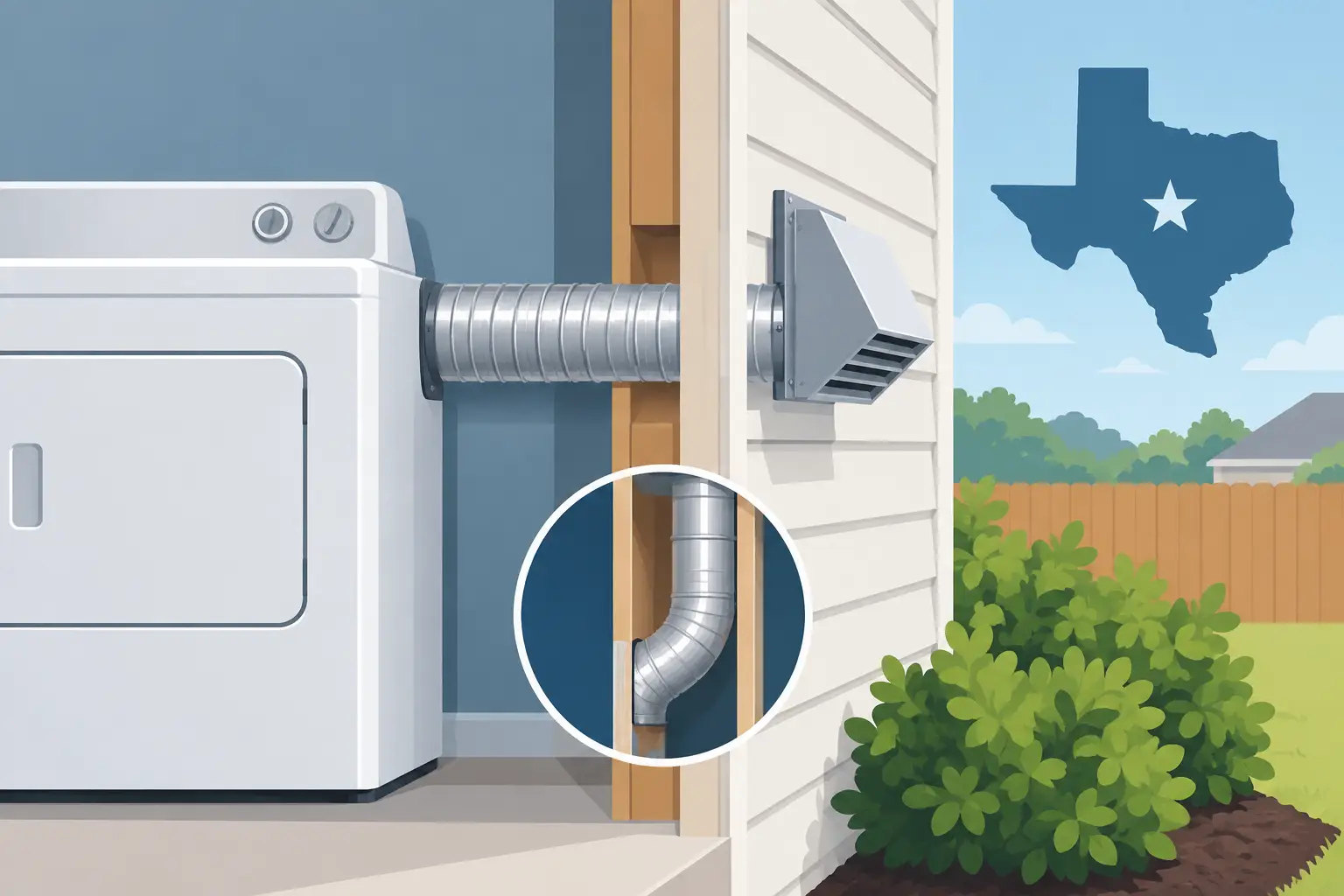
A dryer that takes two or three cycles to dry a normal load is not just frustrating. It can signal a routing problem that traps lint, heat, and moisture where they do not belong. This dryer vent routing safety guide gives Texas homeowners a clear way to recognize safer vent layouts, identify common warning signs, and know when professional help is the right call.
Dryer vents work hard in North Texas homes. Long runs through hot attics, tight laundry closets, slab foundations, and exterior walls can all make proper installation more complicated. When the route is poorly planned or neglected, the dryer has to work harder, energy costs can rise, and the risk of a lint-related fire increases.
Why Dryer Vent Routing Matters
A clothes dryer produces hot, humid air and carries fine lint with it every time it runs. The vent system must move that air outdoors quickly and reliably. If the exhaust path is too long, crushed, clogged, disconnected, or routed to the wrong place, heat and moisture can build up inside the home.
That moisture is more than a comfort issue. It can contribute to mildew, staining, wood damage, and poor indoor air conditions around laundry rooms, attics, garages, and wall cavities. A restricted vent also leaves lint closer to the dryer’s heat source, creating a preventable fire concern.
A safe route is usually the shortest practical path from the dryer to the exterior of the home. Shorter runs with fewer turns allow better airflow and make future cleaning easier. However, every house is different. A laundry room located in the center of the home may require a longer path, which is why the materials, fittings, support, and maintenance plan matter just as much as distance.
Dryer Vent Routing Safety Guide: The Right Path Outside
The vent must terminate outdoors. It should never exhaust into an attic, crawl space, garage, chimney, wall cavity, or indoor room. Those shortcuts may seem convenient during an installation, but they release moisture and lint into spaces not designed to handle either one.
For most homes, rigid or semi-rigid metal ducting is the safer choice for the concealed vent run. It has a smooth interior that supports airflow and is less likely to trap lint than flexible plastic or foil-style ducts. Thin, accordion-style materials can sag, tear, and collect lint in their ridges. They may be acceptable only for limited, accessible transition connections when permitted by the appliance manufacturer and local requirements, but they are not a substitute for a properly built duct system.
The connection behind the dryer deserves attention too. Pushing a dryer too tightly against the wall can crush the transition duct, sharply restricting airflow before the air even reaches the main vent line. Leave enough clearance for the connection to remain open and inspectable. A dryer box or recessed connection may be useful in tight spaces when professionally installed.
The exterior termination should have a proper hood or damper that opens when the dryer runs and closes afterward. It should keep out pests and weather without blocking exhaust. Screens are often a problem because lint collects on them quickly. If the exterior cover has visible lint buildup, weak airflow, or a damper that stays closed during operation, schedule an inspection rather than assuming the dryer itself has failed.
Keep Bends, Length, and Sag Under Control
Every turn in a vent run slows airflow. A 90-degree elbow creates more resistance than a straight section, so a route with multiple hard turns may need to be shorter overall than a straight route. Appliance instructions and local building requirements set limits for allowable duct length, and those limits can vary based on the number and type of fittings used.
Avoid sharp, kinked turns and unsupported sections that sag. Low spots collect lint and condensation, especially in long attic routes. A well-installed metal vent should be securely supported, joined so lint is less likely to catch at seams, and arranged for cleaning access where practical.
Do not assume that a longer route can be fixed by installing a stronger dryer. Some dryer models can accommodate more complex venting with approved equipment, but that decision should follow the manufacturer’s specifications. Adding an unapproved booster fan or altering the route without professional guidance can create new safety and maintenance problems.
Common Routing Problems in Texas Homes
Texas homes present a few recurring dryer vent challenges. Homes built on slabs may have vents routed through walls, ceilings, or long overhead runs. Multi-story homes can have complicated paths from an upstairs laundry room. Older homes may still have outdated materials, concealed damage, or installations that no longer meet current standards.
Watch for these signs that the route needs professional attention:
- Clothes remain damp after a normal cycle or require repeated cycles.
- The laundry room feels unusually hot or humid while the dryer operates.
- A burning smell, excessive heat, or visible lint appears behind the dryer.
- The exterior vent flap barely opens, or no warm air comes out during a cycle.
- Lint returns quickly after cleaning, suggesting a crushed, disconnected, or poorly routed duct.
These symptoms do not always mean there is a major defect. A simple lint blockage can cause several of them. Still, cleaning alone cannot correct a vent that is too long, improperly terminated, damaged inside a wall, or exhausted into the wrong location.
Attic Runs Need Extra Care
Attic routing is common when the laundry room is not near an exterior wall, but it requires careful installation. North Texas attics can reach extreme temperatures, which puts added stress on duct connections and can make a restricted dryer work even harder. The vent should remain intact, supported, accessible where possible, and routed directly to an approved exterior termination.
Never leave a dryer vent open in the attic. Beyond lint accumulation, the warm moist air can affect insulation, framing, and nearby surfaces. If you notice a musty attic smell, damp insulation near the laundry area, or lint around duct connections, have the system evaluated promptly.
Safe Maintenance Starts With the Whole System
Cleaning the lint screen after every load is a smart first step, but it is not complete dryer vent maintenance. Fine lint passes through the screen and settles in the transition duct, the main vent run, elbows, and exterior hood. Dryer sheets and fabric softeners can also leave a film on the lint screen that reduces airflow even when the screen looks clean.
Periodically wash the lint screen with warm water and a soft brush, then allow it to dry fully before reinstalling it. Vacuum around and behind the dryer carefully, but avoid disconnecting or forcing ductwork if you are not sure how it is assembled. A loose connection can release lint and moisture into the wall or attic without being immediately visible.
Professional dryer vent cleaning is especially valuable for long routes, roof exits, multi-story homes, and systems with several elbows. A trained technician can clean the line while also checking airflow, exterior termination, accessible connections, and signs that the duct route needs correction. On Time Home Experts helps homeowners address both the lint buildup and the routing conditions that can allow the problem to return.
When to Repair, Reroute, or Replace a Dryer Vent
A professional may recommend a basic cleaning when the duct route is sound and lint is the main restriction. Repair is often appropriate for a loose joint, damaged exterior hood, crushed transition connection, or accessible section of incorrect material.
Rerouting may be the safer long-term option if the duct has excessive turns, travels an impractical distance, terminates indoors, or cannot be cleaned effectively. While rerouting is a larger project, it can improve drying performance, reduce strain on the appliance, and make routine maintenance more manageable. The right answer depends on your home’s layout, dryer model, existing construction, and applicable local requirements.
If your dryer is running hot, taking longer to dry, or showing signs of poor exhaust flow, do not wait for the issue to become an emergency. A clear, properly maintained path to the outdoors protects your home, helps your dryer run efficiently, and gives your family one less hidden safety concern to worry about.