




A gutter guard systems review should start with a practical question: will the system keep water moving through your gutters when North Texas storms arrive? A guard can reduce the leaves, pine needles, roof grit, and pests that collect in an open gutter. But not every product works equally well on every roof, and no guard makes maintenance disappear forever.
For Dallas-Fort Worth homeowners, the right choice depends on the trees around your property, the condition and slope of your existing gutters, and whether you are solving a recurring overflow problem or trying to protect a new gutter installation. The best system is one that handles local debris, sheds heavy rain efficiently, and can be inspected without creating another headache.
Why Gutter Guards Matter in North Texas
Gutters have one job: direct rainwater away from the roofline, siding, foundation, and landscaping. When they clog, water can spill over the edge or back up beneath the roofline. Over time, that can contribute to fascia damage, wood rot, stained exterior walls, washed-out flower beds, standing water, and foundation moisture concerns.
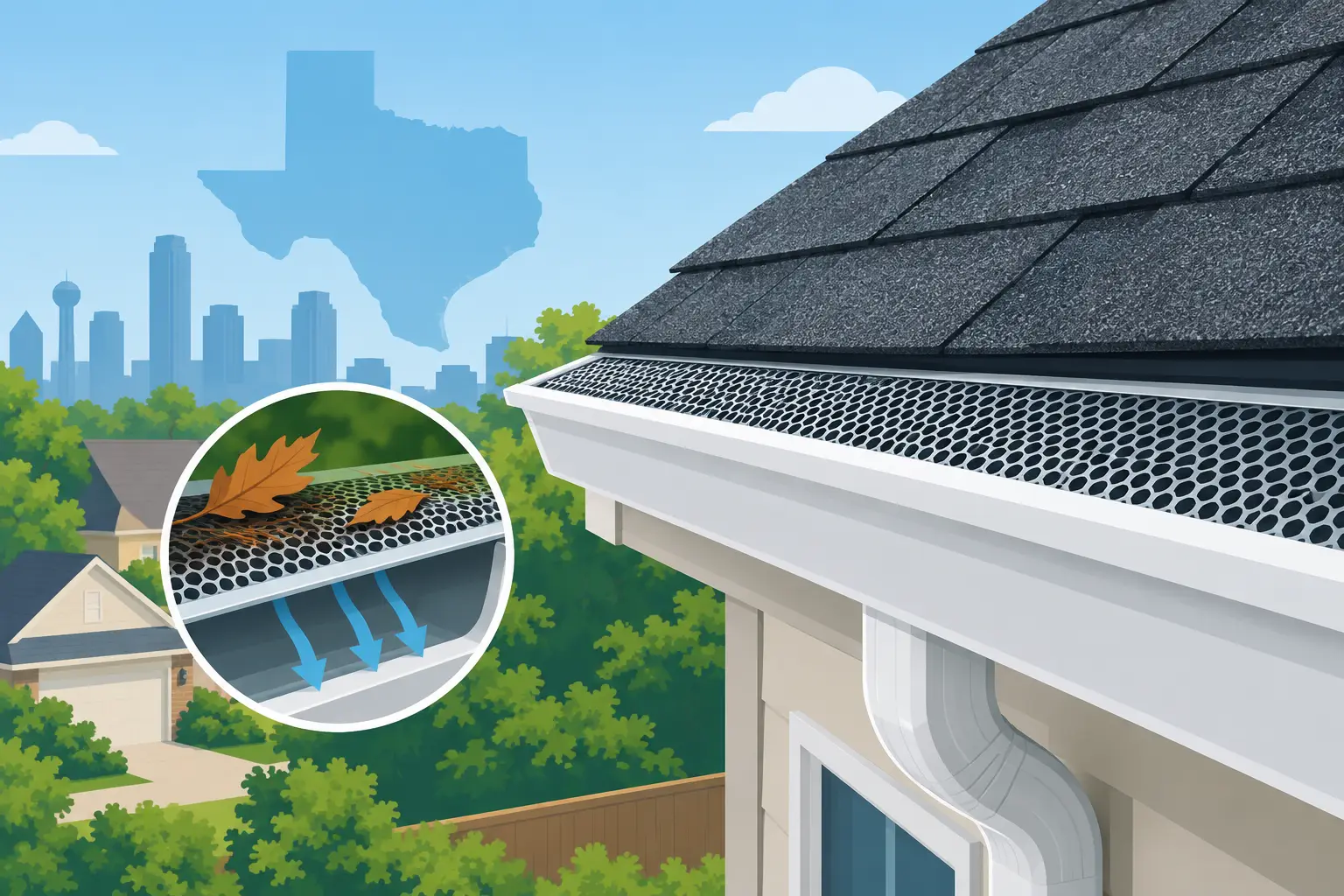
Texas weather puts extra pressure on the system. Sudden downpours can overwhelm gutters already filled with leaves or shingle grit. Oak tassels, pine needles, seed pods, and windblown debris can create dense clogs that are harder to remove than a layer of dry leaves. Gutter guards are designed to keep larger debris out while allowing water to enter, but their design determines how well they perform during a real storm.
Gutter Guard Systems Review: The Main Types
There is no single “best” gutter guard for every home. Each type has a place, along with trade-offs homeowners should understand before making a decision.
Screen guards
Screen guards are usually made from metal or plastic panels with larger openings. They sit on top of the gutter and block leaves, twigs, and larger debris. They are often one of the more budget-friendly options and can be effective for homes with broad leaves and limited tree cover.
Their weakness is small debris. Pine needles, seed pods, and roof grit may pass through the openings or rest on top of the screen. Some screens can also shift during severe weather if they are not installed securely. They may reduce gutter cleaning needs, but they do not always eliminate them.
Micro-mesh guards
Micro-mesh systems use a fine metal mesh that filters much smaller debris than a standard screen. They are often a stronger fit for homes beneath trees that drop pine needles, oak debris, or fine organic material. Quality stainless steel micro-mesh guards can offer good durability and resist rust.
The trade-off is that fine debris can collect on the surface of the mesh. Rain may wash some of it away, but homeowners may still need occasional brushing or professional service. Installation quality matters because gaps, poor fastening, or an incorrect angle can allow water to overshoot the gutter in heavy rain.
Reverse-curve or surface-tension guards
These guards use a curved cover that directs rainwater into a narrow opening while encouraging leaves and debris to fall to the ground. When sized and installed correctly, a surface-tension design can move substantial water volume and keep the inside of the gutter relatively clear.
However, these systems are more dependent on precise installation and roof conditions. Heavy rainfall, steep rooflines, or poor placement can cause water to run past the opening. They are also typically more expensive and may alter the appearance of the roof edge. A professional assessment is especially valuable before choosing this option.
Foam inserts and brush guards
Foam inserts fill the gutter channel, while brush guards use bristles to catch debris above the gutter. These products are easy to find and may look appealing for a quick do-it-yourself project. Their low upfront cost is their main advantage.
For many Texas homes, they are not the best long-term solution. Debris can become trapped in or on the material, and organic buildup may hold moisture. Foam can deteriorate over time, while brush systems can become difficult to clean thoroughly. They may work as a temporary measure, but homeowners looking for lasting protection usually benefit from a more durable guard style.
What to Look for Before You Buy
A gutter guard should match the home, not just the sales brochure. Start with the gutters themselves. If they are sagging, undersized, improperly pitched, rusted, or pulling away from the fascia, installing guards will not fix the underlying problem. Water needs a clear path through a sound gutter system and downspouts that discharge away from the foundation.
Next, consider the debris source. A home surrounded by mature oak trees has different needs than a newer property with a few ornamental trees. Fine pine needles and roof grit call for a smaller opening than large leaves. If nearby trees overhang the roof, trimming branches may be as important as adding guards.
Rain handling is another major factor. DFW storms can drop a great deal of water quickly. Look for a system designed to accommodate the roof’s runoff volume rather than one that simply blocks leaves. Proper gutter sizing, securely mounted hangers, and clear downspouts all affect performance.
Finally, ask who will stand behind the installation. A strong warranty can be helpful, but homeowners should understand what it covers. Product warranties and workmanship warranties are not always the same. Read the details on maintenance requirements, exclusions for storm damage, and whether the installer will return if water bypasses the system.
Cost Versus Long-Term Value
Gutter guard pricing varies widely based on material, roof height, gutter length, accessibility, and whether repairs or replacements are needed first. Basic inserts and screens cost less upfront, while professionally installed micro-mesh and surface-tension systems cost more. The lowest price is not always the lowest cost over time if a guard traps debris, requires frequent service, or must be replaced early.
The value of a guard system comes from reducing routine clogging and lowering the chance of water-related damage. It can also make gutter maintenance safer by reducing how often someone needs to climb a ladder. Still, a guard is not a substitute for inspections. Homeowners should check the roofline and downspout flow after major storms, especially during the first season after installation.
Installation Details That Affect Results
Even a well-made guard can fail if installed over damaged gutters or attached in a way that interferes with the roof edge. Guards should not create gaps where pests can enter, trap water against the fascia, or compromise roof materials. They also need to be secured well enough to withstand high winds.
Professional installation is particularly worthwhile for two-story homes, steep rooflines, or gutters with existing drainage problems. A trained technician can identify hidden concerns such as loose fasteners, separated joints, crushed downspouts, and areas where water is already spilling behind the gutter. Addressing those issues first helps the guard system perform as intended.
At On Time Home Experts, we encourage homeowners to treat gutter protection as part of a broader exterior maintenance plan. Clean gutters, functional downspouts, and timely repairs work together to help protect the home from avoidable water damage.
Do Gutter Guards Eliminate Cleaning?
No. This is one of the most common misunderstandings. Quality guards can greatly reduce the amount of debris inside the gutter, but material can still collect on top of the guard, near valleys, around downspout openings, and in areas beneath heavy tree cover. Wind-driven dirt and asphalt shingle granules can also build up over time.
Most homes still need periodic visual checks and occasional professional cleaning. The good news is that a well-chosen guard usually makes that work faster and less frequent. If water is flowing over the gutter edge, downspouts are draining slowly, or debris is visibly accumulating along the roofline, schedule an inspection before a small drainage issue becomes an expensive repair.
A dependable gutter guard system should make home maintenance more manageable, not give you false confidence. Choose a product that fits your roof and debris conditions, keep the whole drainage system in good shape, and let the next heavy Texas rain be a test your home is prepared to pass.