


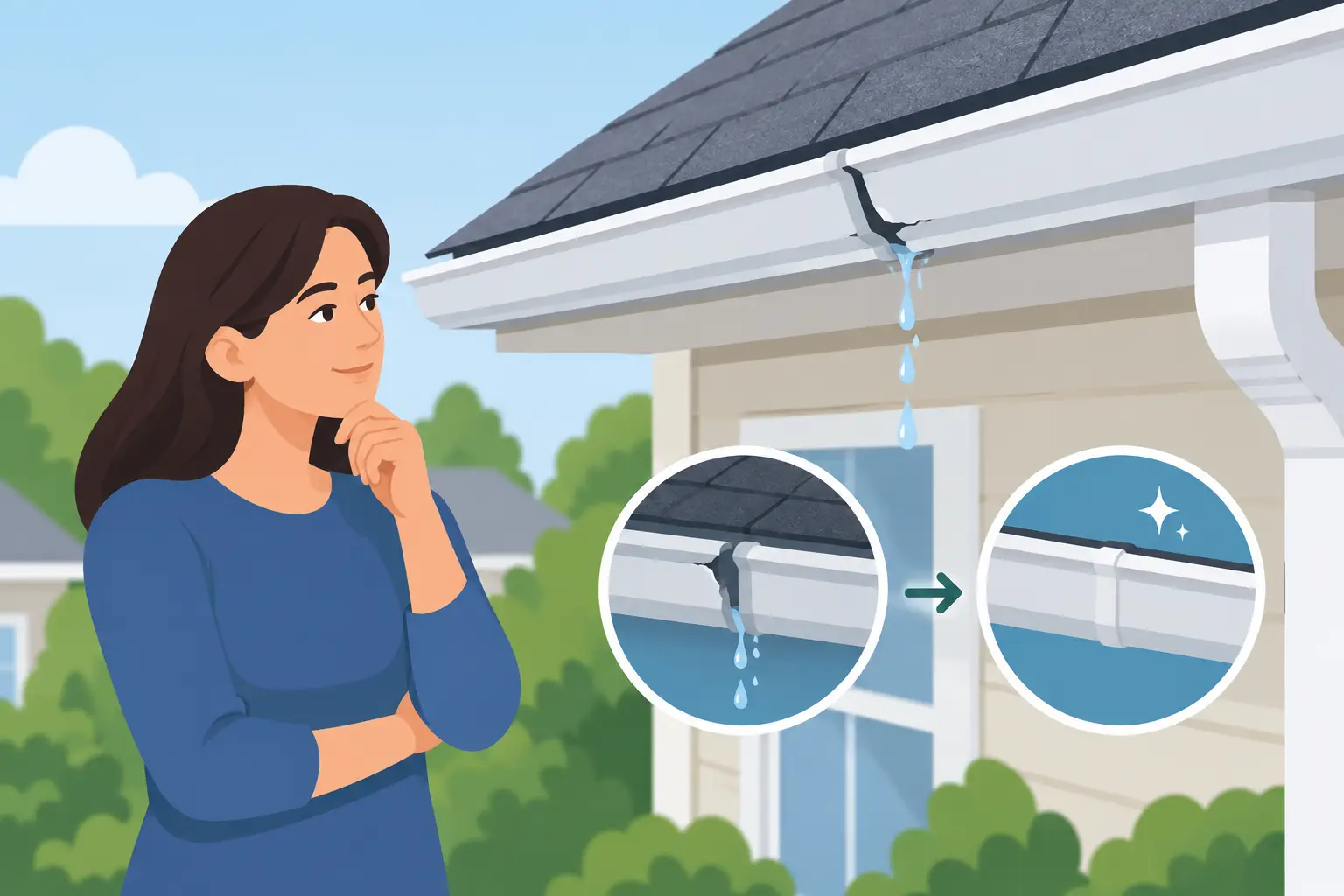
A small drip from a gutter can turn into stained siding, rotted fascia boards, foundation moisture, or a washed-out flower bed after one hard Texas storm. So, are gutter leaks repairable? In many cases, yes. The right repair depends on where the leak is, what caused it, and whether the gutter system is still structurally sound.
For Dallas-Fort Worth homeowners, waiting through another storm season is rarely a good plan. Gutters are designed to move rainwater away from the roofline and foundation. When that system leaks, overflows, or pulls away from the house, water can end up exactly where it should not be.
Are Gutter Leaks Repairable? It Depends on the Damage
Most minor gutter leaks can be repaired without replacing the full system. Leaks at seams, end caps, corners, and small holes are often good candidates for professional sealing or patching. These repairs are generally cost-effective when the gutter sections are properly sloped, securely attached, and free of widespread corrosion.
A seam leak is one of the most common problems. Sectional gutters have joints where two pieces meet, and old sealant can crack after years of sun, heat, standing water, and seasonal expansion. A technician can clean the joint, remove failed sealant, and apply a durable gutter sealant to restore a watertight connection.
Small holes can also be patched if the surrounding metal remains solid. Aluminum gutters do not rust like steel, but they can corrode, dent, or develop holes over time. A properly installed patch can extend the useful life of an otherwise healthy gutter section.
Replacement becomes the smarter choice when damage is widespread. Multiple leaks, extensive corrosion, sagging runs, large cracks, loose hangers, or gutters separating from the fascia may indicate that a patch is only a short-term fix. Continually repairing a failing system can cost more than addressing the underlying issue once and correctly.
Signs Your Leak May Be a Simple Repair
Look closely after rain, not just when the gutters are dry. Water dripping from one corner or a single seam often points to a localized issue. Water marks below an end cap, a pinhole leak in one spot, or a visible bead of cracked sealant may also be repairable.
A gutter that overflows is different from a gutter that leaks. Overflow can happen when leaves, roof grit, and debris block the channel or downspout. In that situation, the gutter itself may not be damaged at all. Thorough cleaning may restore normal drainage and stop water from spilling over the edge.
However, debris can hide damage. A gutter full of wet leaves can hold water against the metal, strain hangers, and conceal cracks at seams. That is why cleaning and inspection work best together.
When Repair Is Not Enough
If water is leaking from several places along the same run, the material may be worn beyond a reliable repair. Rusted steel gutters, brittle vinyl, and severely corroded aluminum can fail again even after sealing. Large splits caused by a fallen branch or ladder damage may also require replacing a section.
Slope matters, too. Gutters need a slight, consistent pitch toward the downspout. If water pools in the middle of the gutter, sealant will not solve the real problem. Standing water increases the chance of leaks, attracts pests, adds weight to the system, and speeds up deterioration.
Pay attention to the wood behind the gutter. Soft fascia boards, peeling paint, or discoloration along the roof edge can mean the gutter has been leaking for a while. Reattaching a gutter to damaged wood without correcting the wood issue can lead to another failure. A qualified inspection should identify both the gutter problem and any water damage around it.
Common Causes of Gutter Leaks in North Texas
North Texas weather puts gutters through a lot. Intense heat can dry out old sealant and cause materials to expand. Heavy spring storms can overwhelm clogged gutters. High winds may blow branches and roofing debris into the system, while hail can dent gutter sections and loosen connections.
Poor installation can also cause early leaks. Gutters need enough hangers to support their weight, especially when they are carrying rainwater. Downspouts must be positioned to move water efficiently, and seams need professional-grade sealing. If the system was installed with insufficient slope or weak support, leaks and overflow may show up sooner than expected.
Roof runoff is another factor. A roof valley sends a high volume of water into one concentrated area. If the gutter below that valley is undersized, clogged, or poorly supported, water may shoot over the edge or force its way through a weak seam. The repair may involve more than applying sealant. It could require adjusting the gutter, adding support, or improving how water enters the channel.
Why DIY Gutter Leak Repairs Can Fall Short
Homeowners can find gutter sealant and patch kits at local stores, but the repair is only as good as the preparation. Sealant applied over dirt, wet surfaces, loose material, or old failing caulk often separates quickly. The leak may look fixed until the next major storm.
Safety is an equally serious concern. Gutter repairs require ladder work near roof edges, often while dealing with slippery debris and awkward tools. For busy homeowners, the risk of a fall and the uncertainty of diagnosing the real issue can outweigh the savings of a temporary DIY repair.
Professional service provides a clearer picture of the system. An experienced technician can distinguish a clogged downspout from a misaligned gutter, identify hidden seam failures, check for loose hangers, and evaluate whether water is threatening the fascia, siding, or foundation. That helps homeowners avoid paying for a patch when cleaning, re-sloping, or replacement is the more dependable solution.
What a Professional Gutter Inspection Should Include
A useful gutter inspection should not focus only on the visible drip. The technician should check the gutter channels for debris, test the downspouts for proper flow, inspect seams and end caps, and look for standing water that suggests poor slope. They should also examine hangers, brackets, and the condition of the fascia board behind the gutters.
The area below the gutter matters as well. Splash marks, mulch displacement, soil erosion, or water collecting near the foundation can reveal drainage problems even when the leak itself seems small. Downspout extensions may need adjustment to carry water farther from the home.
At On Time Home Experts, gutter service is approached as preventive home maintenance, not just a quick cleanup. A clean, properly functioning gutter system helps protect the exterior of your home and reduces the chance that rainwater creates avoidable repairs around the roofline and foundation.
Preventing the Next Leak
Regular cleaning is the simplest way to reduce gutter trouble. Leaves, twigs, shingle grit, and nesting material restrict water flow and trap moisture against the gutter surface. Many homes benefit from an inspection and cleaning at least twice each year, usually before heavy spring rain and again after fall leaf drop. Homes with mature trees nearby may need more frequent attention.
After severe storms, check for obvious warning signs from the ground. Look for water spilling over the gutter, downspouts draining slowly, gutters that appear crooked, or fresh streaks on siding. Avoid climbing a ladder during or immediately after wet weather. A prompt professional inspection can catch a loose section or small seam failure before water reaches vulnerable wood.
Gutter guards can reduce the amount of large debris entering the channel, but they are not a complete maintenance solution. Fine debris, roof grit, and seed pods can still collect, and guards must be compatible with the gutter system. They work best as part of a maintenance plan rather than a reason to stop inspections.
A gutter leak is often repairable when it is caught early. The practical next step is to have the system cleaned and evaluated before the next downpour turns a manageable drip into damage that reaches the roofline, walls, or foundation.