




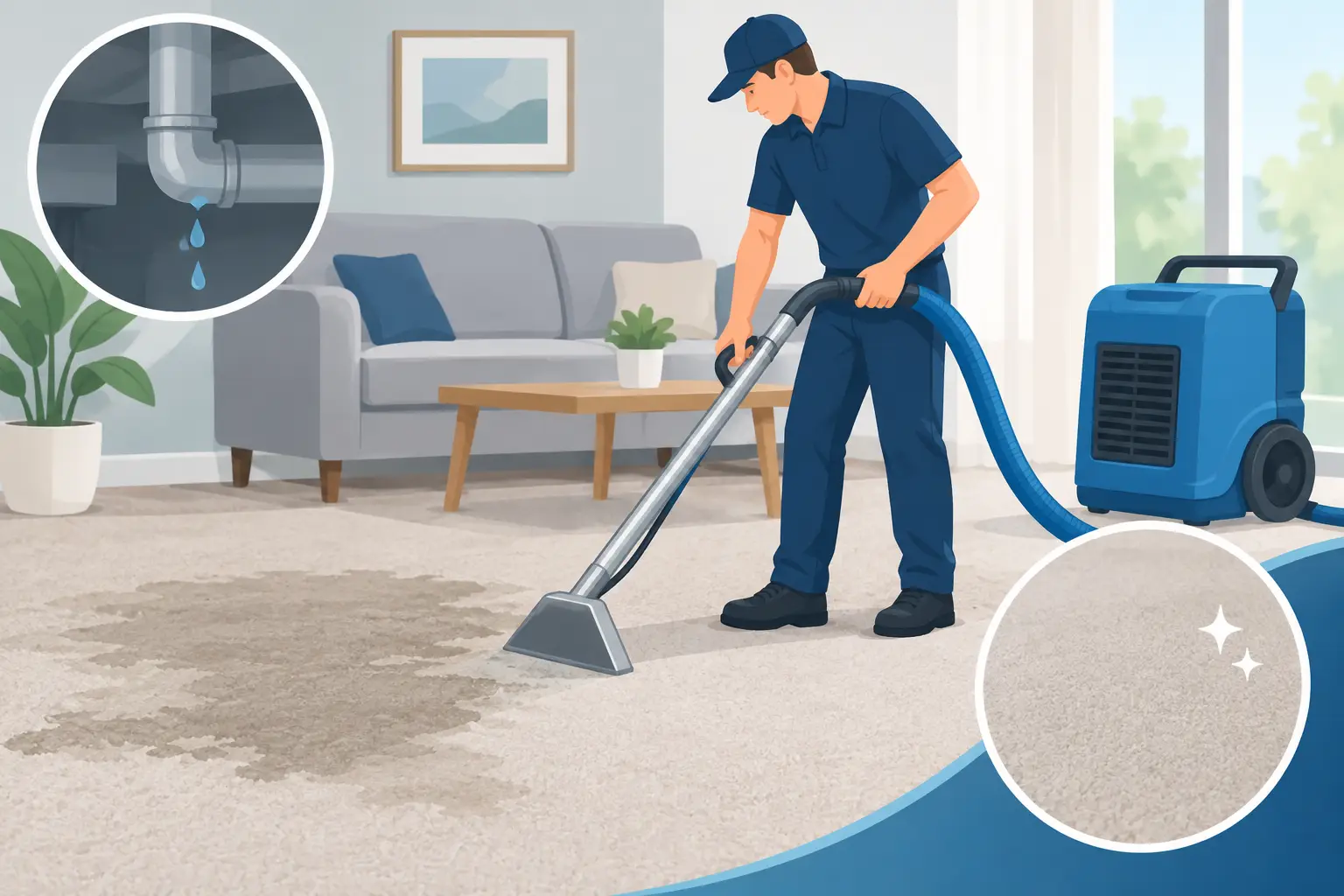
A pipe can leak quietly beneath a sink for days or flood a room in minutes. Either way, wet carpet is not just a cosmetic problem. Water can travel through carpet fibers, soak the pad, reach the subfloor, and create conditions that affect indoor air quality long after the visible water is gone. Carpet restoration after pipe leaks works best when homeowners act quickly and know when professional drying and cleaning are needed.
For Dallas-Fort Worth homeowners, speed matters especially in warm, humid conditions. A damp carpet may feel manageable at first, but moisture trapped underneath can lead to odors, stains, mold growth, and damage to flooring materials. The goal is not simply to make the carpet look dry. It is to remove moisture thoroughly, clean the affected area appropriately, and determine whether the carpet and pad can be safely saved.
Start With the Leak, Then Protect the Room
Before addressing the carpet, stop the water source. Shut off the local water valve if it is safe to do so, or turn off the home’s main water supply when the leak cannot be isolated. A plumbing repair should come first. Drying a carpet while water is still entering the room only adds time, cost, and damage.
Move furniture, boxes, rugs, and electronics out of the wet area as soon as possible. Wood furniture can stain carpet, metal legs can rust, and heavy pieces can hold moisture against the fibers. If furniture must remain in place temporarily, place protective blocks or foil beneath the legs to reduce transfer and discoloration.
Take a few photos before cleanup begins. Documentation can be helpful for insurance claims, particularly when a burst pipe damages multiple rooms or affects walls, baseboards, and flooring. Then remove standing water with a wet vacuum if you have one and it is safe to use. Household towels can help with a small spill, but they are not enough for a soaked room.
Why Fast Drying Makes the Difference
Water does not stay where it lands. Carpet acts like a sponge, and the padding beneath it can hold a surprising amount of moisture. If water reaches the pad, the carpet surface may dry before the materials underneath do. That hidden moisture is where many restoration problems begin.
Within the first 24 to 48 hours, a wet carpet can develop musty odors and become more difficult to clean. Over time, moisture may encourage mold growth, weaken adhesive, cause seams to separate, and damage the wood or concrete beneath the floor covering. Families with allergies, asthma, or respiratory sensitivities may notice that a room feels less comfortable even after the carpet appears normal.
Fans and open windows can help with a very small, clean-water incident, but they do not replace professional extraction and moisture testing after a significant leak. In Texas, outdoor humidity can also limit how much drying open windows actually provide. High-powered extraction equipment, air movers, and dehumidification are designed to pull moisture from the carpet system rather than drying only the top layer.
Clean Water, Gray Water, and Contaminated Water
The source of the leak affects whether restoration is appropriate. A fresh leak from a clean supply line is generally the best-case scenario, provided it is handled quickly. The carpet may be restorable if it has not been wet for long, the water has not mixed with contaminants, and the backing and pad can be dried effectively.
Water from a washing machine discharge, dishwasher line, or another appliance may contain dirt, detergent, or bacteria. This is often considered gray water and requires more careful evaluation and cleaning. Carpet exposed to sewage, toilet backups, outdoor floodwater, or other contaminated water should not be treated like a standard cleaning job. In many cases, the carpet pad and sometimes the carpet itself must be removed to protect the home and its occupants.
Trying to save every material is not always the safest or most cost-effective decision. A trustworthy restoration team should explain what can reasonably be saved, what needs replacement, and why.
The Professional Carpet Restoration Process After Pipe Leaks
A proper response begins with an inspection, not a guess. Technicians assess the water source, the size of the affected area, the amount of saturation, and whether moisture has reached walls, baseboards, padding, or subflooring. Moisture meters and thermal imaging tools can help identify wet areas that are not visible from the surface.
Next comes water extraction. Removing as much water as possible at the beginning reduces drying time and helps limit secondary damage. For larger areas, technicians may lift sections of carpet to inspect and dry the pad and floor beneath. In some situations, the carpet can be carefully floated with air movement underneath it. In others, the pad must be removed because it cannot be cleaned or dried to an acceptable standard.
Once the materials are drying, the carpet should be cleaned based on the type of water involved and the condition of the fibers. Professional cleaning can remove soil, residue, and odor-causing material left behind by the leak. Antimicrobial treatment may be appropriate when conditions call for it, but it should never be used as a shortcut for incomplete drying or for contaminated materials that should be discarded.
The final step is verification. A room should not be considered restored just because it feels dry underfoot. Moisture levels in the carpet, pad, subfloor, and nearby walls should be checked before equipment is removed. This is how you avoid closing up a hidden moisture problem inside an otherwise clean-looking room.
When Can Carpet Be Saved?
Carpet restoration is often possible when the leak involved clean water, drying began quickly, and the carpet has no strong odor, visible mold, or permanent backing damage. Synthetic carpets are generally more forgiving than natural fibers, although every situation is different. The condition of the pad and subfloor matters just as much as the carpet itself.
Replacement becomes more likely when water sat for more than a day or two, when contamination is involved, or when the pad is heavily saturated. Delamination is another concern. This happens when the carpet backing separates, leaving ripples, loose areas, or permanent distortion. If the carpet has a persistent musty smell after drying and cleaning, that is a sign to investigate further instead of covering it with fragrance.
Homeowners should also consider the age and condition of the carpet before the leak. A newer, well-maintained carpet may be worth professional restoration. An older carpet with worn fibers, previous pet odors, or existing stains may be better replaced, especially if the leak affected a large area.
Avoid These Common Cleanup Mistakes
The most expensive mistake is waiting to see whether the carpet dries on its own. Delayed action gives moisture more time to move into the pad, walls, and subfloor. Another common mistake is shampooing a wet carpet before it has been properly extracted. Adding more water can prolong the drying process.
Avoid using bleach on carpet. It can discolor fibers, damage backing, and does not solve moisture trapped below the surface. Renting fans without checking moisture levels can also create false confidence. The carpet may look dry while the pad remains wet underneath.
Do not forget adjacent spaces. Water can migrate under baseboards and into closets, hallways, or rooms on the other side of a shared wall. If a leak occurred upstairs, inspect ceilings and flooring below as well. Catching hidden spread early can prevent a smaller plumbing problem from becoming a broader home repair.
Protect Your Home After the Carpet Is Dry
Once the immediate restoration work is complete, keep an eye on the affected room for several weeks. Watch for returning odors, buckled carpet, dark spots along baseboards, or changes in indoor comfort. These signs do not always mean a major problem, but they deserve prompt attention.
It is also a good time to prevent the next leak. Check supply hoses, look beneath sinks periodically, know where your main water shutoff is located, and address slow drips before they become emergencies. Homes with aging plumbing, water heaters, or appliance connections benefit from regular inspection.
For carpet cleaning and restoration-related support, On Time Home Experts brings trained professionals, modern equipment, and straightforward service to homeowners who want clear answers after water damage. The right response is fast, careful, and focused on protecting the materials you can save without compromising the health of your home.
A pipe leak is stressful, but the next step does not have to be uncertain. Stop the water, begin drying quickly, and have the carpet system evaluated before hidden moisture turns a manageable cleanup into a larger repair.