




A missing chimney cap and a stuck-open damper can both make a fireplace less efficient, but they create very different problems. When homeowners compare a chimney cap versus damper, the key fact is simple: one protects the top of the chimney from the outdoors, while the other controls airflow inside the flue. Many homes need both working properly.
For Dallas-Fort Worth homeowners, that distinction can mean avoiding rainwater damage after a storm, keeping birds and squirrels out of the flue, reducing conditioned-air loss during a hot Texas summer, and using the fireplace more safely when cooler weather arrives.
Chimney Cap Versus Damper: The Main Difference
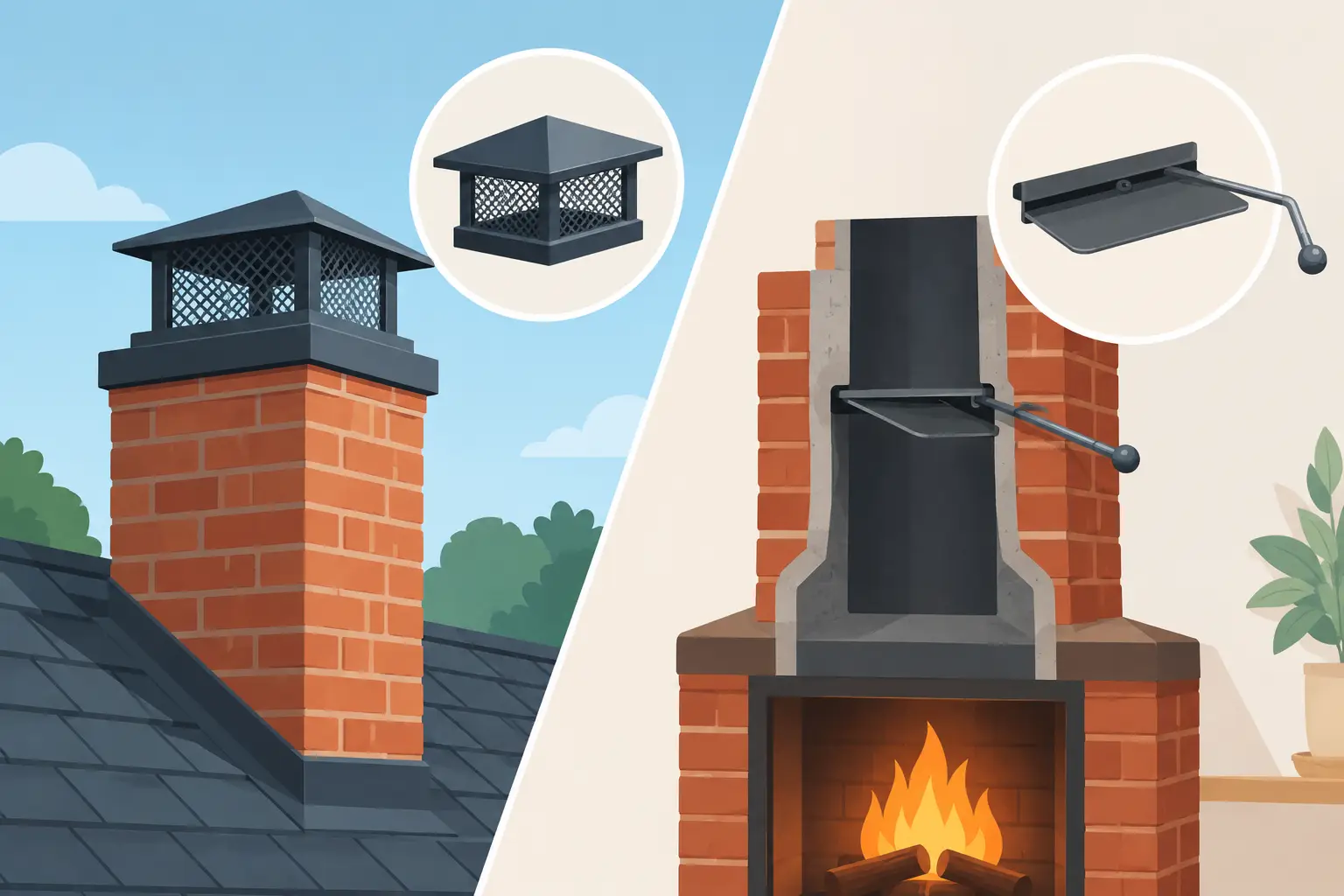
A chimney cap is a protective metal cover installed at the top of the chimney. It sits above the flue opening and usually includes screening around the sides. Its primary job is to keep unwanted things out while allowing smoke and combustion gases to exit.
A damper is a movable metal plate located inside the chimney system, typically near the firebox or at the top of the flue. It opens when you need airflow for a fire and closes when the fireplace is not in use. Its primary job is airflow control.
Think of the cap as an exterior shield and the damper as an interior door. A cap cannot stop warm or cool indoor air from escaping through an open flue. A damper cannot reliably keep rain, leaves, and animals from entering at the top of the chimney. They are complementary components, not substitutes.
What a Chimney Cap Protects Against
An uncovered chimney is an open vertical path into your home. Rain can enter the flue, soak masonry, contribute to rust on metal components, and create moisture issues around the fireplace. Repeated moisture exposure can damage mortar joints and chimney liners over time, especially when small problems are ignored.
A properly sized cap also helps keep out birds, squirrels, raccoons, bats, and nesting materials. Animals inside a chimney are more than a noise concern. Nesting debris can restrict airflow, create odors, introduce pests, and become a fire hazard if you use the fireplace.
Wind is another factor. North Texas storms can blow leaves, twigs, and debris into an uncapped flue. Some caps are designed to help reduce downdrafts as well, which can lessen the chance of smoke being pushed back toward the living space. Downdraft-resistant caps can be useful for homes that experience recurring smoke issues, although they will not correct every drafting problem.
A chimney cap should be made of durable, weather-resistant material and fitted to the chimney correctly. A loose cap can rattle in high winds or blow off. A cap with damaged or poorly sized mesh may let animals in or become clogged with debris. During a professional chimney inspection, technicians can check the cap, screen, crown, flashing, and visible masonry for signs of water intrusion or wear.
What a Damper Does for Comfort and Safety
Your fireplace flue is essentially a large opening to the outside. When the damper is left open, heated or air-conditioned air can move up the chimney. That makes your HVAC system work harder and can leave rooms near the fireplace feeling drafty or uncomfortable.
When you are preparing to light a wood-burning fire, the damper must be fully open. The open damper allows smoke, carbon monoxide, and other combustion byproducts to travel up the flue instead of entering your home. Never light a fire with the damper closed or partially closed.
After the fire is completely out and the ashes are cool, the damper can be closed to reduce air loss. Closing it too soon can trap smoke or carbon monoxide indoors, so wait until there are no hot embers or active combustion remaining.
Many fireplaces use a traditional throat damper located just above the firebox. Others use a top-sealing damper at the chimney top. A top-sealing model may provide a tighter seal against outside air and moisture, but it must be installed and maintained correctly. The right choice depends on your chimney design, fireplace use, and condition of the existing system.
Signs Your Cap Needs Attention
A chimney cap often sits out of sight, which is why damage may go unnoticed until a bigger issue develops. Homeowners should schedule an inspection if they notice water stains near the fireplace, dripping sounds in the chimney after rain, rusted damper parts, musty odors, or bits of leaves and nesting material in the firebox.
Animal sounds are another clear warning sign. Chirping, scratching, fluttering, or movement in the chimney may indicate that a cap is missing, bent, or not properly screened. Do not try to smoke animals out with a fire. That can harm wildlife, block the flue, and create a dangerous situation inside the home.
Visible rust, a tilted cap, loose mesh, or a cap that has fallen into the yard also calls for prompt service. A trained technician can determine whether the cap can be secured or whether replacement is the safer long-term option.
Signs Your Damper Is Not Working Properly
A damper should move smoothly and create a clear open or closed position. If the handle is difficult to operate, the plate will not fully open, or you are unsure which position it is in, do not use the fireplace until it has been checked.
Smoke entering the room when you start a fire can point to a closed damper, a partially blocked flue, a drafting issue, or a chimney that needs cleaning. A strong cold draft from the firebox when the fireplace is not being used may mean the damper is open, warped, or no longer sealing well.
Rust is a common damper concern because chimney moisture can corrode the plate, frame, and operating mechanism. In some cases, cleaning and adjustment may restore operation. In others, replacement is the more dependable solution. Forcing a rusted damper can damage parts further or leave it stuck in an unsafe position.
Why Chimney Cleaning Matters Before Repairs
A cap and damper can only do their jobs when the flue is clear and in good condition. Soot, creosote, nesting material, and fallen debris can restrict the passageway that carries smoke out of the home. Creosote is especially concerning because it is combustible and can contribute to chimney fires.
Professional chimney and fireplace cleaning removes built-up residue and gives technicians a better view of the system’s condition. This is also the right time to identify cracked flue tiles, water damage, damaged caps, malfunctioning dampers, and other concerns that may affect safe operation.
If you have a gas fireplace, the guidance can be different. Some gas systems require a damper to remain permanently open, depending on the appliance and venting design. Never close, remove, or modify components on a gas fireplace without qualified service. Follow the manufacturer’s requirements and have the system evaluated by a trained professional.
Can You Replace a Cap or Damper Yourself?
Some homeowners are comfortable handling simple exterior maintenance, but chimney work has real risks. Reaching the roof safely is one issue. Correct sizing, secure installation, flue clearance, and identifying hidden damage are equally important. An improperly installed cap can restrict exhaust, come loose in a storm, or fail to keep water and animals out.
Damper repairs are also more involved than they appear. The technician needs to verify that the damper opens fully for safe fireplace operation and closes properly when the appliance is not in use. If smoke, odors, water, or poor drafting are already present, replacing one part without inspecting the full chimney may only mask the actual problem.
Professional service is especially worthwhile for homes with older masonry chimneys, recurring leaks, animal activity, visible rust, or fireplaces that have not been cleaned recently. You get a clearer diagnosis, safer access to elevated areas, and repairs based on the condition of the entire system rather than a quick guess.
Protect Your Fireplace Before the Next Cold Front
A chimney cap protects the opening at the top. A damper manages the airflow within the flue. Keeping both in good condition helps protect your home from water, pests, drafts, heat loss, and avoidable fireplace safety concerns.
Before fireplace season or after a severe storm, have the chimney inspected and cleaned by a professional team. On Time Home Experts can help homeowners identify cap, damper, cleaning, and airflow concerns early, so the fireplace is ready when your family wants to use it.