




A fireplace that smells fine all winter can become unpleasant the moment Texas heat and humidity arrive. If you are asking, “why does fireplace smell in summer,” the short answer is that warm, humid air can pull odors from the firebox and chimney into your home. The longer answer matters because that odor may be caused by old soot, creosote, moisture, animals, or a venting problem that deserves professional attention.
A smoky, musty, sour, or campfire-like smell is not something homeowners should simply cover with air freshener. Your fireplace and chimney are part of your home’s ventilation system. Finding the source of the odor can improve comfort now and help prevent bigger cleaning, moisture, or safety issues before fireplace season returns.
Why Does a Fireplace Smell in Summer?
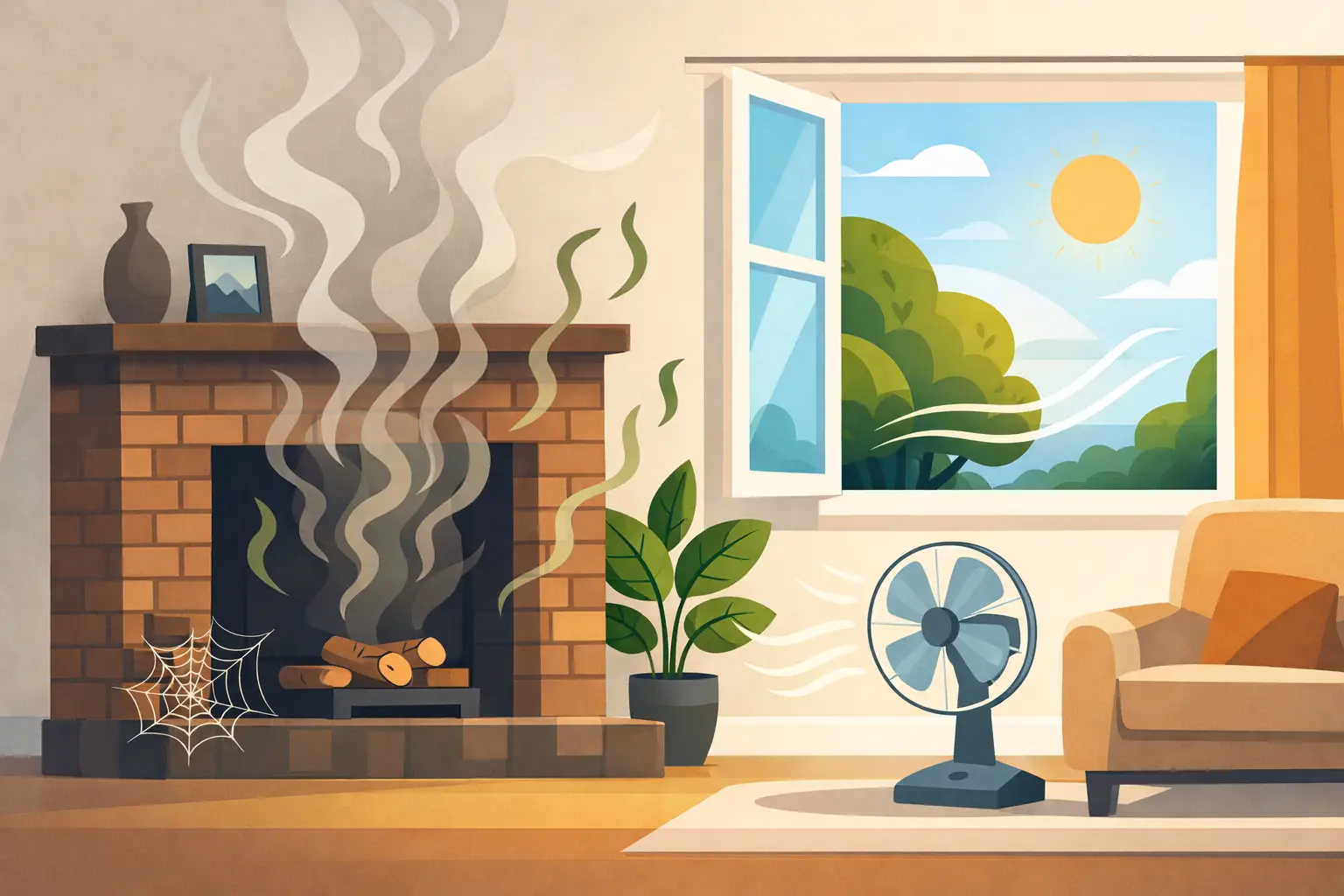
During cooler months, a chimney usually sends combustion gases upward because warm air from the fire rises through the flue. In summer, the conditions can reverse. Hot outdoor air, changes in indoor air pressure, and air conditioning can create a downdraft that pulls air from the chimney down into the living area.
That incoming air carries whatever is sitting inside the chimney: soot, ash, creosote, damp debris, animal nesting material, or odors absorbed into porous masonry. Dallas-Fort Worth summers are especially hard on neglected chimneys because high heat and humidity can intensify odors that were barely noticeable during dry, mild weather.
The smell may come and go. Many homeowners notice it after a thunderstorm, on humid days, when the AC is running, or when exhaust fans are operating in the kitchen, bathroom, or laundry room. Those conditions can change the pressure inside your home and make chimney odors more noticeable.
Creosote and Soot Become More Noticeable
Creosote is the dark, sticky residue that develops when wood burns. Even if you had only a few fires last winter, a small amount can remain on the flue walls and in the smoke chamber. Creosote has a strong smoky odor, and humidity can reactivate it.
A fireplace may also smell like stale smoke because ash and soot were left in the firebox. Ash absorbs moisture easily. Once damp, it can produce a sour, smoky odor that travels farther than expected. Cleaning visible ash is helpful, but it does not remove buildup higher in the chimney where most odor-causing residue collects.
Creosote is more than an odor issue. It is combustible. A chimney inspection and professional cleaning help remove buildup before it creates a greater fire risk when you begin using the fireplace again.
Humidity, Rain, and Moisture in the Chimney
A chimney should keep rain out while allowing smoke to vent safely. When a chimney cap is missing, damaged, or poorly fitted, rainwater and humid outdoor air can enter the flue. Moisture combines with soot and creosote, creating an acrid or acidic smell that can resemble wet charcoal, burned wood, or even a stale barbecue pit.
Water can also expose a larger issue, such as cracked chimney crown material, damaged flashing, deteriorated mortar, or a leaking chase cover on a prefabricated fireplace. If the odor is strongest after rain, do not assume it is just a normal seasonal inconvenience. Moisture inside a chimney can damage components over time and may lead to staining, rust, mold, or structural repairs.
A musty smell is especially worth investigating. While fireplaces do not always develop mold, wet leaves, nesting materials, damp wood, and accumulated debris can create conditions that support mildew or mold-like odors.
Animals and Debris Can Be the Source
Birds, squirrels, rodents, and insects see an uncapped chimney as a protected space. Nesting material, droppings, feathers, and a trapped animal can all cause unpleasant odors. In some cases, the odor becomes much stronger during hot weather as organic material warms inside the flue.
Leaves and small branches can also blow into an unprotected chimney. Besides smelling bad, obstructions can restrict airflow and create problems when the fireplace is used. A proper chimney cap helps keep out rain and animals, but it should be inspected periodically to make sure it remains secure and clear.
Negative Air Pressure May Be Pulling Odors Indoors
Modern homes are often sealed more tightly for energy efficiency. That is good for keeping conditioned air inside, but it can make the home more sensitive to pressure changes. When your dryer, bathroom fan, range hood, or HVAC system removes indoor air, replacement air has to come from somewhere. A chimney can become one of the easiest paths.
This is why a fireplace smell may appear when the air conditioner runs or after you switch on a powerful kitchen exhaust fan. Closing the fireplace damper can reduce the odor, but a damper rarely seals perfectly. It is a temporary measure, not a substitute for removing odor-producing buildup or correcting moisture and venting concerns.
What Homeowners Can Safely Check First
You do not need to climb onto the roof or reach into the flue to take a few sensible first steps. Start by confirming that the fireplace is completely cool and has not been used recently. Remove loose ash from the firebox using appropriate protective equipment, then check that the damper is fully closed when the fireplace is not in use.
Look around the hearth, firebox, and exterior chimney for visible clues. Water stains, rust, crumbling masonry, a damaged screen, animal sounds, or debris near the opening can help explain the odor. If you have a gas fireplace, do not attempt to disassemble burners, gas lines, or ignition components. A gas-like odor requires immediate caution and professional evaluation.
Avoid spraying fragrance products into the firebox or chimney. They mask the symptom without addressing the source, and some products can leave residues that create more odor when the fireplace is heated later. Do not use household bleach, pressure washers, or a shop vacuum to clean deep inside the chimney either. Chimney systems require the right tools and containment to remove fine soot and creosote safely.
When a Fireplace Smell Needs Professional Service
A professional chimney and fireplace cleaning is a smart choice when the odor persists, returns after rain, smells strongly of smoke, or is accompanied by signs of animals or water intrusion. Trained technicians can inspect the firebox, smoke chamber, flue, damper, cap, and accessible exterior components to identify what is actually causing the problem.
Cleaning is often the answer when soot, ash, or creosote is the main culprit. However, cleaning alone will not solve a leaking chimney cap, damaged crown, blocked flue, or pressure-related downdraft. The right service should explain what was found, what needs to be addressed now, and which recommendations are preventive rather than urgent. Clear answers and no hidden charges make it easier to protect your home with confidence.
Homeowners should treat a few situations as more urgent. Stop using the fireplace and schedule an inspection if you see falling debris, heavy black residue, obvious water damage, a blocked damper, or signs of an animal inside the chimney. If you smell natural gas or suspect a gas leak, leave the area, avoid switches or open flames, and contact your gas utility or emergency services as appropriate. Carbon monoxide has no smell, so working carbon monoxide alarms remain essential for any home with fuel-burning appliances.
Keep Summer Odors From Returning
The most reliable prevention is regular chimney maintenance before the weather turns cold. A yearly inspection is a practical baseline for fireplaces that are used regularly, while an infrequently used fireplace may still need evaluation after storms, animal activity, or a long period without service.
Keep the firebox free of old ash, make sure the chimney cap is intact, and address water entry quickly. If your home has ongoing pressure issues, a qualified technician can help determine whether the chimney, HVAC operation, or exhaust ventilation is contributing to the downdraft. The fix depends on the home, which is why a quick inspection is usually more valuable than guessing.
A summer fireplace odor is your home’s way of telling you that air, moisture, or debris is moving where it should not. Taking care of it before the first cool evening helps keep your fireplace cleaner, your indoor air fresher, and your family ready to enjoy the season without an unpleasant surprise.