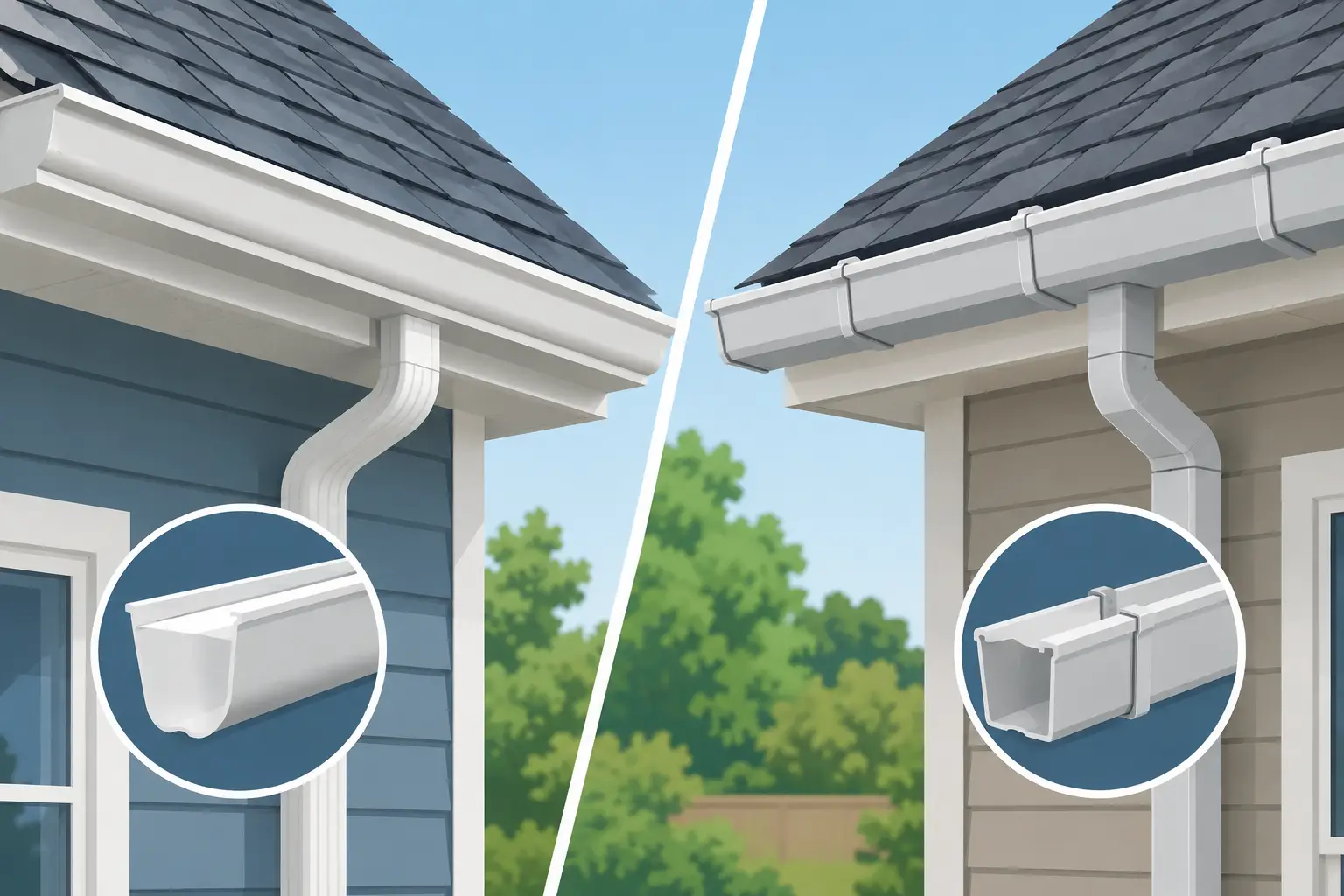






A fast North Texas storm can send hundreds of gallons of water off a typical roof in a single afternoon. Your gutters collect that water, but gutter downspouts decide where it goes next. When they are clogged, damaged, or aimed too close to the house, rainwater can end up against the foundation, beneath landscaping, and in places where it can cause expensive problems.
For Dallas-Fort Worth homeowners, downspouts are not a minor finishing detail. They are a key part of protecting the exterior of your home from heavy rain, windblown debris, soil movement, and standing water. A clean, correctly placed downspout helps keep water moving where it belongs: away from the home.
Gutter Downspouts Need a Clear Exit
A gutter system works as a path. Water runs from the roof into the gutter, travels to the outlet, and moves down through the downspout. If any part of that path is blocked or poorly installed, water can overflow before it reaches the ground safely.
The most common problem is a clog near the top of the downspout. Leaves, roof grit, twigs, nesting material, and even small balls can create a blockage that stops drainage. You may see water spilling over the gutter edge during rain, but the real issue can be hidden inside the downspout.
A downspout also needs to discharge far enough from the foundation. Water that repeatedly lands near the base of the house can saturate the soil. In Texas, where expansive clay soils can swell when wet and shrink when dry, changing moisture levels around the foundation deserve attention. Proper drainage cannot solve every foundation concern, but it can prevent a gutter system from adding unnecessary water near the home.
What Proper Downspout Drainage Looks Like
A working downspout should be firmly attached, unobstructed, and positioned to direct water away from the house. It should not drip from seams, pull away from the wall, or empty into a low area where water pools.
Most homes benefit from a downspout extension that carries water several feet away from the foundation. The exact distance depends on the property’s grade, soil, landscaping, and drainage layout. A short extension may work on a lot that slopes away from the house, while a flatter yard may need a longer path or another drainage solution.
The goal is simple: water should continue away from the home after it leaves the downspout. If it runs back toward the foundation, collects beside a patio, or creates a muddy trench in the flower bed, the system needs adjustment.
Downspouts should also be sized for the roof area they serve. A large roof plane that drains into one undersized downspout can overwhelm the system during a hard storm. Adding another downspout or changing the gutter layout may be a better long-term fix than repeatedly cleaning an overloaded section.
Signs Your Downspouts Need Attention
A quick walk around the house after rainfall can reveal a lot. Look at where water is leaving the downspout and what the ground looks like nearby. Small concerns are usually easier and less costly to correct before the next major storm.
Watch for these signs:
- Water overflowing from gutters or pouring over the sides during rain
- Wet streaks, staining, or mildew on siding near the downspout
- Gutters that sag, separate at seams, or pull away from the roofline
- Eroded mulch, exposed roots, or deep channels in soil below the outlet
- Puddles near the foundation, driveway, walkway, or patio
- A downspout that is loose, bent, crushed, or disconnected from the gutter
Overflow is not always caused by a downspout clog. Gutters can overflow because they are full of debris, pitched incorrectly, too small for the roof, or damaged at a seam. That is why a full inspection matters. Addressing only the visible symptom can leave the underlying drainage issue in place.
Cleaning Downspouts Without Missing the Real Problem
Routine gutter cleaning is the best way to reduce downspout clogs. In many DFW neighborhoods, homeowners should plan for cleaning at least twice a year, typically after heavy leaf drop and before the rainier parts of the year. Homes beneath mature trees, pine trees, or pecan trees may need more frequent service.
Cleaning should include more than scooping debris from the open gutter channel. The downspouts need to be checked and flushed to confirm water is traveling freely from top to bottom. A garden hose can help identify a partial blockage, but water pressure alone will not always clear packed debris, especially around elbows and joints.
Be careful with do-it-yourself cleaning. Working on a ladder near a roof edge creates a real fall risk, and forcing tools into a downspout can dent thin metal or separate a joint. If you notice repeated clogs, loose hangers, rust, leaks, or water damage around the roofline, it is wise to have a trained technician inspect the complete system.
Gutter guards can reduce the amount of leaves entering the system, but they are not a substitute for maintenance. Fine roof grit, seeds, and windblown debris can still collect, and guards that are poorly fitted can create their own drainage problems. Whether guards make sense depends on the surrounding trees, roof design, and the type of debris your home receives.
Repair or Replace? How to Make the Right Call
A simple repair may be enough when the problem is limited to a loose strap, disconnected elbow, missing screw, or short extension. Small leaks at joints can often be sealed or corrected before they spread water down the siding or into a landscaped area.
Replacement is usually the better choice when downspouts are badly corroded, crushed, repeatedly separating, or undersized for the roof section. If the gutters themselves are pulling away, holding standing water, or leaking at multiple seams, the issue may be with the whole gutter system rather than one downspout.
Material matters, but installation matters just as much. Aluminum is a common residential option because it resists rust and is lightweight. Steel can be durable but may eventually corrode if its protective finish is damaged. Copper offers a distinctive appearance and long service life, though it comes at a higher cost. The right choice depends on budget, appearance, local weather exposure, and the condition of the existing system.
When replacing downspouts, avoid treating every home the same way. A professional should consider roof size, gutter capacity, outlet placement, the slope of the yard, landscaping, and where water can safely discharge. A downspout that works well on one side of the home may be wrong for another.
Protecting More Than Your Gutters
Reliable drainage supports the parts of your property that homeowners often overlook until damage appears. Water spilling over gutters can stain siding, rot fascia boards, damage soffits, erode landscaping, and create slippery areas near walkways. Moisture near the exterior can also encourage mold growth in shaded areas and create conditions that attract pests.
Inside the home, water management contributes to comfort and efficiency, too. Exterior leaks and moisture intrusion can lead to repairs that affect insulation, drywall, and indoor air quality. Keeping rainwater moving away from the home is a practical part of maintaining a cleaner, safer property.
On Time Home Experts provides professional gutter cleaning and replacement services for homeowners who want a dependable inspection, clear recommendations, and efficient work without guesswork. A professional visit can identify whether your downspouts only need cleaning or whether the drainage system needs a more complete correction.
Before the next heavy Texas rain, take a look at each downspout while the weather is dry. Make sure it is secure, clear, and carrying water away from the foundation. That small check can help you catch a preventable issue before it becomes a wet wall, damaged landscaping, or a much larger repair.