





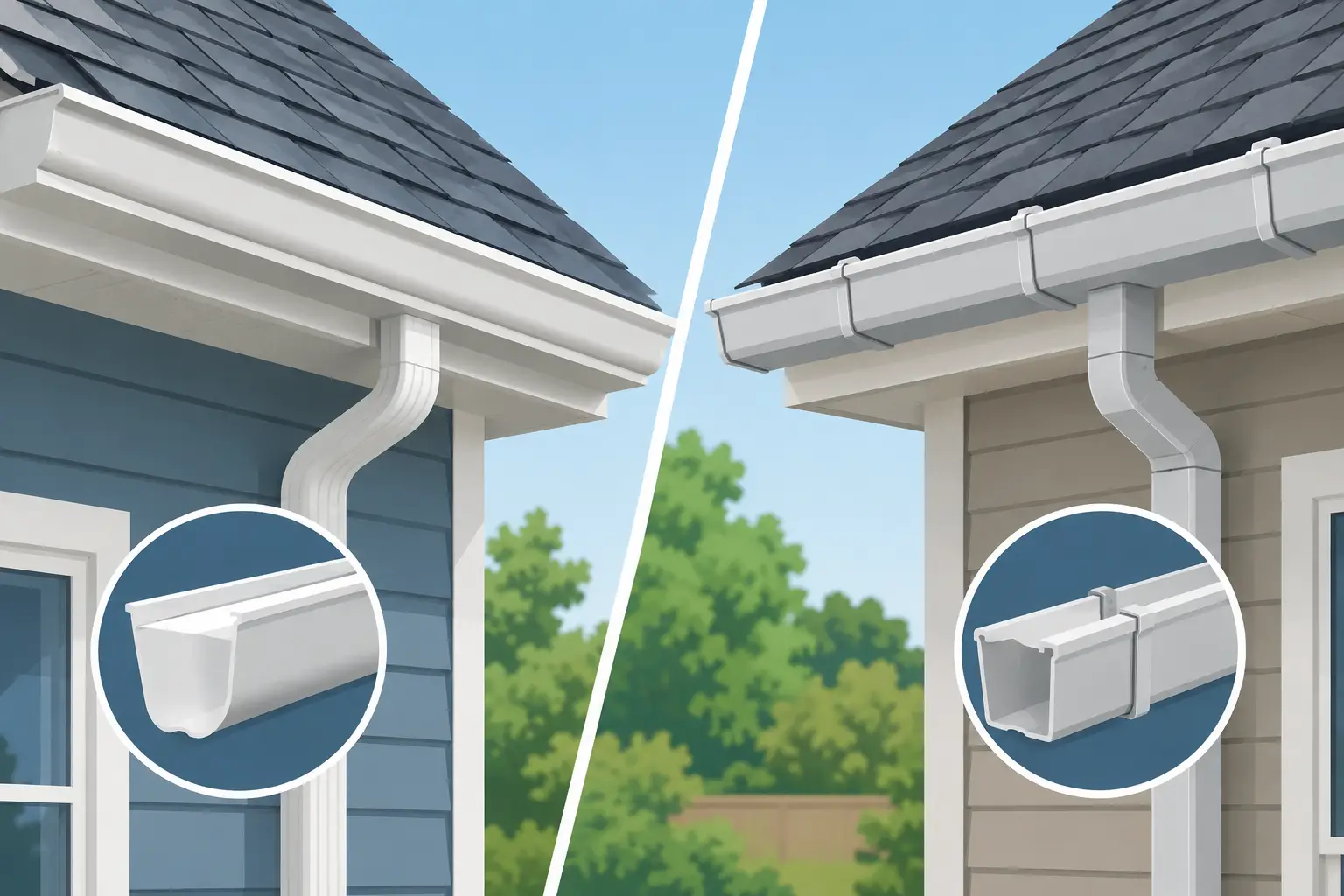
A hard Texas rain can expose a weak gutter system in minutes. When homeowners compare seamless versus sectional gutters, the real question is not which option looks better from the street. It is which system will move water away from the roofline, siding, foundation, and landscaping with fewer problems over time.
Both types can protect a home when they are correctly sized, securely installed, and kept clean. But they are built differently, and those differences affect leak risk, maintenance needs, upfront cost, and how well the gutters hold up through Dallas-Fort Worth storms, falling leaves, wind, and intense summer heat.
Seamless Versus Sectional Gutters: The Main Difference
Sectional gutters are made from pre-cut pieces that are connected with joints, seams, end caps, corners, and fasteners. They are commonly available at home improvement stores and can be installed in shorter runs. Their modular design makes them a familiar option for basic gutter replacements and smaller projects.
Seamless gutters are formed from a continuous piece of material on-site, usually aluminum. A professional measures each roofline and uses a gutter machine to create custom-length sections for that specific home. They still need joints at corners and downspout connections, but they do not have seams every several feet along the straight runs.
That reduced number of joints is the reason many homeowners choose seamless gutters. Every joint is a potential place for debris to collect, sealant to fail, or water to work its way through. Fewer joints generally mean fewer common leak points.
Why Gutter Seams Matter So Much
A gutter does more than catch rainwater. It controls where thousands of gallons of water go when a storm hits. If water overflows or leaks near the house, it can saturate soil around the foundation, stain siding, damage fascia boards, wash out flower beds, and create standing-water problems.
With sectional gutters, the joints must remain sealed and aligned. Over time, temperature changes can cause materials to expand and contract. Texas heat makes that movement more noticeable, especially on long rooflines exposed to direct sun. Sealant can crack, screws can loosen, and debris can settle around the connections.
This does not mean sectional gutters always leak or fail. A well-installed sectional system that receives regular cleaning and repairs can last for years. The trade-off is that it usually asks more of the homeowner in ongoing inspection and maintenance.
Seamless systems are not leak-proof, either. Corner joints, end caps, and downspout outlets still need attention. However, eliminating many of the joints along straight sections removes a frequent source of trouble. For busy homeowners who want to reduce maintenance demands, that difference can be worthwhile.
Appearance and Fit Around Your Home
Because seamless gutters are made to the measurements of your home, they typically provide a cleaner, more tailored appearance. Long, uninterrupted runs can make the roofline look neat and finished, particularly on larger homes or homes with prominent front elevations.
Sectional gutters can also look good when installed carefully. However, their connector pieces are more visible, and a system may look uneven if sections sag, pull apart, or collect grime at the seams. This is especially noticeable on homes with long eaves.
Color matters as well. Aluminum gutter systems are available in a range of colors to coordinate with trim, brick, siding, or soffits. The best choice is one that performs properly first, then complements the home without drawing unnecessary attention to itself.
Custom sizing is not just cosmetic
Professional fitting affects performance. Gutters need the right slope so water travels toward the downspouts instead of pooling in the channel. They also need strong hangers and secure attachment to sound fascia. A custom-length gutter section gives the installer more control over fit, placement, and drainage design.
If the existing fascia is soft, rotted, or damaged, replacing gutters without addressing that issue can lead to loose fasteners and recurring problems. A proper inspection should look beyond the gutter itself.
Cost: Upfront Price Versus Long-Term Value
Sectional gutters usually cost less at the start. The materials are widely available, and individual sections can be easier to purchase and transport. That lower entry cost may make sense for a small detached structure, a temporary repair, or a homeowner working within a very tight budget.
Seamless gutters generally cost more because they require professional measuring, specialized equipment, custom fabrication, and installation. The price can also rise based on gutter size, material, roof height, number of corners, downspouts, and accessibility.
The more useful comparison is long-term value. If a seamless system reduces recurring seam repairs, limits leaks, and protects the areas around the foundation, the higher initial investment may be easier to justify. For a home you plan to own for many years, fewer weak points can mean fewer maintenance headaches.
Still, the best answer depends on the property. A simple one-story home with short gutter runs may not see as large a benefit as a larger home with long rooflines, multiple valleys, heavy tree coverage, and complex drainage needs.
Maintenance Needs for Both Gutter Types
No gutter type can perform well when it is packed with leaves, roof grit, seed pods, or nesting material. Clogs force water over the front edge of the gutter or behind it toward the fascia. They can also cause water to back up in roof valleys and overwhelm the system during heavy rain.
Sectional gutters deserve extra attention at every seam. Look for rusted fasteners, separated connections, cracked sealant, dark water marks, and drips after a storm. Small repairs are easier and less expensive before water reaches wood trim or the home’s exterior walls.
Seamless gutters should also be cleaned and inspected regularly. Check the corners, end caps, and downspout openings, and make sure the gutter is not pulling away from the roofline. If water sits in the channel after rainfall, the slope may need adjustment.
For many North Texas homes, gutter cleaning at least twice a year is a practical starting point: once after spring pollen, seeds, and storms, and again after fall leaf drop. Homes beneath mature trees or pines may need more frequent service. Gutter guards can reduce large debris buildup, but they do not eliminate the need for professional inspection and cleaning.
Choosing the Right Gutter Size and Drainage Plan
Material and construction type are only part of the decision. A gutter system must be designed for the roof’s water load. Heavy rain can quickly overwhelm undersized gutters or too few downspouts, even when the gutters are clean.
Standard 5-inch gutters work well for many homes, but larger 6-inch gutters may be a better fit for steep roofs, large roof areas, long runs, or areas that receive heavy runoff. Downspout placement matters just as much. Water should discharge far enough from the foundation to avoid pooling near the home.
A professional assessment can identify trouble spots such as roof valleys that dump large amounts of water into one location, low areas where water lingers, and downspouts aimed toward walkways or landscape beds. Sometimes the issue is not whether the gutters are sectional or seamless. It is that the current system was never sized or routed correctly.
When Sectional Gutters Can Be a Sensible Choice
Sectional gutters remain a practical option in certain situations. They can work well for a small garage, shed, rental property repair, or a short, straightforward run where budget is the primary concern. They also allow replacement of a damaged segment without rebuilding an entire gutter line.
The key is to treat them as a system that needs routine care. Keep joints sealed, clear out debris before storm season, and repair sagging sections promptly. Neglect is usually what turns a lower-cost installation into water damage and repeated repair bills.
When Seamless Gutters Are Usually Worth It
Seamless gutters are often the stronger choice for homeowners who want a custom fit, fewer joints, and less exposure to routine seam leaks. They are especially well suited to homes with long roof edges, multiple drainage challenges, or landscaping and foundation areas that need dependable water control.
They can also be a good investment when replacing an aging system that has already begun leaking at connections or pulling away from the fascia. Rather than continuing to patch several weak areas, a properly installed custom system can provide a cleaner reset.
On Time Home Experts helps homeowners address gutter buildup and replacement needs with trained professionals, straightforward recommendations, and efficient service. The right solution should protect your property without pushing you into features you do not need.
Before the next major storm, take a walk around your home after a light rain. Look for overflowing corners, dripping seams, wet mulch near the foundation, stains on siding, and downspouts that empty too close to the house. Those small signs can tell you where your gutter system needs attention before a heavier downpour turns a manageable repair into a costly one.