




A cozy fire should smell like seasoned wood, not leave your living room smoky or your home feeling unsafe. Knowing the warning signs of chimney creosote helps homeowners address buildup before it restricts the flue, damages the chimney, or creates the conditions for a dangerous chimney fire.
Creosote is the dark, sticky or crusty residue left behind when wood smoke cools inside a chimney. A small amount can develop with normal fireplace use, but it should never be ignored. In North Texas, occasional cold snaps can lead homeowners to use fireplaces heavily over a short period, which may allow buildup to develop faster than expected.
What Creosote Looks Like and Why It Matters
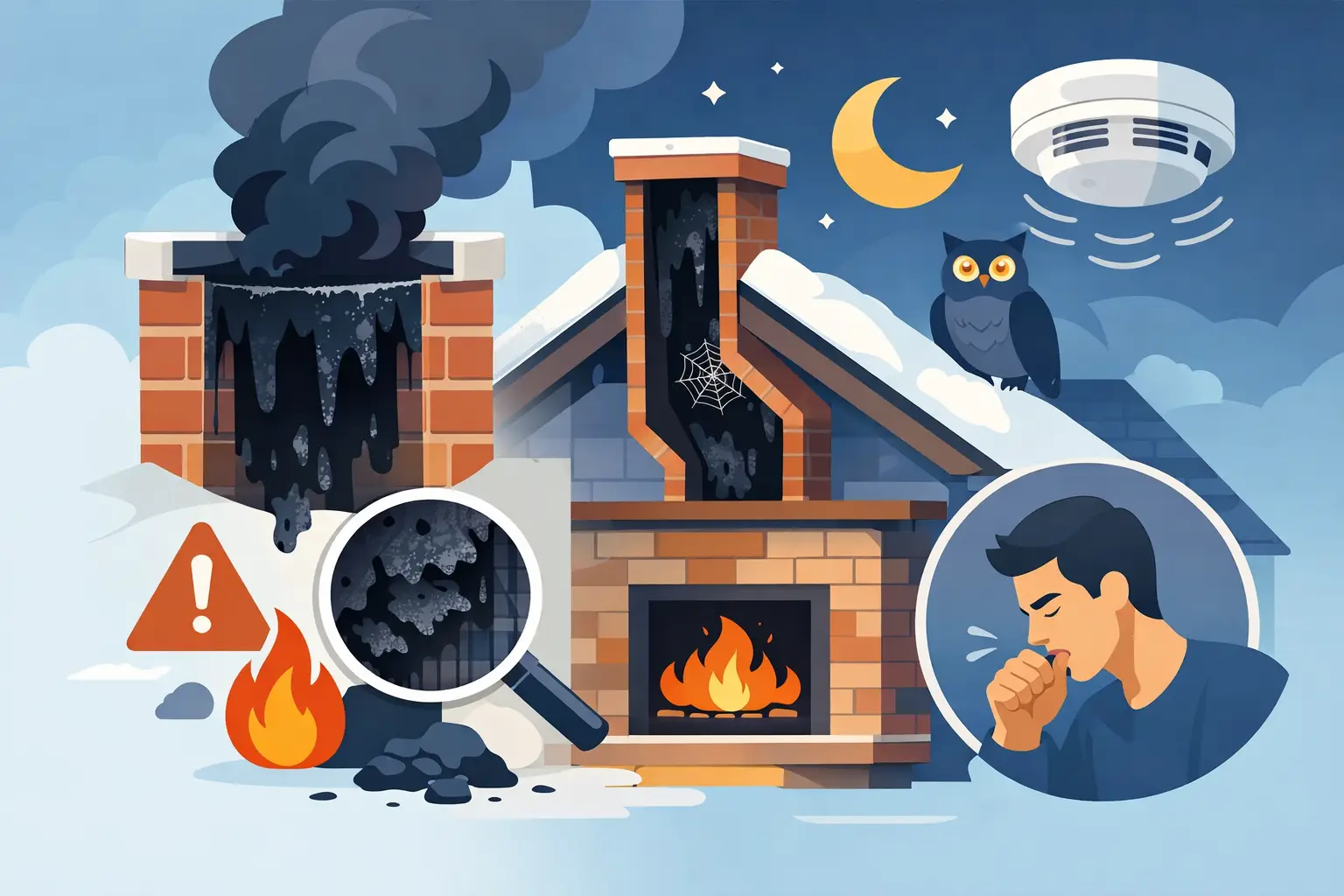
Creosote does not always look the same. Early-stage buildup may appear as a dry, dusty black or brown coating that can be brushed away. As it thickens, it may become flaky, tar-like, shiny, or hard and glazed. The glazed form is especially concerning because it is highly combustible and more difficult to remove.
The risk is not limited to visible residue near the fireplace opening. Creosote often collects farther up the flue, where homeowners cannot safely inspect it. When ignited, it can burn intensely enough to crack flue liners, damage masonry, and spread fire to nearby framing. Even a small chimney fire can cause hidden damage that affects the chimney’s ability to vent smoke and gases safely afterward.
7 Warning Signs of Chimney Creosote Buildup
1. A strong smoky or burnt odor
A fireplace that smells smoky when it is not in use deserves attention. Creosote has a sharp, campfire-like odor that can become more noticeable during humid or rainy weather, when moisture moves down the chimney. The smell may also become stronger after you run the air conditioner or heating system because changes in air pressure can pull chimney odors into the home.
An odor alone does not confirm how much creosote is present, but it is a clear reason to schedule an inspection. Do not try to mask the odor with candles or room sprays. Those products do nothing to remove the underlying fire hazard.
2. Black flakes or soot falling into the firebox
Look inside the fireplace before starting a fire. Black flakes, gritty debris, or unusually heavy soot on the floor of the firebox can indicate that creosote is loosening from the flue. A light dusting of ash after use is normal. Thick black material that keeps appearing is not.
Falling debris can also mean an animal nest, deteriorating mortar, or a damaged flue liner is present. Because several chimney problems can produce similar debris, a professional assessment is the safer choice.
3. Smoke enters the room when you light a fire
A properly functioning chimney should establish a draft that pulls smoke up and out. If smoke spills into the room after the damper is fully open and the fire is properly started, a partial blockage may be restricting airflow. Creosote buildup is one possible cause, along with wet wood, a cold flue, a closed damper, or a chimney cap obstructed by debris.
Never keep burning wood in a smoky fireplace to see if the issue improves. Smoke contains fine particles and carbon monoxide, and continued use can expose your household to unhealthy indoor air. Put the fire out safely, ventilate the space if needed, and have the system checked before using it again.
4. The fire burns poorly or is hard to keep going
When a chimney cannot draft effectively, fires may seem lazy, produce excessive smoke, or struggle to stay lit. You might notice flames that die down soon after lighting, even with dry firewood and enough kindling. This can be frustrating, but it is also a safety signal.
Draft issues have more than one cause, so this is a situation where the answer depends on the fireplace, the chimney design, and weather conditions. Still, creosote is one of the first conditions a trained technician should rule out because it can narrow the flue passage and reduce the chimney’s ability to vent.
5. A shiny, tar-like coating inside the chimney
If you can safely see a glossy black coating just above the firebox, do not scrape at it or use household chemicals. That hard, tar-like layer may be glazed creosote. It is more flammable than loose soot and usually requires specialized tools and professional cleaning methods.
A glazed surface can also hide cracks or other chimney damage. Attempting an aggressive DIY cleaning may damage the liner or knock debris into an area that is difficult to reach. A camera inspection can help determine what is actually inside the flue and what level of cleaning is appropriate.
6. Loud popping, roaring, or rumbling from the chimney
A chimney fire does not always look like flames shooting from the top of the house. Sometimes the signs are a loud roar, deep rumbling sound, popping, or an intense hot smell coming from the chimney area. You may also notice thick smoke, sparks, or flames visible from the chimney top.
Treat these signs as an emergency. Get everyone out of the home, call 911, and do not use the fireplace again until the chimney has been professionally inspected. Even if the event seems brief, heat from a chimney fire can compromise liners and surrounding materials without obvious exterior damage.
7. More than a season has passed without an inspection
The most common warning sign is one homeowners cannot see: overdue maintenance. If you use a wood-burning fireplace regularly, creosote can build up faster than expected based on the type of wood, moisture content, burn habits, and chimney configuration. Burning unseasoned wood, allowing fires to smolder, and restricting airflow can all increase buildup.
An annual chimney inspection is a sensible baseline for most homeowners, especially before the cooler season begins. A home that uses its fireplace only a few times each year may need less cleaning than a home that relies on it often, but an inspection is still the best way to make that call based on actual conditions rather than guesswork.
What Homeowners Should Do Next
If you notice one of these signs, stop using the fireplace until you understand the cause. Make sure the damper is closed once the fireplace is cool to prevent drafts, odors, and outdoor debris from entering, but do not close it while a fire or hot embers remain. Avoid pouring water into a hot fireplace, as sudden temperature changes can damage masonry or metal components.
Professional chimney service should include more than a quick sweep of the firebox. The technician should assess the flue for creosote, check for obstructions and visible damage, and explain what was found in clear terms. Ask questions about the amount and type of buildup, whether the chimney liner appears sound, and when your next inspection should be scheduled. Honest service means you understand the work being recommended before it begins.
For Dallas-Fort Worth homeowners, On Time Home Experts provides professional chimney and fireplace cleaning designed to help keep your system cleaner, safer, and ready for use. Trained technicians can identify conditions that are easy to miss from the hearth, giving you a clearer picture of your chimney’s condition.
Reduce Future Creosote Buildup
The right burning habits can slow creosote formation, although they cannot replace regular inspection and cleaning. Use dry, seasoned firewood rather than green or damp wood. Dry wood burns hotter and cleaner, while wet wood creates more smoke and residue. Keep the damper fully open during use and build fires that burn steadily instead of smoldering for hours.
Avoid burning treated lumber, painted wood, cardboard, trash, or household materials in the fireplace. These can release harmful fumes and leave residues that do not belong in a residential chimney. If you are unsure whether a piece of wood is suitable, leave it out.
Your fireplace should provide warmth and comfort, not a question mark over your family’s safety. Paying attention to early changes in smell, smoke, draft, and residue gives you time to schedule professional care before a small chimney maintenance issue becomes a costly repair or a fire risk.