

A Dallas-Fort Worth attic can become brutally hot for much of the year, and weak insulation lets that heat work its way into the rooms below. When homeowners find old, thin, or uneven material overhead, the decision usually comes down to insulation removal versus insulation topping. The right answer is not always to remove everything, and it is not always safe or effective to simply add more.
A professional attic inspection should look beyond insulation depth. Moisture, rodent activity, air leaks, duct conditions, and the age of the existing material all affect whether your home needs a fresh start or a properly planned insulation upgrade.
When Insulation Topping Is the Smart Choice
Insulation topping means adding new insulation over existing attic insulation to reach the recommended thermal resistance, or R-value, for the home. In many Texas homes, this is the most practical option when the existing insulation is dry, reasonably clean, and still performing as a stable base layer.
Older fiberglass batts or loose-fill insulation may have settled over time, leaving the attic floor with insufficient coverage. A topping installation can restore the depth needed to slow heat transfer, helping your air conditioner run more efficiently during long North Texas summers and helping rooms stay warmer during cold snaps.
Topping can be a good fit when the existing insulation has no signs of contamination, major odor, mold, or pest damage. It can also cost less than a full removal because technicians do not have to vacuum out and dispose of the old material before installing the new layer.
However, more insulation is not a cure for every comfort problem. If conditioned air is escaping through gaps around plumbing penetrations, wiring openings, attic hatches, or recessed fixtures, the attic should be air sealed before new insulation goes in. Otherwise, your home may still feel drafty, dusty, or unevenly cooled even with a thicker layer overhead.
What a Proper Topping Project Should Include
A quality topping project starts with an attic evaluation, not a quick estimate based only on square footage. The technician should assess existing insulation depth, identify bare or compressed areas, and look for signs that another issue needs attention first.
Ventilation also matters. Your attic needs a balanced path for heat and moisture to leave through properly designed intake and exhaust ventilation. Insulation should not block soffit vents, and baffles may be needed to preserve airflow at the roof edge. Ductwork, electrical components, and access paths should remain appropriately protected and accessible.
For many homeowners, topping is the efficient choice because it improves energy performance without discarding material that is still usable. The key is confirming that the old insulation is truly clean and dry before covering it.
When Insulation Removal Is Necessary
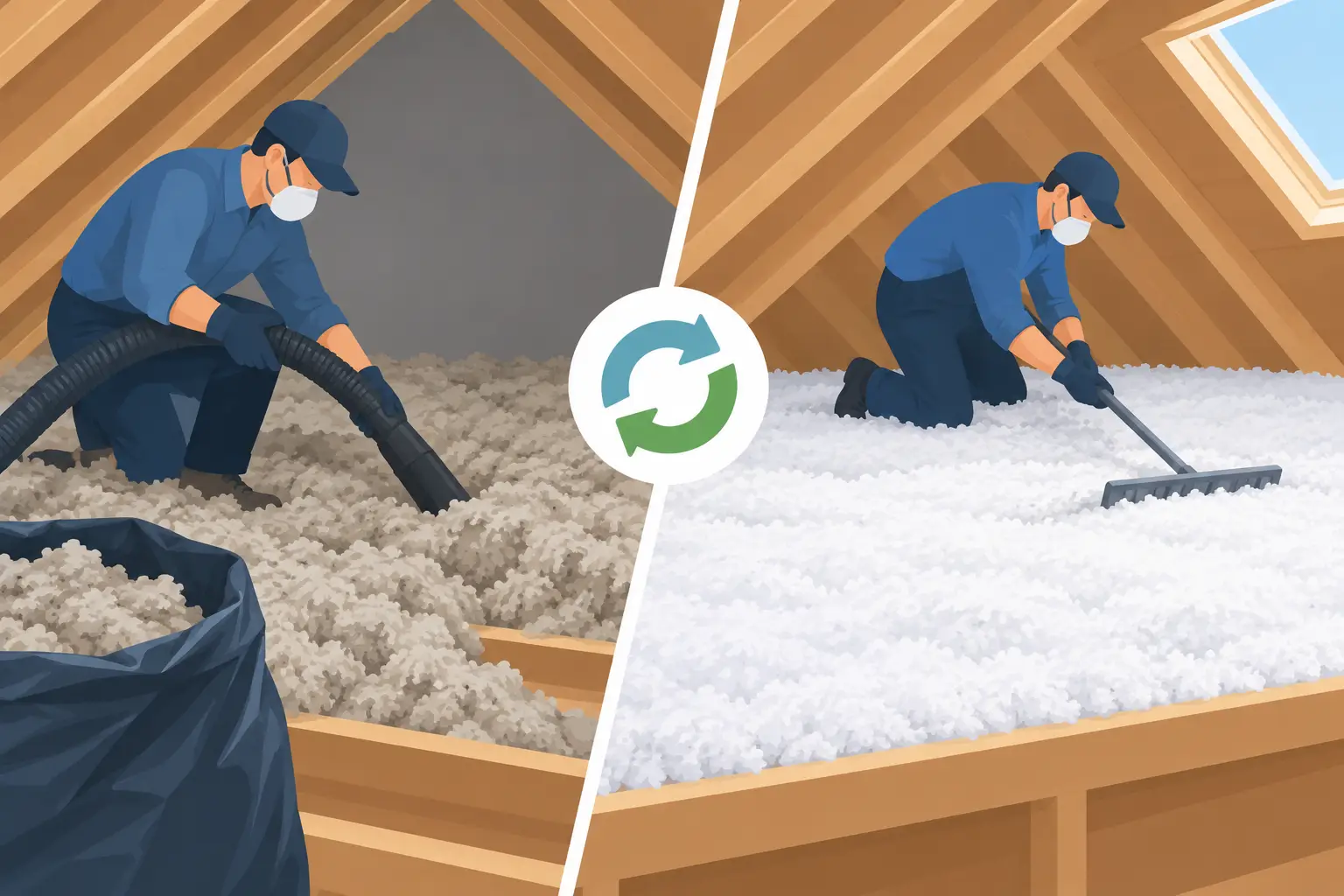
Insulation removal is usually the better choice when the old material has become a health, odor, moisture, or performance concern. Covering damaged insulation can trap the source of the problem in the attic and make future repairs more difficult.
Rodent infestation is one of the most common reasons for removal. Mice, rats, squirrels, and other pests can leave urine, droppings, nesting material, and strong odors throughout the insulation. Even after pest entry points are addressed, contaminated insulation may continue affecting attic air and the air moving through leaks in the ceiling plane.
Water damage is another major concern. A roof leak, plumbing leak, or condensation problem can compress insulation and reduce its effectiveness. Wet insulation may also support mold growth on nearby wood, drywall, or other attic surfaces. Before replacement, the moisture source has to be found and corrected. New insulation installed over an unresolved leak will only repeat the problem.
Removal may also make sense after smoke damage, a major renovation, or years of heavy dust and debris accumulation. In these situations, a clean attic floor gives technicians a better opportunity to inspect framing, seal air leaks, repair damaged ducts, and install insulation evenly from the ground up.
Materials That Require Extra Caution
Not every older insulation material should be disturbed without an assessment. Vermiculite insulation, which can resemble small gray-brown pebbles, may be associated with asbestos contamination. If you see vermiculite or are unsure what is in your attic, do not rake it, bag it, vacuum it, or install new insulation over it as a DIY project. A qualified professional can advise on appropriate testing and next steps.
Even common fiberglass or cellulose insulation can release dust and irritants when handled improperly. Professional removal equipment is designed to contain material as it is extracted, reducing the mess and exposure that can come with trying to remove attic insulation by hand.
Insulation Removal Versus Insulation Topping: Key Factors
The choice comes down to the condition of what is already in your attic. Topping generally makes sense when the insulation is dry, odor-free, free of pest contamination, and simply too thin to meet your home’s comfort and efficiency needs.
Removal is the stronger long-term solution when the insulation is contaminated, wet, mold-affected, heavily compacted, or concealing an attic issue that needs repair. It costs more upfront, but it can prevent you from paying twice – once to add material and again to remove it after the underlying problem returns.
Your comfort concerns can offer useful clues. If certain rooms are hot in summer but the attic is otherwise clean and dry, added insulation and air sealing may help substantially. If you notice musty odors, pest sounds, droppings, ceiling stains, or persistent allergy irritation, a full inspection is more urgent than adding another layer.
Why Attic Air Sealing and Ventilation Belong in the Conversation
Insulation slows heat flow. It does not stop air movement through cracks and openings. That distinction matters in Texas homes, where attic heat can be intense and air conditioning systems work hard for months at a time.
Before topping or replacing insulation, sealing gaps around ceiling penetrations can reduce the flow of hot attic air, dust, and pollutants into living spaces. Attic access doors are another frequent weak point. An unsealed or uninsulated hatch can undermine the value of otherwise well-installed insulation.
Ventilation should be evaluated alongside insulation, but more ventilation is not automatically better. The goal is a properly designed system that helps control attic heat and moisture without creating unnecessary openings or disrupting the home’s intended airflow. A trained technician can identify blocked soffit vents, disconnected ducts, or other conditions that affect both attic performance and indoor comfort.
Avoid the “Add More and Hope” Approach
DIY insulation projects can look straightforward, but attics involve more than spreading material across the floor. Electrical wiring, recessed lights, combustion vents, bathroom exhaust ducts, HVAC equipment, and limited walking surfaces all require careful handling. Incorrect installation can block ventilation, cover needed clearances, compress insulation, or leave major air leaks untouched.
A professional team can inspect the attic, explain whether removal or topping is justified, and show you where the real concerns are. Homeowners deserve a clear recommendation based on the condition of their attic, not pressure to buy a service they do not need.
For DFW homeowners, On Time Home Experts can help evaluate insulation concerns as part of a practical plan for cleaner air, better comfort, and improved home efficiency. Whether your attic needs targeted topping or a complete removal and replacement, the goal is the same: a dry, clean, properly insulated attic that supports the rest of your home.
The next time an upstairs bedroom will not cool down or your energy bills climb without a clear reason, do not assume the answer is simply more insulation. Start with an honest attic assessment, address the conditions that caused the problem, and choose the solution that protects your home for the long term.