



Smoke drifting into the living room when you light a fire is more than an inconvenience. It can mean combustion gases, soot, and potentially carbon monoxide are not leaving your home as they should. Knowing how to tell chimney blockage early helps protect your family, prevent fireplace damage, and avoid turning a quiet evening at home into a safety concern.
A chimney can become restricted gradually, often without obvious warning. In North Texas, windblown debris, nesting animals, heavy rain, and long periods without fireplace use can all contribute. The safest response is to stop using the fireplace when warning signs appear and arrange a professional inspection rather than trying to force the problem out yourself.
The Most Common Signs of a Chimney Blockage
A properly functioning chimney creates draft: warm air and combustion byproducts rise and exit through the flue. When that pathway is narrowed or blocked, the symptoms usually show up inside the home first.
Smoke enters the room
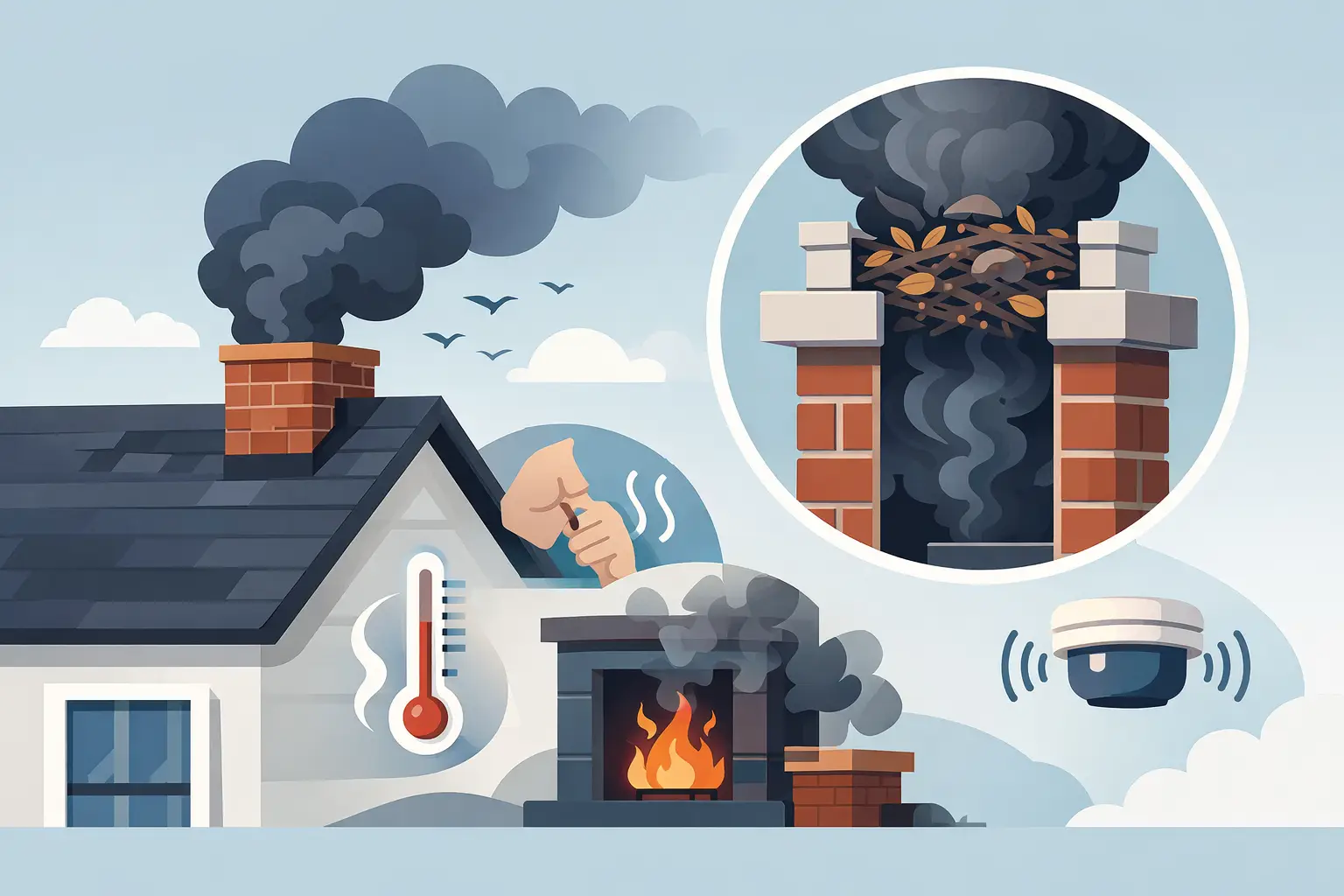
Smoke rolling out from the fireplace opening is the clearest warning sign. A small amount of smoke may appear while starting a cold fire, especially if the flue is cold or the damper is not fully open. But ongoing smoke in the room, a fireplace that suddenly smokes more than usual, or smoke that worsens after the fire gets going should not be ignored.
First, confirm the damper is fully open. If it is open and smoke still backs up, stop adding wood and allow the fire to go out safely. The issue may be soot buildup, debris, a bird nest, a damaged flue liner, or another obstruction that needs professional attention.
A strong smoky or musty odor
A fireplace can smell faintly of ash after use, but persistent odors are different. A sharp smoky smell, damp soot odor, or musty scent coming from the firebox may point to creosote deposits, moisture, decaying leaves, or animal material in the chimney.
Odors often become stronger during humid, rainy, or windy Texas weather because changes in air pressure can push chimney odors back into the house. While odor alone does not prove a complete blockage, it is a good reason to have the chimney checked before your next fire.
Poor draft or a fire that will not stay lit
If a fire struggles to establish itself, burns weakly, or seems to pull smoke toward the room, poor draft may be the problem. A partial blockage can limit airflow enough to make lighting difficult without completely stopping exhaust from leaving the chimney.
Draft issues are not always caused by debris. A tightly sealed home, a powerful kitchen exhaust fan, or a nearby bathroom fan can compete for air and affect fireplace performance. Even so, it is wise to rule out chimney obstruction first, especially if the issue is new or getting worse.
Black stains, falling soot, or debris in the firebox
Look for an unusual amount of soot on the fireplace surround, dark marks above the opening, or flakes and debris falling into the firebox. These signs can indicate that smoke is not moving up the flue efficiently.
Twigs, leaves, feathers, nesting material, and small pieces of deteriorating masonry can also collect in the firebox. Never reach up into the flue to investigate. Sharp edges, unstable deposits, hidden animals, and heavy creosote make this a job for trained chimney professionals with the right inspection equipment.
What Can Block a Chimney?
Chimney blockages range from minor restrictions to complete obstructions. The cause matters because the right repair may involve cleaning, animal removal, cap replacement, flue repair, or masonry work.
Creosote is one of the most common concerns in wood-burning fireplaces. This sticky, flammable residue forms when wood smoke cools inside the flue. Over time, it can build up along the chimney walls and reduce the opening. Heavy creosote is also a fire hazard, which is why chimney cleaning is not simply cosmetic maintenance.
Outdoor debris is another frequent culprit. Leaves, branches, seed pods, and windblown material can enter an uncapped or damaged chimney. Birds, squirrels, and other animals may build nests in a flue, particularly during seasons when the fireplace is used less often. A chimney cap helps reduce these risks, but it still needs periodic inspection.
Less visible problems can be just as serious. A collapsed flue liner, loose brick, damaged mortar, or a shifted chimney component can restrict the passageway. These conditions are not safely diagnosed from the fireplace opening and may require a camera inspection.
How to Tell Chimney Blockage From a Simple Operating Issue
Homeowners sometimes assume any smoky fireplace means the chimney is clogged. The truth depends on what is happening and when. A closed damper, damp firewood, or an improperly built fire can create smoke without an actual blockage.
Start with the basics only when the fireplace is cool and unused. Make sure the damper is open, use dry seasoned firewood, and avoid burning cardboard, trash, treated lumber, or overly wet logs. These materials create excess smoke and deposits. If normal operation does not improve the draft, do not keep testing the fireplace with more fires.
A pattern is often revealing. One brief smoky startup on a very cold day may be a draft issue. Repeated smoke backup, soot accumulation, persistent odor, or visible debris points more strongly to a restricted flue. If your fireplace has not been inspected or cleaned in several years, scheduling service before using it again is the responsible choice.
Gas Fireplace Warning Signs Need Quick Attention
Gas fireplaces do not produce wood smoke, but their venting systems can still become blocked or damaged. Do not assume a gas unit is maintenance-free.
Yellow, lazy flames, soot around the glass or vents, unusual odors, frequent pilot outages, and condensation can signal a venting or combustion problem. If you smell gas, leave the area, avoid switches or open flames, and contact your gas utility or emergency services as appropriate. If a carbon monoxide alarm sounds, get everyone outside immediately and call for help.
Never remove gas fireplace components or attempt to clear a vent on your own. Proper diagnosis requires a qualified technician who can assess the appliance and its venting system safely.
Why Waiting Can Cost More Than a Cleaning
A partially blocked chimney may still seem usable, which is why homeowners sometimes put off service. Unfortunately, a restriction can worsen with every fire. More smoke and creosote may cling to the flue, while moisture and debris can accelerate deterioration.
The larger concern is safety. Blocked flues can send combustion gases into living spaces and raise the risk of chimney fires when creosote is present. Smoke damage to walls, furniture, and carpeting can also become an expensive cleanup issue. Addressing an early warning sign is usually simpler than responding after a backup, animal intrusion, or fire-related event.
For Dallas-Fort Worth homeowners, fireplace service is especially valuable before the first cold spell. A chimney that sat unused through spring storms and summer heat may have collected debris or developed a problem that is not visible from below.
When to Call a Chimney Professional
Stop using your fireplace and schedule an inspection if smoke enters the room repeatedly, you see nesting material or debris, odors persist, soot is falling, or the fireplace suddenly drafts poorly. You should also call for service after a chimney fire, storm damage, suspected animal activity, or any carbon monoxide concern.
A professional visit can determine whether the flue needs cleaning, whether the chimney cap is damaged, and whether the liner or masonry has a more serious issue. On Time Home Experts provides homeowner-focused chimney and fireplace cleaning with trained professionals who can help identify conditions that should not be left to guesswork.
Your fireplace should add warmth and comfort, not leave you wondering where the smoke is going. If something feels different, trust the warning signs and have the chimney checked before the next fire.