

A fireplace can make a North Texas home feel comfortable on a cold evening, but it is not a system to ignore between seasons. The choice between chimney cleaning vs repair comes down to one question: Is the problem buildup that needs to be removed, or is something damaged that needs to be corrected? Knowing the difference can help protect your family, your home, and your ability to use the fireplace with confidence.
Cleaning and repair often work together, but they solve different problems. A professional visit can reveal whether your chimney simply needs routine maintenance or whether a structural, venting, or moisture issue requires additional attention.
Chimney Cleaning vs Repair: The Core Difference
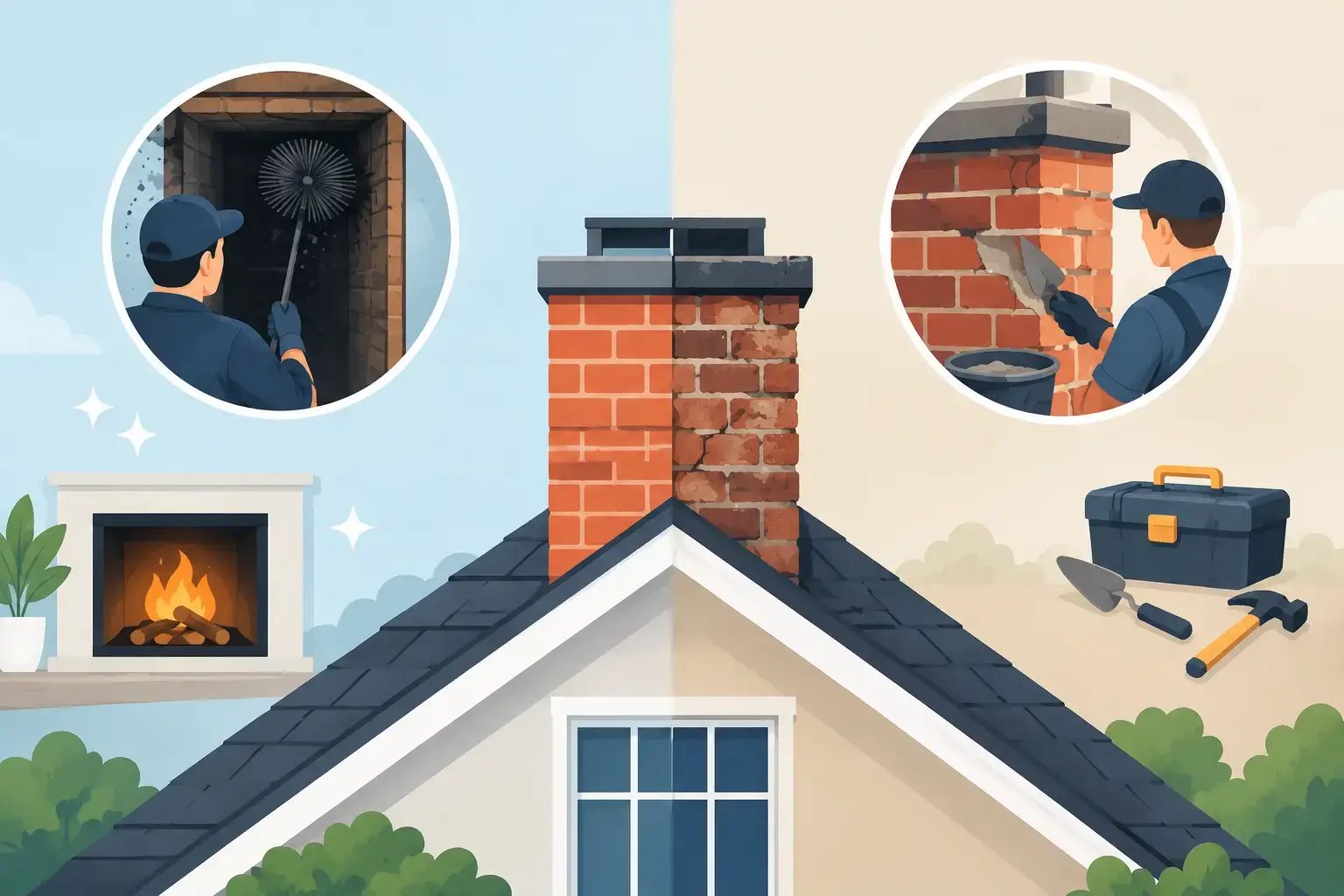
Chimney cleaning removes soot, creosote, ash, debris, and blockages from the fireplace, smoke chamber, flue, and other accessible parts of the system. Creosote is a dark, combustible residue created when wood burns. Over time, it can collect inside the flue and raise the risk of a chimney fire.
Repair addresses a condition that cleaning cannot fix. This may include damaged flue liners, cracked masonry, loose mortar, a broken chimney cap, deteriorated flashing, damaged dampers, or problems caused by water entering the chimney. A clean chimney with a cracked liner is still not a safe chimney to operate. Likewise, a repaired chimney can quickly develop new issues if heavy buildup or a nest is left inside the flue.
For most homeowners, the practical answer is not choosing one service forever. It is scheduling a professional evaluation and completing the work your system actually needs. This approach avoids paying for unnecessary work while ensuring real safety concerns are not overlooked.
When Chimney Cleaning Is the Right Service
Routine cleaning is generally needed when the chimney has been used regularly, especially for wood-burning fires. Even an occasional fire leaves residue behind, and Texas weather can carry leaves, dust, and pests into an uncapped or poorly protected chimney.
A cleaning may be the right next step if you notice soot around the fireplace opening, a stronger-than-usual smoky odor, visible debris in the firebox, or reduced airflow when you light a fire. Smoke entering the room instead of traveling up the chimney can also point to a blockage or excessive buildup. Birds, squirrels, and other animals may build nests that restrict the flue and create an immediate ventilation concern.
Cleaning is preventive maintenance. It helps remove fuel that could contribute to a chimney fire and supports proper draft, which is the upward movement of smoke and combustion gases. Better draft also means less chance of smoke odors and particles affecting your indoor air.
A professional cleaning is more thorough than removing ashes from the firebox. Trained technicians use proper tools to reach soot and creosote inside the flue while protecting the surrounding living space from dust and debris. During the appointment, they can also identify visible conditions that may call for repair.
Signs Your Chimney May Need Repair Instead
Some warning signs point beyond ordinary maintenance. If you see cracked bricks, crumbling mortar, rust on the damper or firebox, staining on walls near the fireplace, or white chalky deposits on exterior masonry, schedule a professional inspection. These issues can indicate moisture intrusion, material deterioration, or a venting problem.
Water is one of the most common causes of chimney damage. Rain can enter through a missing or damaged cap, while failed flashing can allow water to work between the chimney and roof. Over time, repeated wetting and drying can weaken mortar joints, damage masonry, and create leaks inside the home. Freezing temperatures can make the damage worse when trapped water expands.
A damaged flue liner is another concern that should not be ignored. The liner helps contain heat, smoke, and combustion gases as they move outside. Cracks, gaps, or deterioration can allow heat and gases to reach areas where they do not belong. Repair needs vary based on the type and extent of damage, so a professional assessment matters before deciding on the correct solution.
You should also pay attention to changes in how the fireplace performs. Persistent smoke in the room, unusual odors, a damper that will not open or close properly, and signs of animals entering the home through the fireplace all deserve prompt attention. Do not keep using the fireplace while a potential safety issue is unresolved.
Why Cleaning Alone Cannot Solve Every Problem
It can be tempting to request a cleaning when something seems wrong because it sounds like the simpler and less expensive option. In some cases, cleaning will solve the problem. A blocked flue or heavy creosote accumulation may be the reason smoke is backing up into the room.
But cleaning cannot seal roof flashing, rebuild damaged mortar, replace a broken cap, or correct a compromised liner. Trying to use the fireplace after a cleaning without addressing these conditions can expose your home to water damage, poor ventilation, smoke intrusion, or fire risk.
On the other hand, repair should not be treated as a substitute for cleaning. Replacing or fixing a component does not remove flammable creosote already inside the flue. The safest path is to address both maintenance and repair needs when the system calls for them.
How Often Should a Chimney Be Cleaned or Inspected?
Frequency depends on how often you use the fireplace, what you burn, the age and condition of the chimney, and whether it has had past problems. A wood-burning fireplace used throughout the season typically needs more regular attention than one used only a few times a year. Burning unseasoned wood can also create more creosote than properly dried firewood.
As a practical rule, homeowners should have their chimney professionally inspected at least once a year and cleaned when buildup or use warrants it. An annual inspection is especially helpful before fireplace season begins. It gives you time to address any repairs before you want to use the system.
Even gas fireplaces may require chimney or vent inspections. They do not create creosote like wood-burning systems, but their venting components, caps, connections, and pathways still need to function correctly. Debris, corrosion, and animal activity can affect gas fireplace venting too.
The Value of a Professional Evaluation
A proper chimney service visit is not just about making the fireplace look clean. It is about evaluating how the system removes smoke, heat, and gases from your home. Professionals can check accessible areas for buildup, obstructions, moisture damage, damaged components, and signs that a repair recommendation is needed.
For busy homeowners, this helps replace guesswork with clear information. You should understand what was found, why it matters, and whether the recommendation is maintenance, repair, or both. Straightforward service and honest explanations make it easier to prioritize work without surprises.
At On Time Home Experts, trained professionals help homeowners address chimney and fireplace concerns with safety, cleanliness, and dependable service in mind. A clean, properly functioning chimney supports a safer home and a more comfortable fireplace season.
Simple Steps Between Professional Visits
Homeowners should never attempt to repair a flue liner, climb onto the roof to fix a chimney cap, or use a fireplace that appears damaged. Those jobs require the right training and equipment. However, there are a few safe habits that can reduce avoidable problems.
Use dry, seasoned firewood if you have a wood-burning fireplace, and avoid burning trash, treated lumber, or materials not intended for fireplaces. Watch for water stains, new odors, falling mortar, and changes in how smoke exits. Keep the fireplace area clear, and make sure working smoke and carbon monoxide alarms are installed in appropriate areas of the home.
If your fireplace begins smoking indoors, produces a sharp or unusual odor, or shows visible damage, stop using it until it has been checked. Early service is usually simpler than waiting for a minor issue to become a larger repair.
A chimney should not be an out-of-sight, out-of-mind part of your home. Whether you need cleaning, repair, or both, timely professional care lets you enjoy your fireplace with fewer questions and greater peace of mind.