




A vent cover with a little dust may look like a minor housekeeping issue. A dryer vent packed with lint, a bathroom exhaust fan that cannot move moisture, or HVAC ducts coated with buildup can affect far more than appearances. They can contribute to lingering odors, reduced comfort, higher energy use, moisture concerns, and, in the case of dryer vents, a real fire risk.
This home vent cleaning guide helps homeowners understand which vents need attention, what can be handled safely at home, and when trained service is the better choice. For Dallas-Fort Worth homes, where long cooling seasons, pollen, pet dander, and humidity can all affect indoor conditions, routine ventilation maintenance is a practical part of protecting your home.
Home Vent Cleaning Guide: Know What You Are Cleaning
Not every vent serves the same purpose, so each one needs a different approach. Your HVAC supply and return vents circulate heated and cooled air throughout the house. Dryer vents carry hot, damp air and lint outside. Bathroom exhaust vents remove moisture, while kitchen range vents help move smoke, grease, and cooking odors away from the living space.
A fireplace chimney is also part of your home’s ventilation and safety system, although it requires its own specialized inspection and cleaning process. Treating all these systems as if they need the same brush or vacuum can cause damage or leave the real problem untouched.
Start by looking at how each system is performing. Rooms that feel stuffy, dust that returns quickly after cleaning, weak airflow at certain registers, unusual odors when the HVAC runs, and a dryer that takes more than one cycle to dry clothes are all useful warning signs. They do not automatically mean every duct or vent needs cleaning, but they do tell you that an inspection is worthwhile.
Start With a Safe Home Inspection
Before cleaning anything, turn off the system connected to the vent. Switch off the HVAC unit at the thermostat and, if you will be removing a register or working near moving equipment, at the appropriate breaker. Unplug the dryer before accessing its vent connection. Safety comes first, especially around electrical components, sharp sheet metal, and hot appliances.
Walk through the home and check visible vent covers, registers, and exhaust grilles. Look for heavy dust, pet hair, discoloration, loose covers, or signs of moisture. In bathrooms, peeling paint, mildew around the grille, or a mirror that stays fogged long after a shower may mean the fan is not exhausting properly. At the exterior dryer vent, make sure the flap opens when the dryer runs and closes when it is off.
Do not overlook the return air grilles. These larger vents pull air back to the HVAC system, and they often collect more visible dust than supply registers. A clogged or dirty HVAC filter can make the situation worse by restricting airflow and allowing particles to circulate longer. Check your filter monthly and replace it based on the manufacturer’s guidance, your household conditions, and the filter type. Homes with pets, smokers, or allergy concerns may need more frequent changes.
What Homeowners Can Clean Safely
Routine surface cleaning goes a long way. Remove register covers carefully, wash them with mild soap and water, and allow them to dry completely before reinstalling. Vacuum around the vent opening using a brush attachment, but avoid pushing a hose deep into the ductwork. That can dislodge debris without actually removing it and may damage flexible ducts or internal connections.
For bathroom exhaust fans, remove the grille and vacuum away surface dust. If the grille is washable, clean and dry it before putting it back. Keep water away from the motor and wiring. If the fan still sounds loud, runs weakly, or fails to clear humidity after surface cleaning, it may have a mechanical issue or a blocked exhaust path that needs professional attention.
Dryer vent maintenance deserves special care. Clean the lint screen before every load and occasionally wash it with warm water and a soft brush to remove residue from dryer sheets or fabric softener. Vacuum the lint-screen housing only if you can do so without forcing tools into the appliance. Check behind the dryer for crushed or kinked transition ducting, which restricts airflow and allows lint to collect.
There are a few tasks homeowners should avoid:
- Using leaf blowers, high-pressure air, or improvised tools inside ductwork
- Spraying fragrances, disinfectants, or sealants into HVAC ducts
- Disconnecting hard-to-reach dryer vent runs without knowing how to reconnect and seal them
- Climbing onto the roof to access a high or difficult exterior exhaust outlet
These shortcuts can create new problems, including disconnected ducts, damaged equipment, airborne dust, and hidden lint buildup. A clean-looking grille does not prove that the full ventilation path is clear.
When Professional Vent Cleaning Is the Right Call
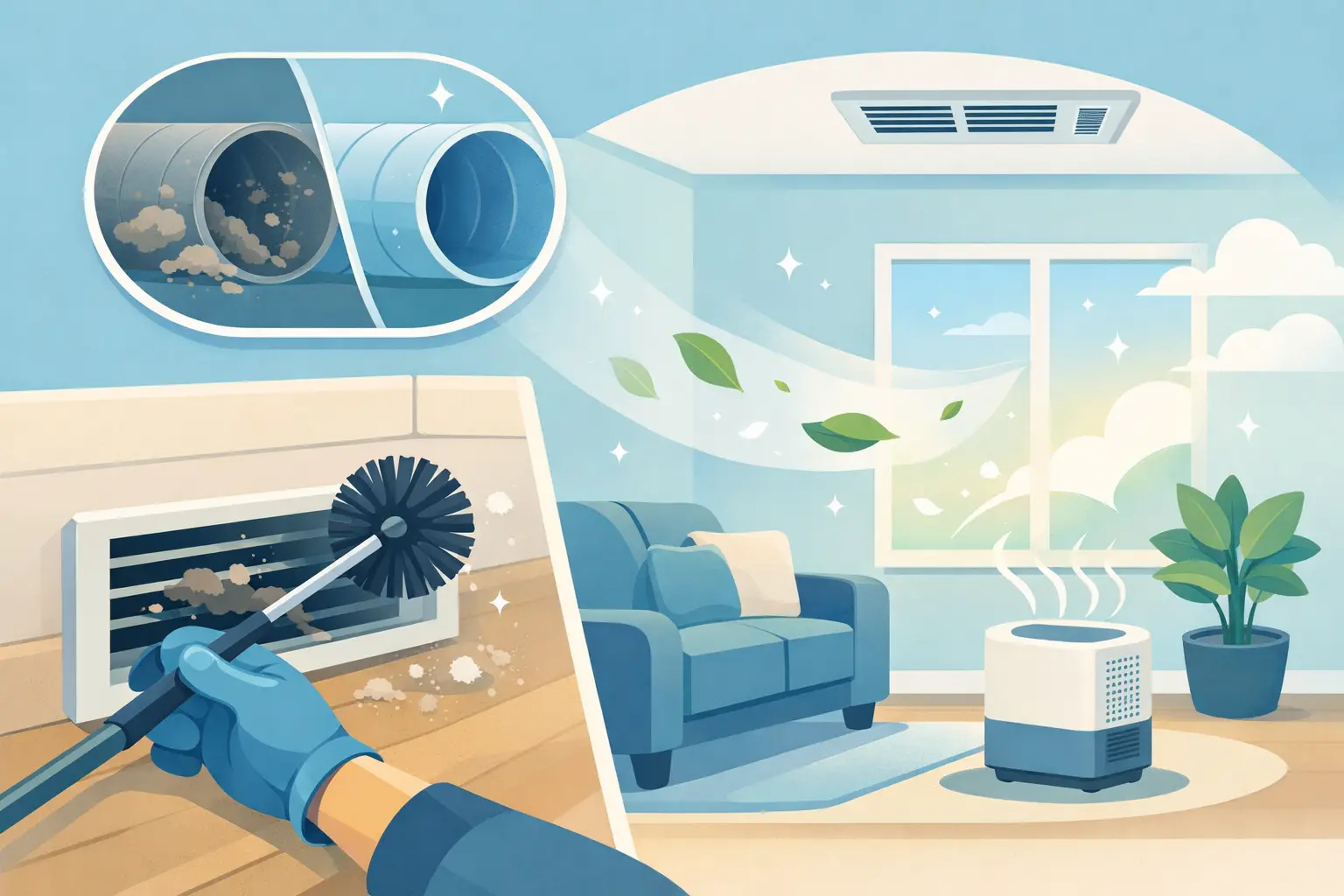
Professional service is the safer option when the concern extends beyond the vent cover. For HVAC ducts, trained technicians use specialized negative-air equipment, agitation tools, and controlled methods designed to remove debris from the system without spreading it through the home. The process should include accessible supply and return ducts, registers, and attention to the system components that are appropriate for cleaning.
Consider scheduling an HVAC duct inspection if you have recently completed remodeling work, moved into a previously occupied home, noticed recurring dust despite regular cleaning, or see debris coming from vents. If anyone in the home has allergies or respiratory sensitivities, it is reasonable to be more proactive, but duct cleaning should not be presented as a cure for medical conditions. Good filtration, moisture control, regular housekeeping, and properly maintained HVAC equipment all matter too.
For dryer vents, call for service right away if clothes take longer to dry, the dryer or laundry room becomes unusually hot, you smell something burning, or you see lint collecting around the outside vent hood. These signs can point to restricted airflow. Dryer vent cleaning is not just an efficiency service. It is a fire-prevention measure that should be handled thoroughly from the appliance connection to the exterior termination point.
Bathroom and kitchen vents may also need professional help when airflow remains weak after basic cleaning, ducts have come loose in the attic, moisture stains appear near ceilings, or a vent terminates in the attic instead of outdoors. Venting warm, humid air into an enclosed attic can contribute to mold, wood damage, and insulation problems.
How Often Should You Clean Home Vents?
The right schedule depends on the system and your household. Lint screens need attention with every dryer load, while the full dryer vent should generally be inspected and cleaned about once a year. Larger households, frequent laundry use, long vent runs, and homes with multiple pets may need service sooner.
HVAC filters usually need to be checked monthly. Surface cleaning of registers and bathroom grilles can be part of normal house cleaning. Full air duct cleaning is more situation-based. There is no benefit to scheduling it on an arbitrary, overly frequent cycle if the system is clean, properly filtered, and performing well. On the other hand, visible buildup, renovation dust, pest activity, water damage, or ongoing indoor air concerns should not be ignored.
In Texas, it also makes sense to inspect vents before periods of heavy HVAC use. A spring check can prepare the home for summer cooling demands, while a fall check helps catch dryer vent and fireplace concerns before seasonal routines pick up.
Choose Service Based on Safety, Not a Low Teaser Price
Vent cleaning should come with clear communication about what is included, how the technician will access the system, and whether any issues are found. Be cautious of vague offers that promise to clean an entire home for an unusually low price, then add charges after arriving. A reputable provider should explain the scope of work before service begins and answer questions directly.
Ask whether technicians are trained, insured, and background checked. For dryer vent and chimney work, confirm that the provider can inspect the full exhaust or flue path, not just clean the area you can already see. A professional team should protect floors and furnishings, use appropriate equipment, and leave the work area clean.
For homeowners who want one dependable team for air ducts, dryer vents, chimneys, insulation, and other essential home maintenance, On Time Home Experts provides straightforward service focused on cleaner air, safer systems, and efficient results.
A well-maintained vent system is rarely something you notice every day. That is the point. When air moves properly, moisture leaves the home, laundry dries as it should, and your HVAC system can do its job without unnecessary strain, your home feels more comfortable and your maintenance plan is working quietly in the background.