

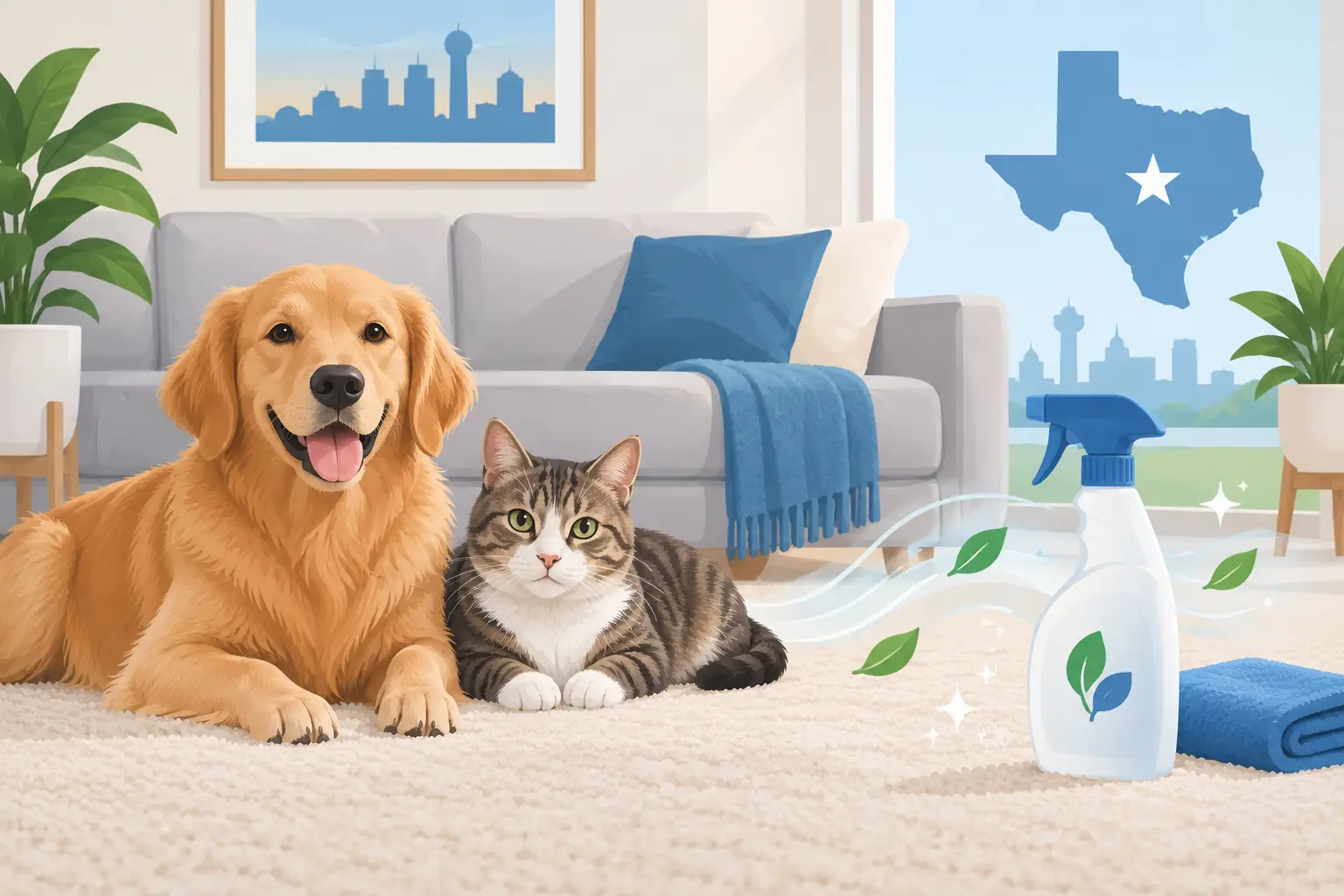
A carpet can look clean and still hold the unmistakable smell of pet urine. That is because the odor is rarely sitting on the surface. It can soak through carpet fibers, backing, padding, and sometimes the subfloor below. The best pet odor carpet treatments address the source of the smell, not just the room’s air.
For Texas homeowners, the problem can feel worse during warm, humid weather. Moisture in the air can reactivate dried urine crystals, making an old accident suddenly noticeable again. A scented spray may cover it briefly, but lasting results require the right treatment for the severity of the contamination.
Why Pet Odors Keep Coming Back
Pet urine contains uric acid crystals that can remain after the visible moisture dries. Standard carpet shampoo, soap, and household deodorizer may clean the top fibers without breaking down those odor-causing residues. When humidity rises or the area becomes damp, the crystals release odor again.
Repeated accidents create a deeper issue. If urine reaches the carpet pad, cleaning only the carpet face will not be enough. The pad acts like a sponge, and odor can travel beneath the original spot. In severe cases, urine reaches wood or concrete subflooring, where it may require targeted sealing or replacement of affected materials.
This is why the right treatment depends on where the odor is located, how long it has been there, and whether the pet has returned to the same area. Treating every odor the same can waste time and leave homeowners frustrated.
Best Pet Odor Carpet Treatments by Problem Type
Enzyme cleaners for fresh or isolated accidents
Enzyme-based cleaners are often the best first option for a recent accident or one small, identifiable spot. These products use enzymes and beneficial bacteria to break down organic matter that causes urine odor. They work best when the cleaner reaches as deeply as the urine did.
Blot up as much fresh moisture as possible before applying the product. Then saturate the affected area according to the label directions, including enough solution to reach the backing and pad if needed. Give it the recommended dwell time. Enzymes need time to work, and rushing the process is one of the most common reasons a treatment fails.
Do not mix enzyme products with bleach, ammonia, or other cleaners. Those chemicals can interfere with the treatment and may create unsafe fumes. Avoid using a heavy fragrance to judge whether the odor is gone. Let the area dry completely, then check it again under normal room conditions.
Oxygen-based treatments for stains and light odor
Oxygen-based carpet treatments can help with yellowing, discoloration, and lighter pet odors. They are useful when an enzyme cleaner has handled the organic residue but a visible stain remains. Some formulas are appropriate for colorfast carpet, but homeowners should always test a hidden area first.
These treatments have limits. They are not a dependable answer for deep, old urine saturation. They also may lighten certain carpet colors or damage natural fibers if used incorrectly. If the carpet is wool, silk, antique, or otherwise delicate, professional evaluation is the safer choice.
Professional hot water extraction for broader contamination
When several areas smell, when accidents have happened over time, or when the odor returns after DIY cleaning, professional carpet cleaning is usually the more effective next step. A trained technician can use commercial extraction equipment to flush soils and residues from the carpet while removing more moisture than rental machines typically can.
Professional extraction is not simply about making carpet look better. Proper cleaning can reduce the buildup that traps odors, pet dander, hair, and allergens in the fibers. It is especially helpful in high-traffic rooms where pet accidents may be mixed with everyday dirt and oils.
However, extraction alone is not always enough for urine that has penetrated deeply. The technician should identify the affected areas, treat them with an appropriate odor-control solution, and explain whether the backing, pad, or subfloor may still need attention. Honest assessment matters more than a quick promise that every odor can disappear in one pass.
Targeted pad or subfloor treatment for persistent smells
A strong odor that returns in the same location after thorough cleaning usually points below the carpet. In this situation, lifting a portion of the carpet may be necessary to inspect the pad and subfloor. The pad may need replacement if it is heavily contaminated.
For affected subflooring, a professional may clean and dry the area before applying an odor-blocking sealer designed for this purpose. On concrete, treatment may involve different products and drying methods than on wood. This is more involved than surface cleaning, but it can be the right solution when a room continues to smell despite repeated treatments.
How to Choose the Right Treatment
Start with the facts, not the strength of the odor alone. A single new accident in a known location may respond well to an enzyme cleaner. Several old spots, a whole-room smell, or a pet that repeatedly marks the same place usually calls for a more complete inspection and professional service.
Watch for these signs that the issue is deeper than a spot treatment:
- The odor returns after rainy or humid days.
- Your pet keeps returning to one area of carpet.
- The smell is strongest near the floor, even after vacuuming.
- Stains reappear after cleaning or seem larger than expected.
- The carpet feels stiff, tacky, or discolored in certain areas.
A UV light can help locate old urine spots that are not visible in normal lighting, although it is not perfect. Some non-pet materials can also glow. It is best used as a guide, followed by a closer inspection rather than as final proof of contamination.
What to Avoid When Removing Pet Odor From Carpet
Avoid ammonia-based cleaners. Urine contains ammonia-like compounds, and the smell may encourage some pets to mark the same area again. Bleach is also a poor choice for carpet. It can discolor fibers, damage backing, and create a safety concern when combined with residues from other cleaning products.
Be careful with rental carpet machines as well. They can be useful for general cleaning, but over-wetting carpet is a real risk. If moisture remains in the pad, it can prolong odors and create conditions that are harder to dry, particularly in humid weather. Use only the recommended amount of solution, make slow extraction passes, and allow the area to dry fully with good airflow.
Steam alone does not neutralize urine crystals. Heat can sometimes set certain stains, and it does not replace the chemical action of a quality enzyme or odor treatment. The most dependable approach is targeted treatment first, followed by appropriate cleaning and extraction.
Keeping Pet Odors From Returning
Fast response makes a difference. Blot accidents immediately with clean towels, working from the outside toward the center to avoid spreading the spot. Do not scrub aggressively, since that can push moisture deeper into the carpet and fray the fibers.
Regular vacuuming also helps by removing pet hair, dander, and dry soil that hold odors close to the carpet. For homes with multiple pets, young pets, or older pets with accidents, periodic professional carpet cleaning can help maintain a fresher home and make new spots easier to identify.
Just as important, address the reason for repeat accidents. A change in routine, stress, training needs, or a health issue may be involved. If a normally reliable pet begins having accidents, a veterinarian can help rule out medical causes.
When Professional Carpet Odor Removal Is Worth It
Professional help is worth considering when the odor affects a bedroom, living room, nursery, or other space where your family spends significant time. It is also a practical choice before listing a home, welcoming guests, moving into a previously occupied property, or preparing a rental for new tenants.
On Time Home Experts provides professional carpet services designed to help homeowners restore cleaner, more comfortable living spaces. A trained team can evaluate the condition of the carpet, explain realistic treatment options, and help determine whether deep cleaning or more targeted odor work is needed. No hidden charges, no guesswork, and no unnecessary complexity.
A pet-friendly home should not have to smell like one. When an odor keeps returning, treat it as a sign to look deeper than the carpet surface. The right solution can protect your flooring, improve everyday comfort, and make the room feel like home again.