



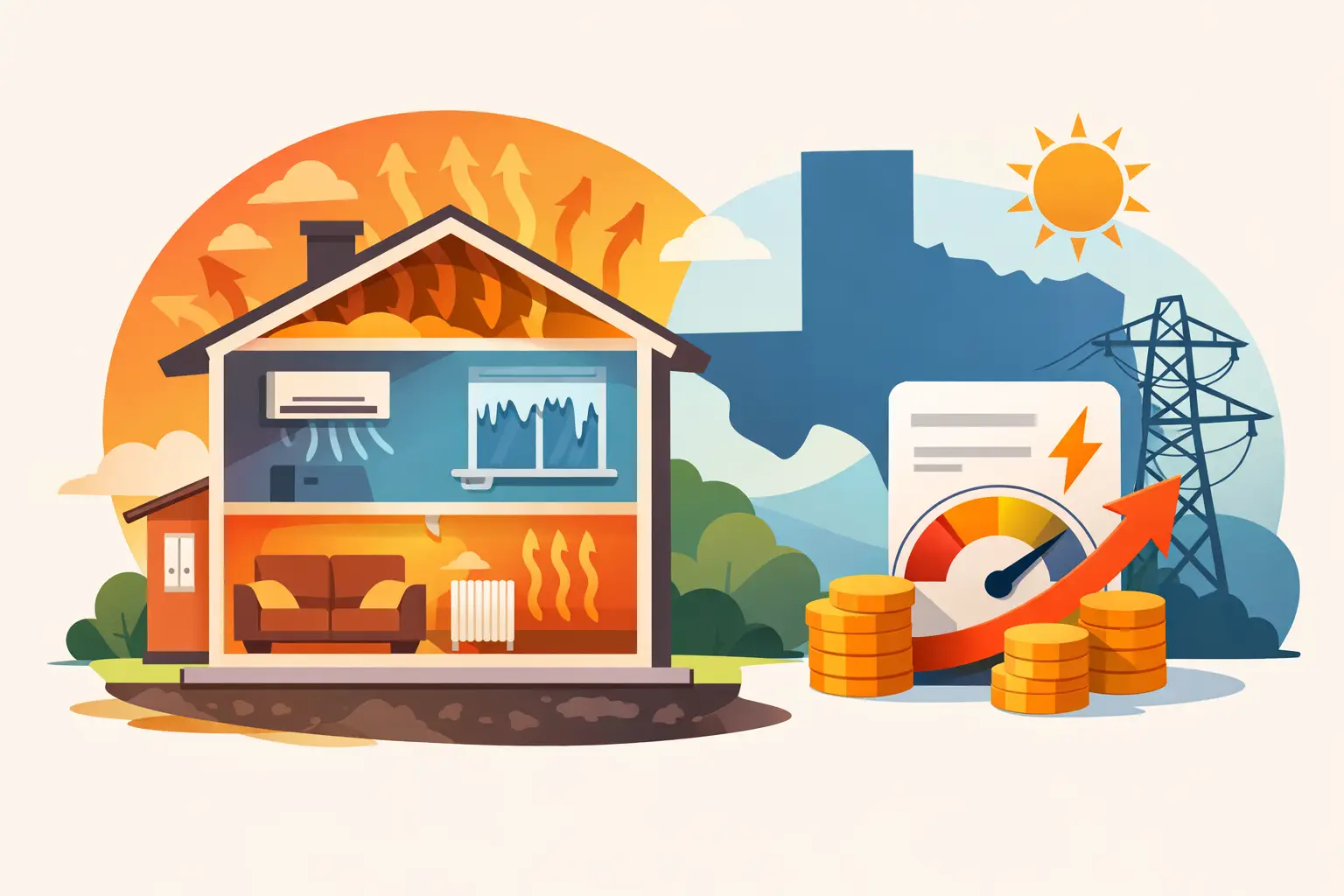
A Dallas-Fort Worth attic can reach extreme temperatures during a long Texas summer. When that heat moves into the living space below, your air conditioner has to keep removing it – often for hours longer than it should. So, can poor insulation raise electric bills? Absolutely. Insulation may be out of sight, but it has a direct effect on comfort, HVAC workload, and monthly energy costs.
For homeowners, the issue is rarely just one high bill. It is often a pattern: rooms that stay warm in the afternoon, an upstairs that never feels comfortable, an AC system that runs constantly, and utility costs that climb even when your habits have not changed. A professional insulation evaluation can help identify whether the attic is contributing to the problem and what improvements make financial sense.
How Poor Insulation Raises Electric Bills
Insulation slows heat transfer. In summer, it helps keep intense attic heat from moving down through the ceiling and into your conditioned rooms. In winter, it helps hold heated indoor air inside the home. When insulation is too thin, compressed, uneven, wet, or missing in key areas, it cannot perform that job effectively.
Your HVAC system then has to make up the difference. The thermostat may be set to 74 degrees, but the system is battling heat entering through the ceiling, exterior walls, gaps around fixtures, and other weak points. That longer runtime uses more electricity and can add unnecessary wear to the air conditioner, blower motor, and other components.
In North Texas, attic insulation is especially important because cooling season can be long and demanding. A poorly insulated attic acts like a heat reservoir above your home. By late afternoon, that stored heat can continue moving downward even after the sun is no longer directly hitting the roof.
The cost is not always obvious at first
A home does not need to feel dramatically uncomfortable for insulation problems to affect the electric bill. Even modest heat gain across a large ceiling area can force an AC system to cycle more often. Homeowners may assume rising costs are caused by utility rates, an aging air conditioner, or normal summer weather when the attic is a major contributor.
The exact increase depends on the home’s age, square footage, thermostat settings, roof exposure, HVAC condition, and current insulation levels. Still, improving inadequate insulation can reduce avoidable cooling demand and help the system maintain temperature more consistently.
Signs Your Attic Insulation May Be Underperforming
Uneven temperatures are one of the clearest warning signs. If the second floor is much hotter than the first, or if certain bedrooms are uncomfortable at the same thermostat setting, heat may be entering through the attic and ceiling areas.
High electric bills during hot or cold stretches can also point to a problem, particularly when the increase seems out of proportion to your household’s usual energy use. An AC system that runs for long periods without reaching the set temperature deserves attention as well. Insulation may not be the only cause, but it should be part of the evaluation.
Other signs can be found in the attic itself. Insulation may look low, patchy, flattened, contaminated, or disturbed around walkways and storage areas. Older homes sometimes have insulation that has settled over time, leaving less thermal protection than the home needs. In some cases, previous electrical, plumbing, or HVAC work has left gaps that were never properly refilled.
Air leaks can make the problem worse
Insulation and air sealing work together. Adding insulation over major gaps without addressing the leaks beneath it can limit the results. Warm attic air can enter around recessed lights, plumbing penetrations, attic hatches, wiring openings, and duct connections. Conditioned air can also escape through those same pathways.
This is why a professional assessment matters. The right solution is not always simply adding more material. A trained team should look at insulation depth, coverage, moisture concerns, ventilation, accessible air leaks, and the condition of attic ducts before recommending work.
Why Texas Attics Need a Balanced Approach
More insulation is often helpful when levels are inadequate, but attic performance is not only about piling material higher. The attic also needs appropriate ventilation and protection from moisture issues. Poor ventilation can allow heat and humidity to build up, while roof leaks or condensation can damage insulation and reduce its effectiveness.
Proper attic ventilation helps manage heat and moisture, but it does not replace insulation. Likewise, insulation cannot correct a roof leak, disconnected duct, or blocked ventilation path. Each part of the attic system affects the others.
This balance is particularly important for Texas homes because high heat, strong sun exposure, seasonal storms, and humidity can all affect attic conditions. A dependable recommendation should account for the whole space rather than selling a one-size-fits-all fix.
Insulation Problems Can Affect More Than Your Electric Bill
Energy waste is a major concern, but it is not the only reason to address poor insulation. When your AC is forced to run longer, the added strain can contribute to breakdowns and shorter equipment life. The home may also have more dust movement, temperature swings, and uncomfortable hot spots.
If attic insulation is damaged by pests, moisture, or heavy contamination, there may be indoor air quality concerns as well. Insulation is not designed to filter the air you breathe, but gaps and disturbed materials can allow attic dust and odors to move more easily into living areas.
For families with allergies or sensitivities, the combination of poor air sealing, dusty attic conditions, and leaky ductwork can make a home feel less comfortable. Addressing insulation as part of a broader home-efficiency and indoor air quality plan can create better results than treating each symptom separately.
What Homeowners Can Check Before Calling a Professional
You do not need to walk across an attic or handle insulation to notice possible trouble. Start by paying attention to patterns in your home. Compare utility bills from similar months over the last year or two. Notice whether the AC runs continuously during peak afternoon heat or whether certain rooms never match the thermostat.
You can also look for visible warning signs from a safe access point, such as obvious bare areas, insulation that is level with or below ceiling framing, staining from a possible roof leak, or an attic access door that feels hot to the touch. Avoid stepping on unsupported areas, moving insulation around electrical equipment, or disturbing material you cannot identify.
A professional inspection is the safer choice when you see damage, suspect moisture, notice animal activity, or are unsure what type of insulation is already present. The goal is to understand the condition of the space before investing in improvements.
When an Insulation Upgrade Makes Sense
An upgrade is often worthwhile when an attic has insufficient coverage, uneven distribution, damaged material, or clear signs that heat is entering the home. It can also make sense after duct repairs, attic cleaning, pest remediation, or renovation work that has disturbed existing insulation.
However, insulation is not a guaranteed cure for every high electric bill. If the HVAC system is oversized, undersized, poorly maintained, or nearing failure, those issues may need attention too. Leaky ducts, failing weatherstripping, old windows, and thermostat problems can also affect energy use. A good service provider will explain these trade-offs clearly instead of promising that one service will solve every comfort issue.
For many DFW homeowners, the best results come from addressing the most significant problems first: air leaks, damaged or low insulation, duct issues, and ventilation concerns. This targeted approach helps protect your investment and avoids paying for work that does not address the real source of energy loss.
Get Clear Answers About Your Attic
High electric bills should not be dismissed as the unavoidable cost of a Texas summer. Your home may be telling you that heat is getting in too easily, conditioned air is escaping, or the attic system needs attention. On Time Home Experts can help homeowners assess attic insulation and related conditions with a practical, professional approach.
A comfortable, efficient home starts with knowing what is happening above your ceiling. When you address insulation issues early, you can give your HVAC system a fair chance to do its job, protect your family’s comfort, and make your monthly electric bill feel more manageable.