

A low-price air duct cleaning offer can sound appealing until a technician arrives without the right equipment, gives a vague diagnosis, or adds surprise charges before work begins. Air duct cleaning credentials help homeowners separate legitimate, trained service providers from companies that rely on pressure tactics and incomplete cleaning.
For Dallas-Fort Worth homeowners, the goal is not to memorize industry acronyms. It is to know what proof of professionalism looks like before someone works inside the system that moves air through your home every day.
Why Credentials Matter for Air Duct Cleaning
Your ductwork is not just a hidden pathway for dust. It connects to the equipment responsible for heating, cooling, airflow, and comfort throughout the house. A careless cleaning can leave debris behind, damage flexible ducts, disconnect a vent, or create a mess around the system without solving the problem that prompted the appointment.
Credentials do not guarantee perfect work on their own. A certificate on a truck is less meaningful than a trained technician who explains the process, protects your home, and completes the job properly. Still, qualifications give you a practical starting point when comparing companies.
A professional provider should be able to show that its technicians have relevant training, that the business carries appropriate insurance, and that its process is designed for the full HVAC air-distribution system, not just the visible registers. Clear pricing and a willingness to answer questions matter just as much.
The Air Duct Cleaning Credentials to Look For
Industry training and certification
One of the most recognized credentials in the duct-cleaning field comes from the National Air Duct Cleaners Association, commonly called NADCA. Its Air Systems Cleaning Specialist, or ASCS, certification indicates that an individual has passed an exam covering HVAC cleaning principles, contamination control, safety, and cleaning methods.
This can be a useful sign that the technician or company has invested in specialized education. Ask who on the team holds the certification and whether that trained person will be involved in your service. A company membership or logo alone is not the same thing as every technician being trained.
Some providers also pursue continuing education related to HVAC systems, indoor air quality, restoration, or ventilation. Those courses can be valuable, particularly when they support the services being performed. The key is relevance. General cleaning experience does not automatically qualify someone to work safely around blower compartments, coils, duct connections, or delicate flexible ductwork.
Insurance and business accountability
A reputable company should carry general liability insurance and workers’ compensation coverage or an appropriate alternative for its employees. This protects homeowners if an accident or property damage occurs during service. It also shows that the business is operating with basic professional safeguards in place.
You do not need to become an insurance expert. Simply ask whether the company is insured and whether it can provide confirmation if requested. A trustworthy provider should answer directly rather than treating a reasonable question as an inconvenience.
Business accountability also includes a clear local identity. Look for a real company name, working phone number, service history, written estimates, and a process for resolving concerns. Extremely cheap ads that offer a whole-house cleaning for an unrealistic price often lead to high-pressure upsells once the technician is inside the home.
Background-checked, trained technicians
Credentials apply to people as well as paperwork. The technicians entering your home should be professionally trained, respectful of your property, and identifiable as part of the company you hired. Background checks and drug testing are meaningful trust signals, especially when service requires access to attics, closets, garages, utility rooms, and multiple areas of the house.
Ask whether technicians are employees, subcontractors, or a mix of both. There is not one automatic right answer, but the company should take responsibility for the people it sends to your home. You deserve to know who is performing the work and who stands behind it.
What Qualified Air Duct Cleaning Actually Includes
Credentials are only useful when they translate into a complete, careful process. Proper duct cleaning is not simply vacuuming dust from a few supply vents. Depending on the home and system layout, the work may involve supply and return ducts, registers and grilles, trunk lines, the blower area, and accessible components of the air handler.
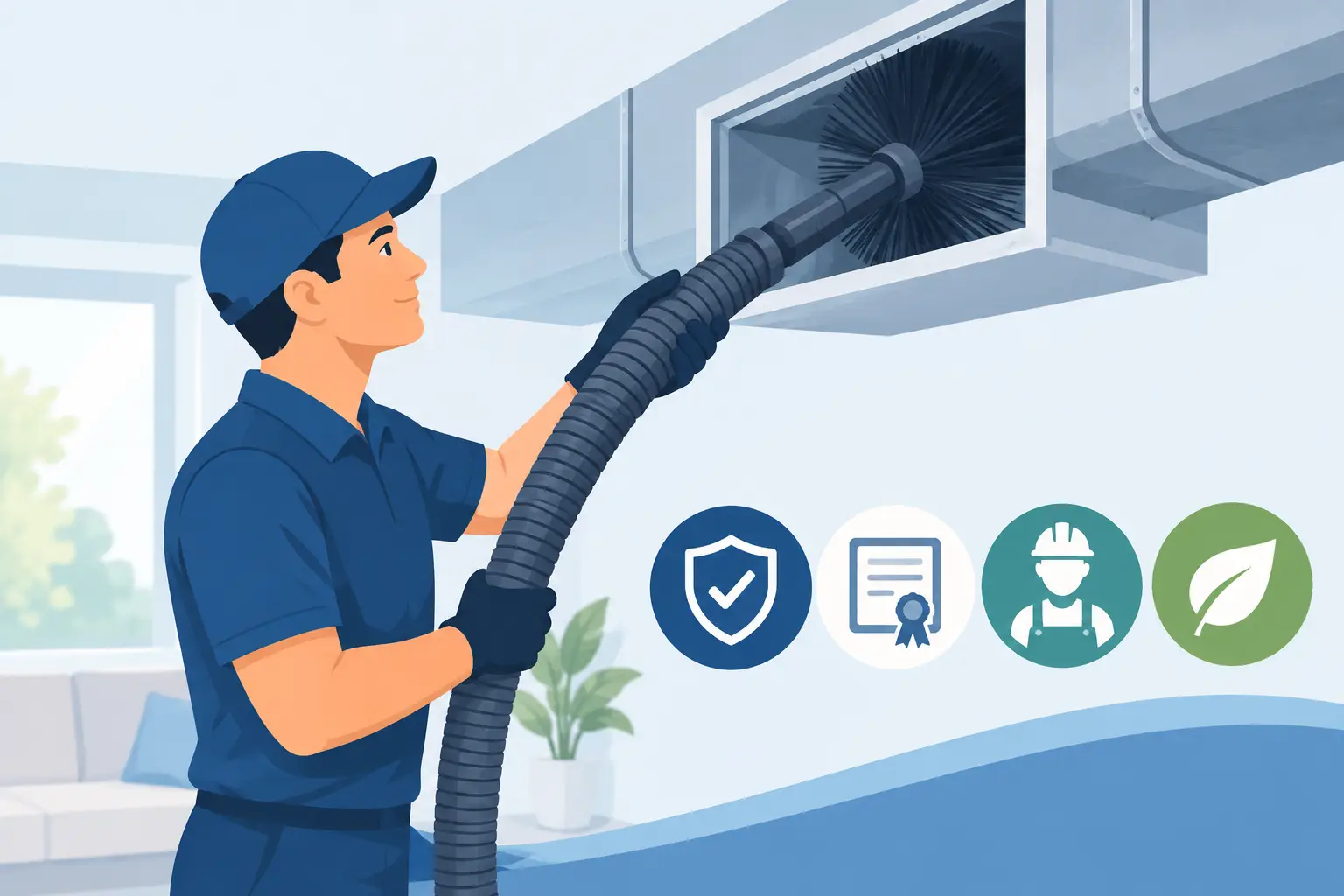
The method should use controlled agitation and high-powered vacuum collection to loosen and contain debris. Technicians may use brushes, air whips, compressed-air tools, and negative-pressure equipment based on the duct material and condition. The right approach depends on whether your home has metal ducts, flex ducts, duct board, or a combination of materials.
A qualified team should inspect before cleaning and explain what it finds. They should take care around furnishings and flooring, seal or protect access points as needed, and avoid damaging insulation or duct connections. If a technician immediately recommends chemical treatments without explaining the reason, product, and expected benefit, pause and ask more questions.
No reputable company should promise to cure allergies, eliminate every indoor-air concern, or make an HVAC system perform like new with duct cleaning alone. Indoor air quality can also be affected by filtration, humidity, pet dander, outdoor pollen, carpet condition, attic dust, and ventilation issues. Honest guidance recognizes those limits.
Texas Licensing Questions Homeowners Should Ask
Air duct cleaning itself is not the same as repairing or installing HVAC equipment. However, a job can cross into regulated work if it involves diagnosing mechanical failures, changing electrical components, modifying equipment, adding refrigerant, or performing HVAC repairs. When that happens, ask whether the work requires a properly licensed HVAC contractor.
Mold is another area where homeowners should be careful. Dust, discoloration, and surface debris are not always mold, and no technician should make a dramatic claim without support. If a suspected mold issue requires assessment or remediation, Texas licensing requirements may apply. A reputable company will explain the difference between routine cleaning and a situation that needs a qualified mold professional.
This distinction protects you from paying for unnecessary services while making sure a real moisture or contamination problem receives the right response.
Questions to Ask Before You Book
A short conversation can reveal a great deal about a service provider. Before scheduling, ask how the company prices the work, what areas of the system are included, and whether the quote can change after arrival. Ask what equipment will be used and how the crew prevents debris from entering the home during cleaning.
You can also ask whether a trained or certified air-systems cleaning professional supervises the job, whether the company is insured, and whether technicians are background checked. If your home has persistent dust, unusual odors, weak airflow, recent remodeling, pets, or family members with allergies, mention those details early. They help the company prepare an appropriate recommendation instead of offering a one-size-fits-all package.
Be cautious if the answers are rushed, unclear, or centered only on a limited-time discount. Professional service should feel transparent before the appointment begins.
Credentials Are Only One Part of Trust
The best air duct cleaning company combines training with honest communication, proper equipment, and respect for your home. Reviews, written scope of work, technician professionalism, and clear explanations all matter alongside certifications.
At On Time Home Experts, homeowners can expect a professional team focused on clean indoor environments, safe ventilation, and straightforward service. The right provider will never make you guess what is being cleaned, why it is recommended, or what the final price includes.
If you are comparing duct-cleaning companies, keep the conversation simple: ask for proof of training, insurance, the planned cleaning method, and an upfront explanation of costs. Those answers will usually tell you far more than the lowest advertised price ever could.