

A soaked carpet is not just a cleaning problem. Water can move beneath the surface, saturate the carpet pad, seep into baseboards, and create conditions where mold can begin growing within 24 to 48 hours. Knowing how to handle wet carpet after flooding quickly can protect your home, your indoor air quality, and the cost of your recovery.
For Dallas-Fort Worth homeowners, fast-changing storms, foundation drainage issues, burst pipes, and appliance leaks can all leave carpeting wet when you least expect it. The right response depends on where the water came from, how long it has been present, and how far it has traveled. In some cases, prompt extraction and drying can save the carpet. In others, removal is the safest choice.
Start With Safety Before You Touch the Carpet
Do not walk through standing water if electrical outlets, cords, appliances, or extension cords may be affected. If it is safe to do so, shut off electricity to the affected area at the breaker. Avoid using a standard household vacuum to remove water. It is not designed for this job and can create a serious electrical hazard.
Next, identify the source of the water. A supply-line leak or rainwater that entered through an opening may be relatively clean at first. Water from a toilet overflow, sewer backup, outdoor runoff, or a flooded creek is different. It can contain bacteria, chemicals, and other contaminants that make carpet restoration unsafe.
If sewage, toilet waste, or visibly dirty floodwater touched the carpet, keep children and pets away from the area. Wear protective gloves and waterproof footwear if you must enter the room, but avoid treating contaminated carpet as a DIY drying project. Professional assessment and removal are generally the safer path.
How to Handle Wet Carpet After Flooding: Act Fast
The first few hours make a major difference. Start by stopping the water source if possible. Turn off the water supply for a plumbing leak, move items away from the affected area, and use towels to limit water from spreading into nearby rooms. Take clear photos and videos before moving too much, especially if you may file an insurance claim.
Remove furniture from the wet carpet when it can be done safely. Wood furniture can stain the carpet, metal legs can rust, and heavy pieces trap moisture beneath them. Place aluminum foil, plastic blocks, or other protective barriers under furniture legs only after standing water has been addressed. Do not drag heavy furniture across saturated carpet, since that can damage fibers and spread moisture farther.
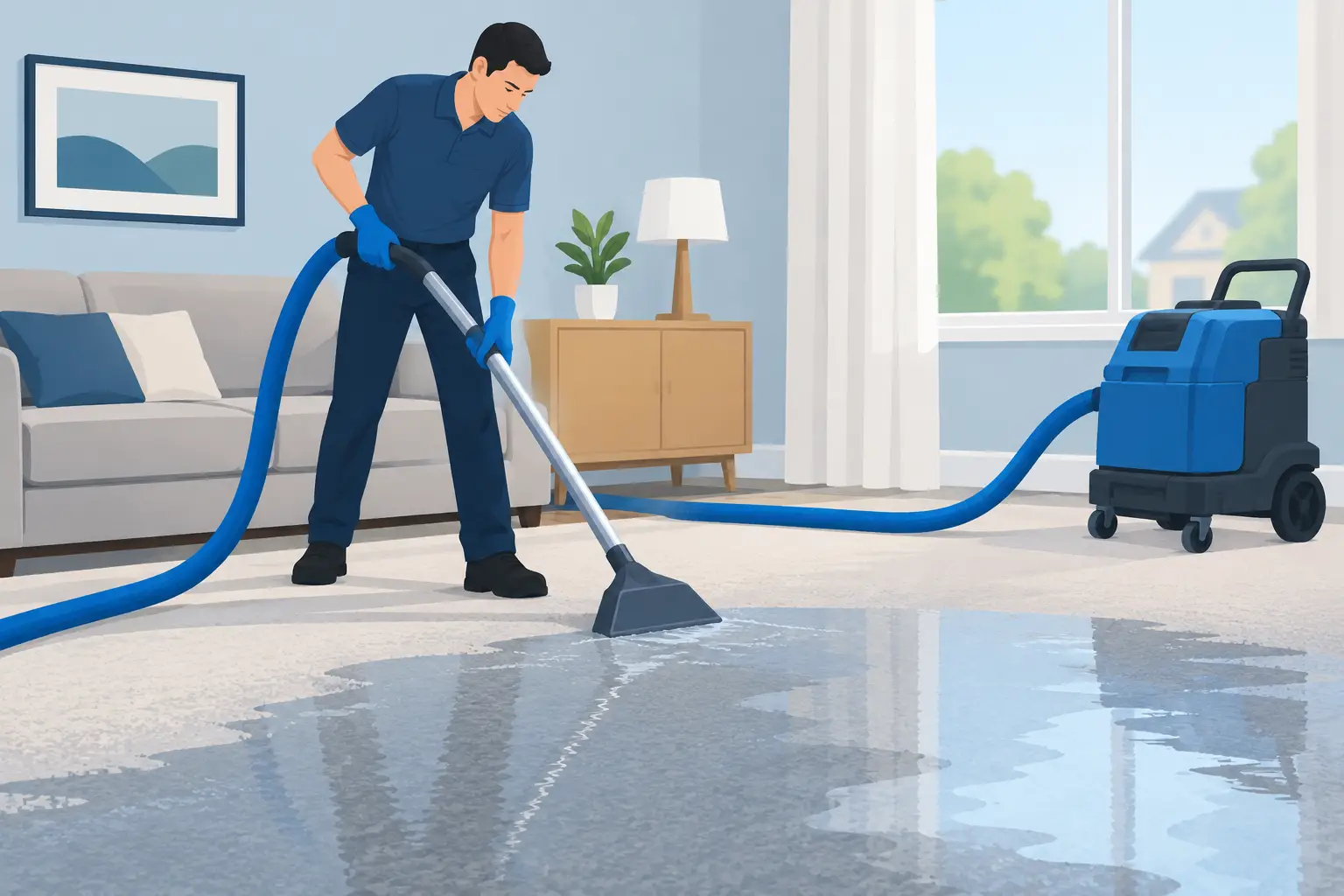
A wet-dry vacuum can help remove surface water from a small, clean-water event, but it will not fully dry the carpet pad or subfloor. Water extraction equipment used by trained technicians is much more effective because it removes a larger volume of water quickly. The longer water remains in the pad, the less likely it is that the carpet can be restored properly.
Open Airflow Carefully
Once the water source is controlled and there is no electrical risk, improve airflow. Run air conditioning if the system is operating safely, and use fans to move air across the carpet surface. A dehumidifier can also help lower indoor humidity, which is especially useful during humid Texas weather.
Open windows only when outdoor air is drier than indoor air. During a rainy or humid day, open windows can bring more moisture inside and slow the drying process. Fans alone may make the carpet feel dry on top while moisture remains underneath, so airflow should support extraction and moisture testing, not replace them.
Decide Whether the Carpet Can Be Saved
Carpet can sometimes be cleaned and restored after a clean-water leak that was discovered quickly. The material, amount of water, condition of the pad, and drying timeline all matter. Synthetic carpet is often more recoverable than natural fiber carpet, while wool can shrink, discolor, or lose its shape after saturation.
The carpet pad is usually the deciding factor. Padding acts like a sponge, and it is difficult to dry completely once it has absorbed significant water. In many flood situations, replacing the pad is more reliable than trying to dry it in place. This is particularly true when water has been present for more than a day or has reached multiple rooms.
Carpet should usually be removed when it was exposed to sewage or contaminated floodwater, when mold growth is visible, when it has a persistent musty odor after drying, or when the backing has separated from the fibers. Removing damaged materials may feel frustrating, but leaving contaminated or wet material in place can create a larger air-quality and repair problem later.
Do Not Judge Dryness by Touch Alone
A carpet that feels dry under your hand may still hold moisture in the pad, tack strips, subfloor, baseboards, or drywall. That hidden moisture can feed mold and cause odors days after the initial flood.
Professional moisture meters and thermal imaging tools help locate water that cannot be seen from the surface. This is one reason quick professional service can be more cost-effective than renting equipment without knowing whether the structure is actually dry. Proper drying includes checking the materials below and around the carpet, not just the carpet itself.
Protect Your Indoor Air Quality During Cleanup
Floodwater can leave behind more than visible damage. As materials dry, they may release odors, allergens, mold spores, and fine particles into the air. If you notice a musty smell, worsening allergy symptoms, or visible spotting along baseboards, do not cover the issue with fragrance sprays or carpet powder. Those products can mask the warning signs without solving the moisture problem.
Keep the affected room separated from the rest of the house when possible. Close interior doors, avoid running portable fans that blow directly from a contaminated area into clean areas, and wash any clothing, towels, or soft items that touched dirty water. Upholstered furniture, area rugs, and drapes may also need assessment if water reached them.
Your HVAC system deserves attention as well. If floodwater reached floor registers, return vents, or duct openings, avoid assuming the system is clean once the carpet dries. Moisture and debris near ventilation components can affect the air moving through your home. A qualified professional can determine whether the affected components need cleaning, repair, or replacement.
Document the Damage and Call Your Insurer
Before disposal begins, document the affected rooms, wet materials, damaged belongings, and water source. Record dates and times, save receipts for emergency services or equipment rentals, and write down conversations with your insurance provider. Many policies handle sudden plumbing failures differently from groundwater or storm flooding, so ask specific questions about your coverage and deductible.
Do not wait for an adjuster before taking reasonable steps to prevent further damage. Removing standing water, protecting furniture, and arranging emergency drying are often necessary mitigation measures. However, avoid throwing away major damaged materials until they have been photographed and your insurer has provided guidance, unless leaving them in place would create a health or safety risk.
When Professional Help Is the Safer Choice
Call for professional help right away when water covers a large area, affects multiple rooms, comes from an unknown or contaminated source, has been present longer than several hours, or has reached walls and flooring beneath the carpet. A professional team can extract water, test moisture levels, identify hidden damage, and recommend a clear plan without guesswork.
This is also the right move if someone in the household has asthma, allergies, a weakened immune system, or sensitivity to mold. The trade-off is the immediate cost of professional service versus the much higher cost of replacing flooring, repairing structural materials, or addressing a mold problem that was missed during cleanup.
On Time Home Experts helps Texas homeowners address carpet-related moisture concerns with a professional, homeowner-first approach. Fast action, honest guidance, and proper drying can make a stressful flood event far more manageable. If your carpet is wet today, focus on safety first, document what happened, and get the moisture out before hidden damage has time to settle in.