



A chimney inspection is easy to postpone when the fireplace is not in use. But the chimney is still exposed to rain, humidity, wind, nesting animals, and shifting temperatures all year long. By the time smoke enters the room, water stains appear near the fireplace, or a strange odor becomes obvious, a smaller issue may have already turned into a costly repair or a safety concern.
For Dallas-Fort Worth homeowners, professional inspection is a practical part of protecting the home. It helps identify fire hazards, ventilation problems, masonry damage, and moisture intrusion before they affect your family’s comfort, indoor air quality, or budget.
What a Chimney Inspection Looks For
A chimney does more than carry smoke outside. It is a complete venting system that includes the firebox, damper, smoke chamber, flue, chimney cap, crown, flashing, and masonry. A problem in any one of these areas can affect how safely your fireplace operates.
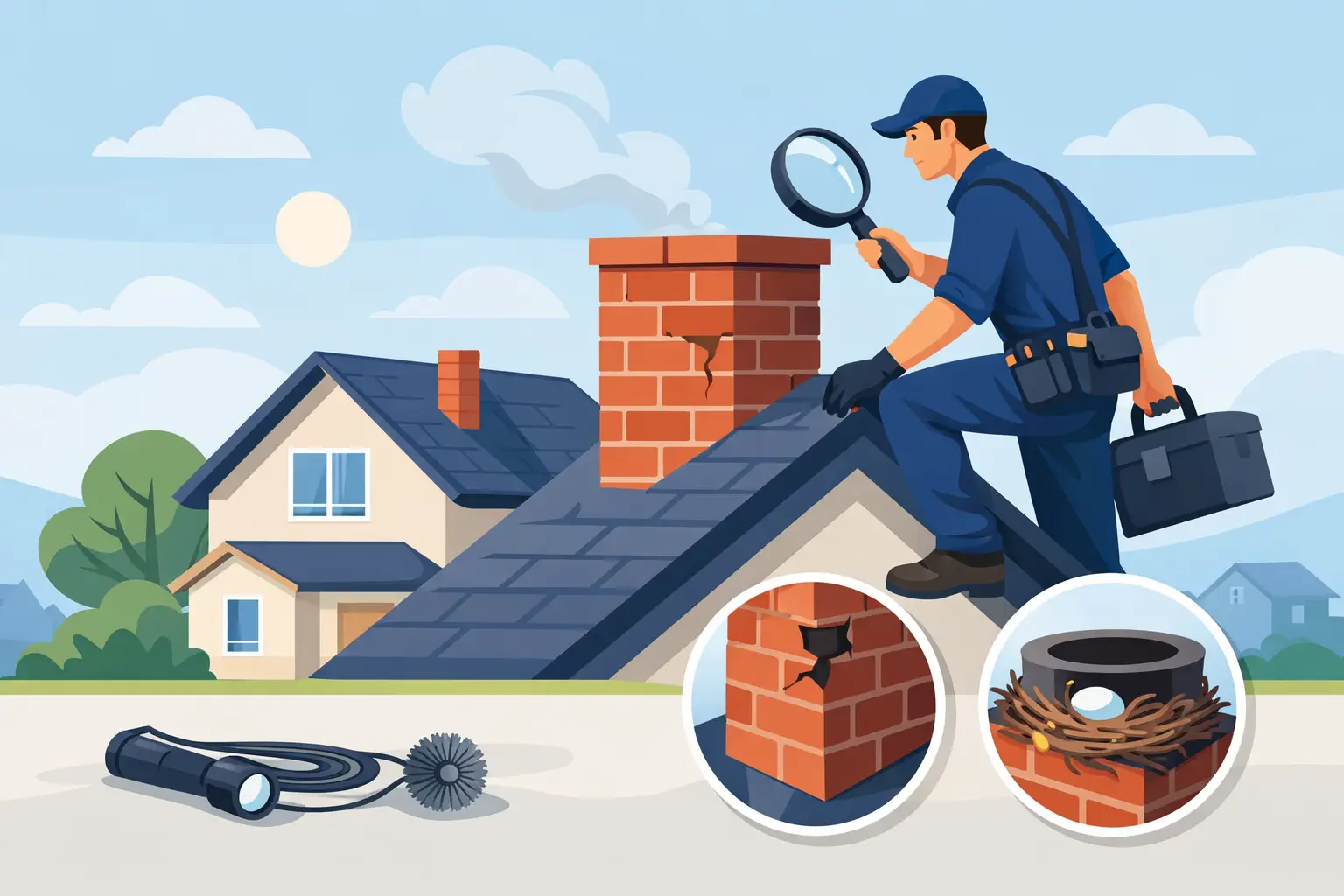
During a professional inspection, a trained technician examines accessible parts of the system for creosote buildup, cracks, loose or damaged components, obstructions, and signs of water entry. They also look for issues that may interfere with proper draft – the upward flow that moves smoke and combustion gases out of the home.
Creosote is one of the biggest concerns in wood-burning fireplaces. This dark, sticky residue forms as wood smoke cools inside the flue. Small amounts may be normal, but heavier buildup can ignite and cause a chimney fire. Even a fire that stays contained inside the flue can damage the liner and leave the system less safe for future use.
Inspection can also reveal blockages from leaves, animal nests, deteriorating flue material, or debris. A blocked chimney can cause smoke to back up into living spaces. That is unpleasant at best and potentially dangerous when combustion gases cannot vent as intended.
Why Texas Homes Need Regular Chimney Checks
Texas winters may be shorter than those in northern states, but fireplaces still see regular use during cold fronts and holiday gatherings. In many homes, the fireplace sits unused for months and then gets lit without anyone knowing what has changed inside the chimney since last season.
Weather adds another layer of risk. Heavy rain can work through cracked crowns, missing caps, worn flashing, or weakened mortar joints. Water can damage the chimney from the top down, leading to rusted dampers, stained ceilings, crumbling masonry, and compromised flue components. North Texas heat can also accelerate wear on exposed materials, especially when previous repairs were incomplete.
An inspection is not only for homes with an obvious problem. It is preventative maintenance. Finding a small crack around the chimney crown or early rust around the damper is usually far less disruptive than waiting for a leak to affect framing, drywall, or flooring.
How Often Should You Schedule a Chimney Inspection?
For most homeowners with a wood-burning fireplace, an annual inspection is a smart standard. Ideally, schedule it before the cooler months, so there is time to clean or repair the system before you want to use it.
The right timing can vary. A fireplace used frequently throughout the winter may need more attention than one used a few times a year. A newly purchased home should also be inspected before the fireplace is used, even if the previous owner said everything was fine. You do not know how often it was used, what fuel was burned, or whether hidden damage occurred during a storm or prior repair.
Gas fireplaces need inspection, too. They do not produce creosote like wood-burning fireplaces, but their venting systems, burner components, and connections can still develop problems. If your gas fireplace has soot, delayed ignition, unusual odors, or a weak-looking flame, stop using it until it has been evaluated.
Three Levels of Chimney Inspection
Not every appointment requires the same level of inspection. The scope depends on the fireplace’s condition, its history, and whether there has been a change in how the system is used.
Level 1: Routine Annual Review
A Level 1 inspection is generally appropriate for a chimney that has been regularly maintained and will continue to be used in the same way. The technician evaluates readily accessible parts of the chimney and fireplace, checking the basic condition and looking for visible obstructions or damage.
This is often paired with chimney cleaning when creosote or debris is present. Cleaning and inspection work together: cleaning removes combustible buildup, while inspection helps identify why buildup may be occurring faster than expected.
Level 2: When Something Has Changed
A Level 2 inspection is more detailed and may include specialized camera equipment to view the interior of the flue. It is commonly recommended after a chimney fire, severe weather event, property purchase, major renovation, or a change in fuel type or appliance.
It can also make sense when an annual inspection identifies a concern that cannot be fully evaluated from accessible areas. This added view helps locate liner cracks, hidden deterioration, or internal obstructions without guessing.
Level 3: When Damage Is Suspected
A Level 3 inspection is used when a serious issue is suspected and concealed areas may need to be accessed. This is not routine maintenance. It may be necessary after significant fire damage, major water intrusion, or structural concerns that require a closer look at the chimney construction.
The goal is to investigate the problem accurately and recommend only the repairs needed to return the system to safe operating condition.
Signs You Should Not Wait for Your Next Inspection
An annual schedule is useful, but certain warning signs call for a prompt inspection. Do not continue using the fireplace while these issues are unresolved:
- Smoke enters the room or the fireplace has trouble drafting.
- You notice a strong smoky, musty, or animal-like odor near the fireplace.
- Water appears in the firebox, or stains show up on walls or ceilings near the chimney.
- You see crumbling mortar, cracked brick, rust, loose chimney cap components, or white staining on masonry.
- The damper is difficult to open or close, or you hear animal activity in the chimney.
White staining, often called efflorescence, deserves attention even though it can look minor. It occurs when moisture moves through masonry and leaves mineral deposits behind. The deposits themselves are not the main problem. They are a clue that water is getting where it should not.
Inspection, Cleaning, and Repair Are Different Services
Homeowners sometimes assume a chimney inspection automatically includes a full cleaning or repair. These services are related, but they are not the same.
An inspection evaluates the condition of the system and identifies safety or maintenance concerns. Cleaning removes creosote, soot, and debris that can affect performance and increase fire risk. Repairs address a specific defect, such as damaged flashing, a cracked crown, worn mortar, a broken damper, or flue liner issues.
A trustworthy technician should explain what was found, why it matters, and what service is recommended before work begins. You should not be left trying to interpret vague warnings or pressured into repairs without clear reasons. Transparent findings help you make a confident decision about your home.
Why Professional Service Matters
Looking up into the firebox with a flashlight can help you spot obvious debris, but it cannot replace a professional chimney inspection. Much of the flue is out of sight, and chimney safety depends on details that are easy to miss without the right equipment and training.
DIY cleaning also creates mess and risk. Creosote can be difficult to remove safely, and improper tools may damage the liner or leave buildup behind. Climbing onto a roof to check the cap, crown, or flashing brings its own hazards, particularly after rain or on steep rooflines.
Professional service provides a clearer picture of the chimney’s condition while helping keep soot and debris contained. At On Time Home Experts, homeowners can expect trained, insured technicians, straightforward recommendations, and efficient service designed around safer, cleaner homes.
Before the next cold front turns your fireplace into the favorite seat in the house, give the chimney the same attention you give your heating system. A timely inspection can help make that first fire feel warm and welcoming for the right reasons.