




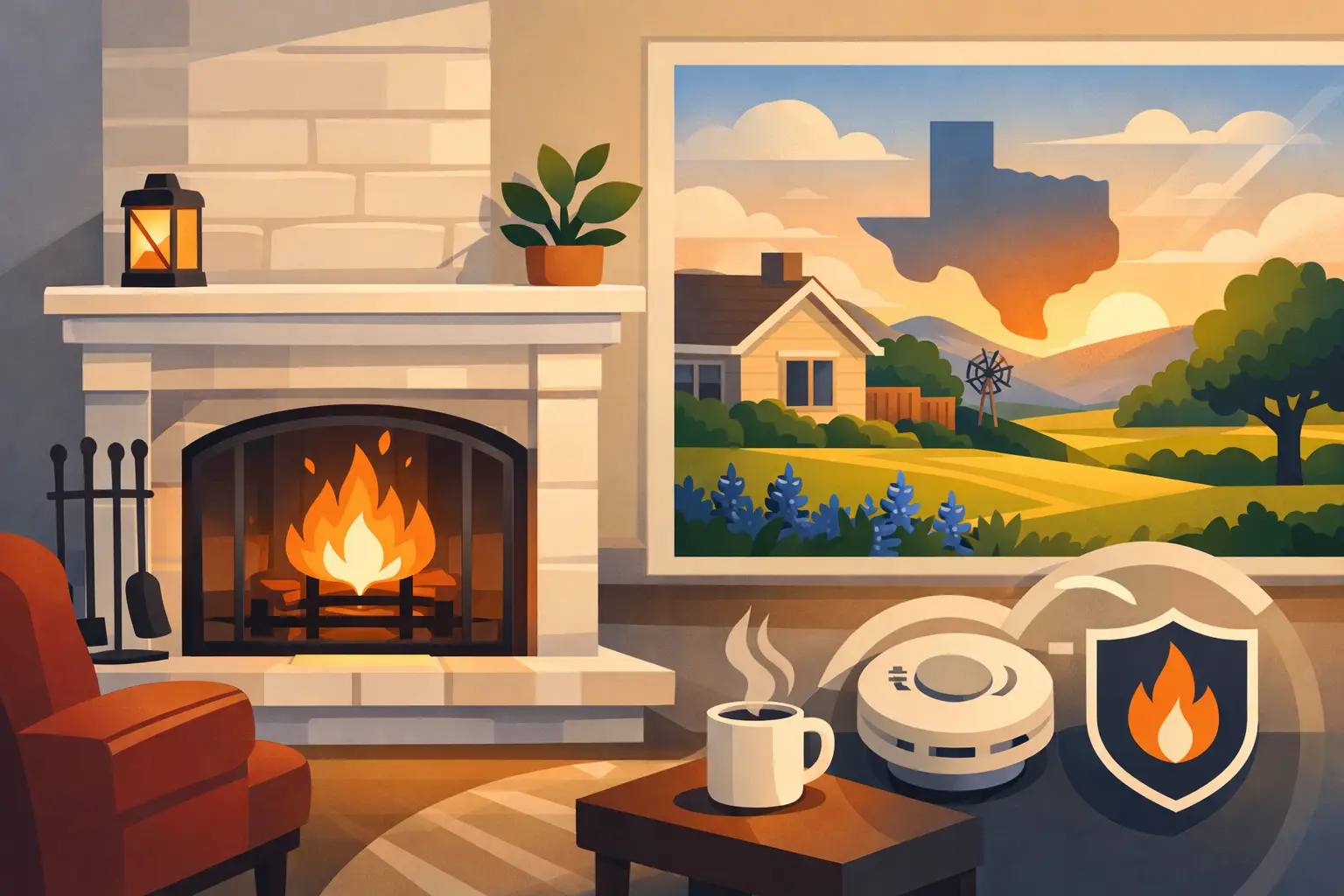
A fireplace can make a North Texas cold front feel a little more manageable, but it is not a system to use on autopilot. This fireplace safety guide helps homeowners prevent chimney fires, smoke problems, carbon monoxide exposure, and costly damage before lighting the first fire of the season.
Start With a Clean, Inspected Fireplace
A fireplace may look clean from the living room while the chimney above it holds a dangerous layer of creosote. Creosote is a sticky, flammable residue created when wood smoke cools inside the chimney. With enough buildup, a spark or high heat can ignite it and cause a chimney fire.
Many chimney fires are loud and obvious, but not all of them are. Some burn slowly inside the flue, damaging the liner, mortar, or surrounding structure without homeowners realizing what happened. That damage can make future fires more dangerous and allow heat, smoke, or carbon monoxide to move where it does not belong.
Schedule a professional chimney and fireplace inspection at least once a year, ideally before fireplace season begins. Cleaning should be performed when inspection shows soot, creosote, animal nesting material, or other obstructions. In Dallas-Fort Worth, fireplaces often sit unused for long stretches, which makes pre-season service especially valuable. Birds, squirrels, leaves, and storm debris can all create a blockage between cold snaps.
A professional appointment should go beyond sweeping visible ash from the firebox. A trained technician can assess the chimney flue, damper, cap, smoke chamber, firebox, and visible signs of moisture or structural wear. If the chimney has a damaged liner or deteriorating masonry, cleaning alone is not the complete answer.
Fireplace Safety Guide: Burn the Right Fuel
What you burn affects how safely and efficiently your fireplace performs. For a traditional wood-burning fireplace, use dry, seasoned firewood with a moisture content of 20 percent or less. Properly seasoned wood burns hotter and cleaner, producing less smoke and less creosote than damp or green wood.
Avoid burning treated lumber, painted wood, plywood, particleboard, trash, cardboard, or wrapping paper. These materials can release harmful chemicals, create excessive sparks, and leave behind residues that increase cleanup and maintenance needs. A fireplace is also not a safe place to dispose of old documents, household waste, or construction scraps.
Use a small-to-moderate fire rather than packing the firebox with logs. An oversized fire can create more heat than the fireplace and chimney were designed to handle. Build the fire with kindling and properly sized logs, then add wood gradually as the fire becomes established.
Gas fireplaces require different precautions. Use only the fuel and operating procedures specified by the manufacturer. Do not burn wood, paper, or household materials in a gas fireplace unless it is specifically designed and approved for that use. If you smell gas, hear unusual sounds, notice delayed ignition, or see soot where it should not be, turn the unit off and arrange for professional service.
Make Sure Smoke Has a Safe Exit
For wood-burning fireplaces, open the damper fully before lighting a fire and keep it open until the fire is completely out. A closed or partially closed damper can force smoke and carbon monoxide back into the room. Before adding fuel, check that the draft is moving upward through the chimney.
Cold chimneys can sometimes struggle to establish a draft, particularly after a long period of nonuse. If smoke spills into the room, do not keep adding wood and hope the problem improves. Extinguish the fire safely, ventilate the area if needed, and have the system checked. A poor draft may point to a blockage, a closed damper, an undersized or damaged flue, or pressure changes caused by exhaust fans and tightly sealed homes.
Keep the glass doors open when using a traditional wood-burning fireplace unless the manufacturer states otherwise. Closed doors can trap heat and create conditions the fireplace was not built to handle. Use a metal mesh screen or fireplace gate to contain sparks while still allowing the fire to receive air.
Never leave a fire unattended. Before going to bed or leaving the house, make sure the flames are out and the remaining embers are safely contained. Do not use water as the normal way to extinguish a wood fire, since sudden cooling can damage fireplace components. Let the fire burn down naturally, then spread the ashes once they are cool.
Protect Children, Pets, and Furnishings
The area around the fireplace needs as much attention as the fireplace itself. Keep furniture, rugs, curtains, blankets, holiday decorations, and other combustible items at least three feet away from the opening. A stray ember can travel farther than expected, especially when a fire is active.
A sturdy fireplace screen is a basic safety feature, not just a decorative accessory. If young children or pets are in the home, consider a protective hearth gate as well. Fireplace glass on gas units can reach extremely high temperatures and remain hot after the flames are off. A safety barrier helps prevent serious contact burns.
Do not store firewood directly against the house or inside the living room in large amounts. Outdoor stacks placed too close to the home can attract insects and rodents. Indoors, keep only a small supply of clean, dry wood away from the fireplace opening.
After the fire is completely cool, place ashes in a metal container with a tight-fitting lid. Store that container outside and away from the home, garage, deck, and other combustible materials. Ashes can retain heat for days, and a plastic trash bag or indoor trash can is never a safe disposal option.
Take Carbon Monoxide Protection Seriously
Carbon monoxide has no color, smell, or taste, which is why working detectors matter. Install carbon monoxide alarms on every level of the home and near sleeping areas, following the manufacturer’s placement instructions. Test them regularly and replace batteries or units as recommended.
Symptoms of carbon monoxide exposure may include headache, dizziness, nausea, weakness, confusion, or flu-like feelings that improve when a person leaves the house. If a carbon monoxide alarm sounds, or anyone develops symptoms during fireplace use, get everyone outside into fresh air and contact emergency services or the appropriate utility provider. Do not re-enter the home or use the fireplace again until the cause has been identified.
A clean chimney supports better ventilation, but it does not replace detectors. This is one area where homeowners need layers of protection: a properly maintained fireplace, a clear venting path, correct operation, and working alarms.
Watch for Warning Signs Between Service Visits
A few changes around the fireplace deserve prompt attention. Smoke entering the room, a strong smoky odor when the fireplace is not in use, crumbling mortar, rust on the damper, water stains near the chimney, or black soot around a gas fireplace can all signal a problem.
Moisture is a common concern for Texas chimneys. Heavy rain, wind-driven storms, and intense heat can wear down chimney caps, flashing, mortar, and exterior masonry over time. Water entering the system can lead to rust, odor, staining, and faster deterioration. A chimney cap in good condition helps keep out rain, animals, and debris while allowing smoke to exit.
If your home has recently had insulation, attic, roofing, or ventilation work completed, it is also wise to make sure the chimney area was not disturbed. Proper clearance around the chimney is essential. Materials should never be packed against a chimney in a way that creates a fire hazard.
Know When to Call a Professional
Homeowners can remove cooled ash, keep the hearth clear, test alarms, and use the correct fuel. But chimney cleaning, flue inspection, gas component repairs, masonry concerns, and draft problems should be handled by qualified professionals.
On Time Home Experts helps Texas homeowners maintain cleaner, safer chimney and fireplace systems with professional service designed around clear communication and efficient results. A trained team can identify buildup and conditions that are easy to miss from the firebox, giving you a clearer picture of whether your fireplace is ready for use.
Before the next chilly evening arrives, take a look at your fireplace with fresh eyes. A quick pre-season appointment and a few careful habits can help keep the warmth in your home where it belongs – and keep smoke, sparks, and hidden hazards out.