




That stale campfire odor in the living room is not always solved by opening a window or lighting a candle. Trying to remove smoke smell from fireplace areas without addressing the soot, ash, and airflow problem behind it can leave your home smelling smoky for weeks. In some cases, the odor is also a warning that your chimney or fireplace needs professional attention.
Smoke particles are extremely fine. They settle into the firebox, damper, hearth, nearby walls, carpeting, furniture, and air vents. In North Texas, where fireplaces may sit unused for much of the year, humidity and temperature changes can make those old deposits smell stronger when the weather turns cool again.
Why Your Fireplace Still Smells Like Smoke
A fireplace can smell smoky even when there has not been a recent fire. The most common cause is leftover ash and creosote inside the firebox and chimney. Creosote is the dark, sticky residue created when wood burns. It has a strong odor, and it is also combustible. A noticeable smoky smell after a fireplace has been sitting unused can mean the residue is being warmed by sunlight, humid air, or your home’s heating system.
Downdrafts are another common issue. Instead of smoke and air moving up and out through the chimney, outside air can push odors down into the room. This is especially likely when the damper is open, the chimney cap is damaged or missing, or the house is tightly sealed and does not have enough makeup air.
Sometimes the odor is not limited to the fireplace at all. Smoke residue can cling to upholstery, rugs, drapes, and surrounding drywall. If the smell becomes stronger whenever your HVAC system runs, particles may have traveled through return vents or settled near air registers. That does not automatically mean your ducts are the source, but it is worth evaluating the entire indoor air environment rather than cleaning only the hearth.
How to Remove Smoke Smell From a Fireplace Safely
Start by making sure the fireplace is completely cold. Do not clean a firebox while embers may still be active, and do not use the fireplace again if you see heavy soot buildup, crumbling liner material, water damage, or a strong odor that suddenly appeared after a fire.
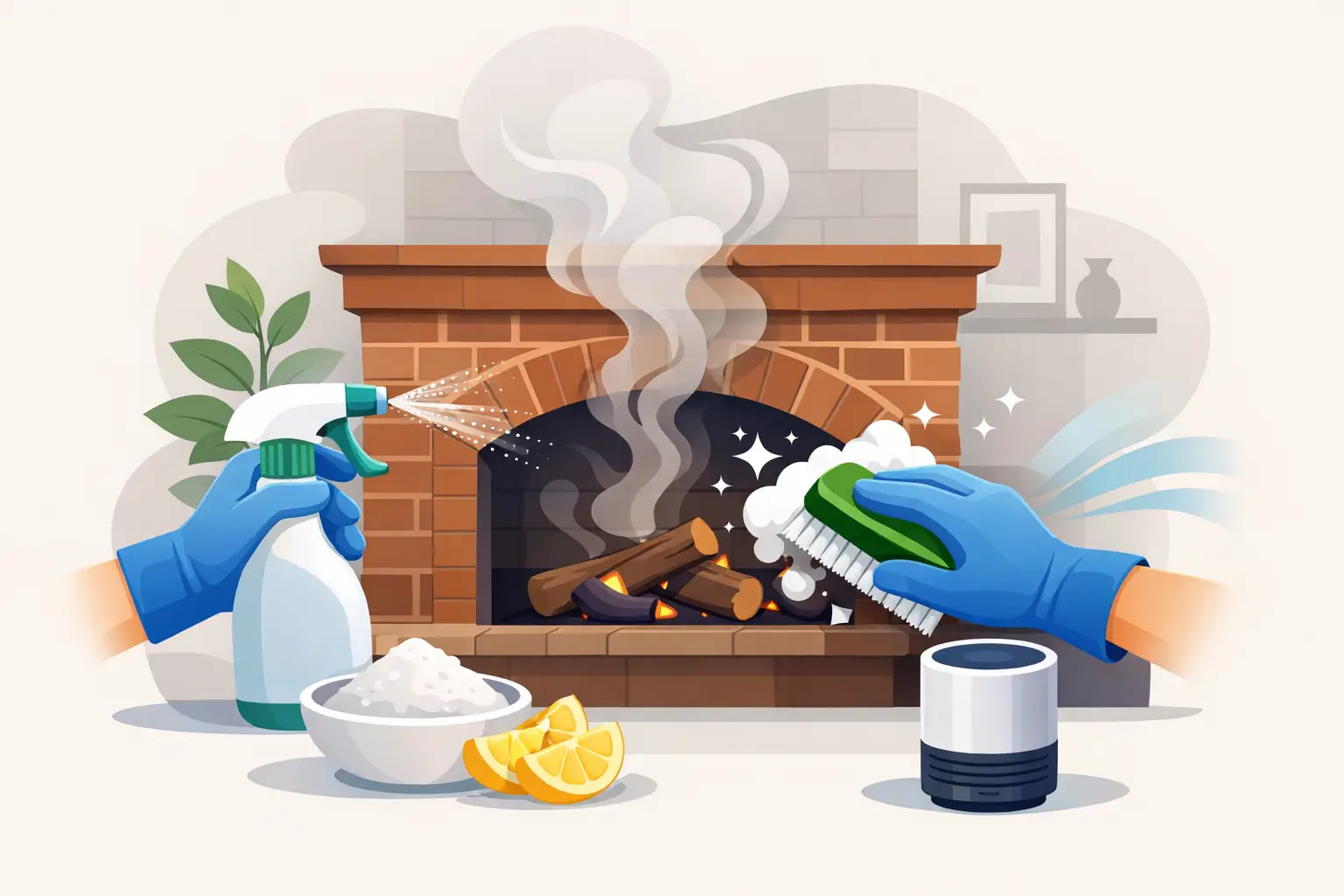
Put on gloves, eye protection, and a well-fitting dust mask before disturbing ash. Fine ash and soot can irritate the eyes and airways, particularly for children, older adults, and anyone with asthma or allergies. Place a drop cloth around the fireplace to protect flooring and furnishings.
Remove loose ash carefully with a metal ash shovel and place it in a metal container with a tight-fitting lid. Ash can retain heat longer than many homeowners expect, so keep the container outdoors on a noncombustible surface until you are certain it is cold. Avoid using a standard household vacuum. Fine ash can pass through filters, spread back into the room, and damage the vacuum. A HEPA-filtered ash vacuum designed for fireplace cleanup is the safer option.
Once the loose debris is removed, wipe the interior masonry or metal surfaces with a dry microfiber cloth or soft brush first. For light soot, a fireplace-specific dry cleaning sponge can lift residue without grinding it further into the surface. These sponges are particularly useful on painted walls, mantels, and other areas where water-based cleaning may smear soot.
For washable fireplace surrounds, use a mild degreasing cleaner appropriate for the material. Brick, stone, tile, painted drywall, and natural stone do not all tolerate the same products. Test any cleaner in an inconspicuous area first. Too much water can drive soot deeper into porous brick, while harsh acidic cleaners can damage certain stone finishes and grout.
Let the fireplace and surrounding surfaces dry thoroughly. If the odor remains, do not keep adding stronger fragrances. Air fresheners may cover the smell for a few hours, but they do not remove the residue causing it. More importantly, a smoky odor that returns after cleaning may be coming from the chimney flue, a draft issue, or hidden smoke deposits in the room.
Clean Nearby Soft Surfaces, Too
If smoke smell has lingered for more than a few days, clean the materials around the fireplace that hold odor. Vacuum carpets and upholstered furniture with a HEPA-filtered vacuum, launder washable blankets and curtains, and wipe hard surfaces around the room. Baking soda can help absorb mild odors from carpeting when used according to the product instructions and thoroughly vacuumed afterward, but it will not correct a dirty chimney.
For a significant smoke event, such as smoke entering the room because of a failed draft or a fireplace door left open, professional carpet and upholstery cleaning may be the better choice. Smoke residue is oily and persistent. Repeated DIY scrubbing can spread staining, set odor into fabric, or damage delicate materials.
Check the Damper, Draft, and Chimney Cap
A clean firebox will not stay fresh if outdoor air keeps carrying chimney odor into your living space. Check that the damper closes fully when the fireplace is not in use. A partially open damper can allow cold, damp air and smoky odors to enter the home.
The chimney cap matters as well. It helps keep out rain, leaves, birds, and other debris that can trap moisture and create odor. A damaged or missing cap may also contribute to downdrafts. From ground level, look for obvious damage, but do not climb onto the roof to inspect the system yourself. Chimney inspection requires proper safety equipment and a close look at components that are not visible from the ground.
If smoke enters the room while you are using the fireplace, stop using it until the cause is identified. Common problems include a closed damper, blocked flue, wet firewood, a cold chimney, or negative air pressure in the home. Running a powerful kitchen exhaust fan, dryer, or bathroom fan can sometimes pull air down a chimney instead of allowing smoke to rise naturally.
When Fireplace Odor Calls for Professional Cleaning
Homeowners can safely handle light ash cleanup, but chimney cleaning is different. Creosote can build up beyond the visible firebox, and obstructions may be high inside the flue. A professional chimney and fireplace service can inspect the system, remove buildup using the right tools, and identify issues such as damaged liners, blockages, moisture intrusion, or poor draft.
Schedule professional help sooner if you notice any of the following:
- A strong smoky or acrid odor that returns soon after cleaning
- Smoke backing up into the room during a fire
- Black staining around the fireplace opening or on nearby walls
- Excessive soot, flaky creosote, or debris falling into the firebox
- Water stains, rust, animal activity, or visible damage around the chimney
- Headaches, dizziness, or carbon monoxide alarm activation while using the fireplace
Carbon monoxide alarms should be installed and working on every level of the home, especially near sleeping areas. If an alarm sounds, get everyone outside, call emergency services if needed, and do not reenter until it is safe. A smoky fireplace smell alone does not confirm carbon monoxide, because the gas has no odor, but fireplace venting problems should never be ignored.
For Dallas-Fort Worth homeowners, On Time Home Experts can help assess fireplace and chimney conditions, then recommend practical next steps with clear, professional service. A trained technician can also help determine whether surrounding indoor air concerns, such as dust, odor in carpeting, or ventilation issues, should be addressed at the same time.
Prevent Smoke Odor From Coming Back
The best way to keep a fireplace from smelling smoky is to burn clean, dry, seasoned firewood and have the chimney inspected and cleaned on a regular schedule. Wet or green wood produces more smoke and creosote, while burning trash, treated lumber, or glossy paper can create harsh fumes and damaging residue.
After each use, allow ashes to cool completely and remove excess ash before it builds up. Keep the damper closed when the fireplace is not in use, and make sure the chimney cap remains intact. If your home is particularly tight or you regularly experience downdrafts, a professional can evaluate airflow and suggest safe solutions tailored to your fireplace setup.
A fireplace should make a Texas home feel comfortable, not leave the room smelling like yesterday’s fire. When cleaning does not solve the problem, treating the chimney, ventilation, and nearby surfaces together is the most reliable path back to a fresher, safer home.