




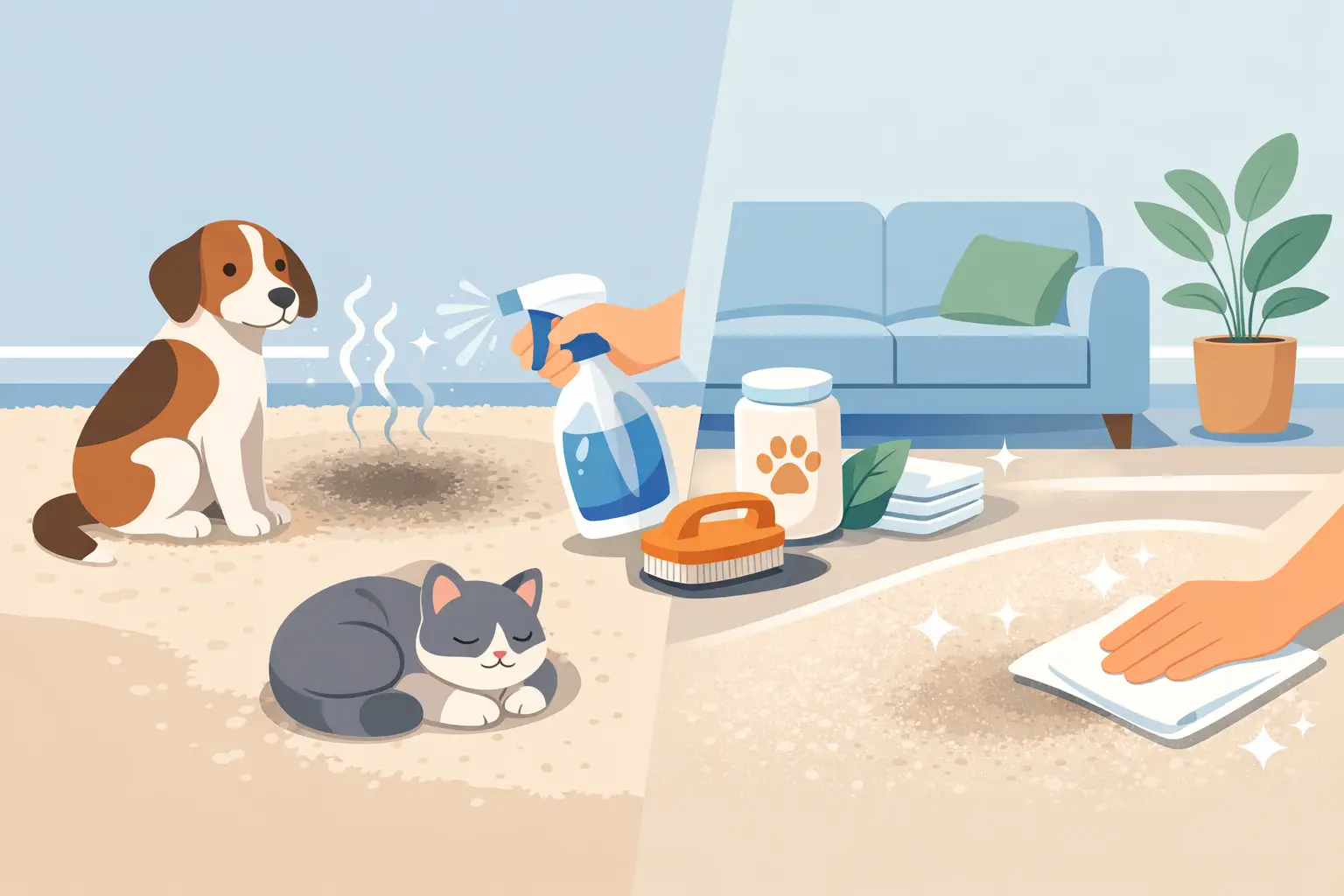
A carpet can look clean and still hold onto the unmistakable smell of urine, damp fur, or an old accident that returns whenever Texas humidity rises. To remove pet odor from carpet for good, you have to treat more than the surface fibers. The odor may be sitting in the carpet backing, pad, subfloor, or nearby upholstery.
That is why repeated sprays often disappoint homeowners. Fragrance can cover a smell for a few hours, but it does not remove the odor-causing residue. A better approach identifies the source, uses the right treatment, and recognizes when deeper professional cleaning is needed.
Why Pet Odor Keeps Coming Back
Pet urine is more than a wet spot. As it dries, it leaves behind crystals and organic compounds that can reactivate when exposed to moisture. Humid weather, steam from a shower, or a routine carpet cleaning can make an old odor noticeable again.
The problem can also spread farther than expected. Liquid moves down through carpet fibers and can soak into the pad underneath. If the accident was large, repeated, or left untreated for a long time, it may reach the subfloor. At that point, treating only the top of the carpet is unlikely to deliver lasting results.
Dogs and cats also tend to revisit areas where they can still detect a previous accident. Their sense of smell is much stronger than ours, so a spot that seems clean to you may still signal a bathroom area to your pet.
Find the True Source Before You Clean
Start by checking the area in normal light for discoloration, stiff fibers, or spots that feel slightly tacky. Do not assume the odor is directly beneath the strongest smell. Air movement can carry odors, especially in rooms with supply vents, ceiling fans, or open doors.
A handheld UV flashlight can help locate old urine stains, particularly in darker rooms. Use it after sunset or with the lights off, and scan slowly. Not every glowing area is urine, but a bright mark combined with odor or discoloration is worth treating.
Also inspect the edges of the room, the area under furniture, pet beds, and upholstered pieces close to the carpet. If a pet has had multiple accidents, mark each suspected area with a small piece of painter’s tape before beginning. Missing one hidden spot is a common reason the room still smells afterward.
How to Remove Pet Odor From Carpet Safely
For a fresh accident, act quickly. Blot the area with clean, white towels or paper towels until they come away mostly dry. Press firmly with your hand or stand on the towels, but do not scrub. Scrubbing can push urine deeper into the carpet and spread it to clean fibers.
Next, use an enzyme-based pet odor cleaner made for carpet. These products are designed to break down the organic material that causes lingering odors. Follow the product directions carefully, especially regarding how long the cleaner must stay damp. Enzymes need contact time to work, and applying a light mist to a deeply soaked area usually will not be enough.
Avoid mixing cleaners. Bleach, ammonia, peroxide-based spot removers, vinegar, and enzyme products can react differently or reduce one another’s effectiveness. Ammonia is also a poor choice for pet urine because its smell can resemble urine to animals and encourage repeat marking.
After treatment, blot away excess moisture and allow the carpet to dry completely. Place fans nearby if possible and keep pets away from the area until it is dry. If the room smells worse temporarily, do not panic. Some odor can become more noticeable during the drying process. Check again after the carpet has dried fully.
Treating Older or Set-In Odors
Old stains may need more than one treatment. Apply the enzyme cleaner generously enough to reach the same depth as the original accident, but do not flood the carpet. Covering the treated area with a clean, damp towel for the recommended dwell time can help prevent it from drying too fast.
Once dry, reassess the smell at different times of day. If the odor returns after humidity or a rainy day, residue may still be below the carpet surface. Repeating the same surface-level process several times can add moisture without solving the underlying issue.
A small spot in a low-traffic area may respond well to careful home treatment. A large stain, repeated accidents, or a smell that affects the entire room calls for a more thorough inspection and extraction process.
What Not to Do When Cleaning Pet Urine
Some well-intended cleaning methods make odor problems harder to solve. Steam cleaning is a good example. High heat can set proteins and odor-causing material into carpet fibers, especially if urine has not first been properly treated with an enzyme cleaner.
It is also tempting to soak the carpet with water, vinegar, or a rental machine. Too much moisture can push contaminants deeper, leave padding wet, and create conditions for mildew. Rental equipment can improve appearance, but its extraction power may not be enough for contamination that has reached the carpet pad.
Avoid relying on scented powders and heavy deodorizers. These products may temporarily make the room smell fresher, but they do not remove urine residue. Powder can also be difficult to vacuum out completely and may leave behind its own fragrance buildup.
When Professional Carpet Cleaning Makes Sense
Professional help is the practical choice when odor continues after proper enzyme treatment, multiple areas are affected, or the carpet smells stronger after cleaning. Trained technicians can assess whether the odor is limited to the carpet or has reached the pad and subfloor. That distinction matters because each layer requires a different solution.
Professional carpet cleaning can provide deeper extraction than most home equipment, helping remove soil, pet dander, and odor-causing residue from the carpet. Depending on the condition of the area, technicians may recommend targeted odor treatment, cleaning beneath furniture, or replacement of contaminated padding. Honest advice is important here: severely saturated padding cannot always be restored through cleaning alone.
For Dallas-Fort Worth homeowners balancing busy schedules with a clean, healthy home, On Time Home Experts provides professional carpet services designed to address the conditions that ordinary spot cleaning can miss. A trained team can help you move from masking odors to finding the cause and treating it correctly.
Protect Your Carpet From Future Odors
The fastest way to prevent repeat odors is to make accidents easier to catch. Keep an enzyme cleaner on hand, and clean fresh spots as soon as you find them. If your pet is suddenly having accidents indoors, consider a veterinary checkup, particularly for older pets or pets whose behavior has changed.
Regular vacuuming matters too. It removes hair, dander, and tracked-in soil that can hold odors and make carpet cleaning less effective. Vacuum at least weekly, and more often in rooms where pets sleep, play, or spend most of their time.
It also helps to schedule periodic professional carpet cleaning before odors become embedded. This is especially useful in homes with several pets, young animals still being trained, or wall-to-wall carpet in bedrooms and living areas.
A home should smell like the people and pets who live there, not like an old accident hiding under the rug. Treat fresh spots quickly, use enzyme products with patience, and seek professional help when the odor points to a deeper problem. That approach protects your carpet, your indoor air, and the comfort of everyone who walks through the door.