




A gutter overflowing during a North Texas downpour is more than an eyesore. It is water going where your home was not designed to handle it. Homeowners often ask, what happens if gutters are clogged? The short answer is that rainwater can back up onto the roof, spill beside the foundation, damage exterior materials, and create conditions that attract pests and moisture problems.
A few leaves may not seem urgent, especially during a dry stretch. But Dallas-Fort Worth weather can shift quickly from intense heat to heavy rain. When the next storm arrives, a blocked gutter system may reveal problems that have been quietly building for months.
What Happens If Gutters Are Clogged During Heavy Rain?
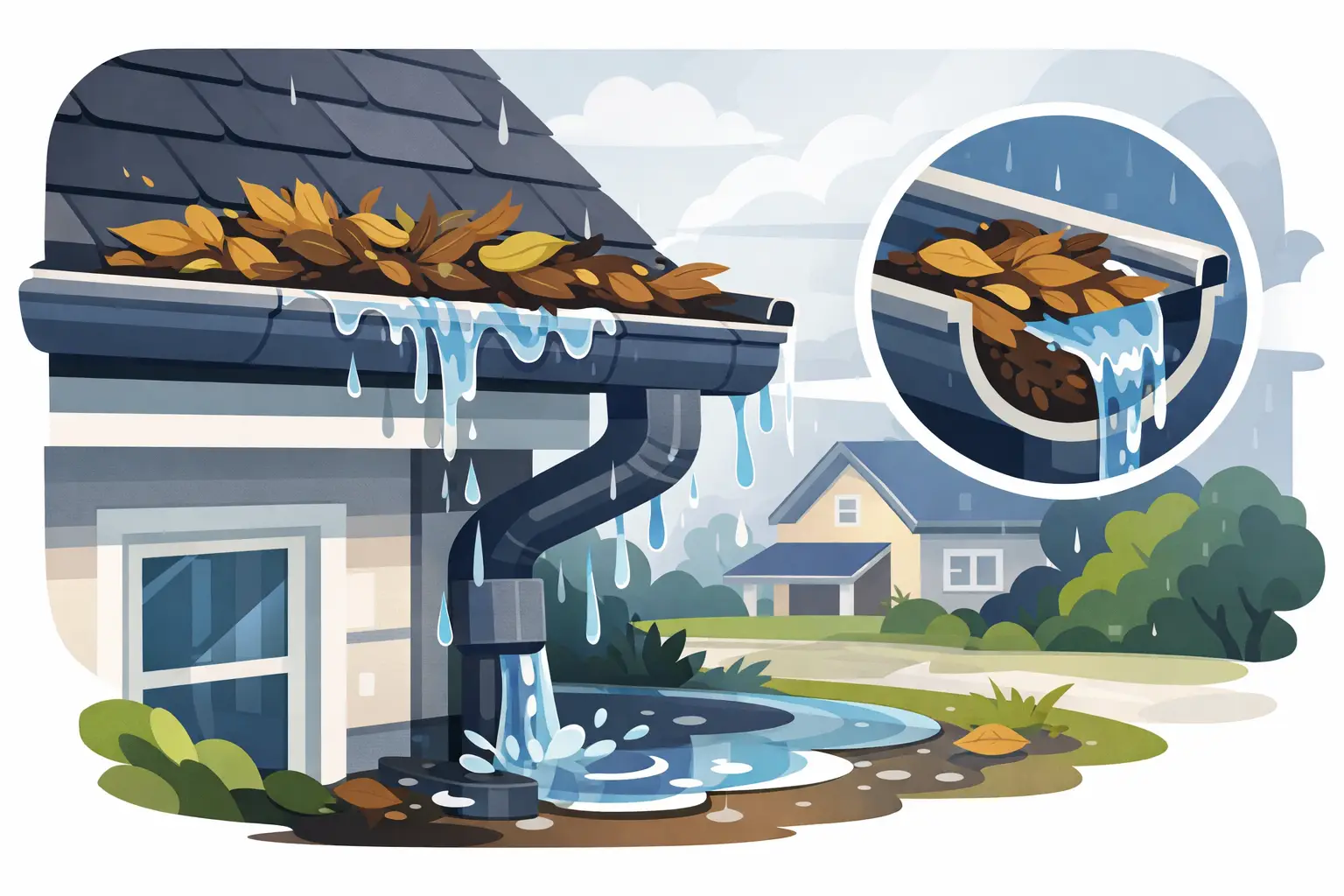
Gutters are meant to collect roof runoff and direct it safely through downspouts, away from the home. When leaves, twigs, roof grit, nests, or other debris block that path, water has nowhere to go. It pools in the gutter, runs over the edge, or backs up beneath the roofline.
The severity depends on the amount of debris, the roof design, the condition of the gutters, and how much rain falls at once. A minor blockage may cause localized overflow. A completely packed gutter or downspout can send a steady sheet of water down the side of the house during every storm.
That repeated overflow can affect several parts of the property at the same time. What begins as routine maintenance can become a roof, drainage, siding, landscaping, or foundation repair issue.
Roof and Fascia Damage Can Start at the Edge
One of the first places clogged gutters cause trouble is the roof edge. Standing water is heavy. As it sits in a blocked gutter, it can pull on fasteners, bend sections of gutter, and place extra stress on the fascia board behind it.
Fascia is the horizontal board where gutters are typically attached. If water repeatedly spills or backs up against this area, wood can soften and rot. Paint may peel, and the gutter may eventually sag or pull away from the house. Reattaching a gutter to damaged wood does not solve the underlying issue – the fascia may need repair first.
Water backing up near the roofline can also find its way beneath shingles or flashing. That does not mean every clogged gutter automatically causes a roof leak, but the risk rises when the system is neglected, the roof is aging, or storms are frequent. By the time a ceiling stain appears indoors, moisture may have already affected roof decking or insulation.
Overflowing Water Can Threaten Your Foundation
Your gutters and downspouts play an important role in controlling where water lands around your home. A clogged gutter can spill large amounts of water directly beside the foundation instead of carrying it to a safer drainage area.
Texas soil is known for expanding when wet and contracting when dry. Excess moisture near the foundation can contribute to soil movement, especially when it happens repeatedly or unevenly around the house. While clogged gutters are not the only cause of foundation issues, they can make existing drainage problems worse.
Watch for water pooling near exterior walls, muddy areas that remain long after rain, erosion around landscaping, or downspouts that discharge too close to the home. These signs do not always mean structural damage has occurred, but they are a reason to address the drainage problem promptly.
Siding, Brick, and Exterior Finishes Take the Hit
When water pours over the front or back of a gutter, it runs down siding, trim, brick, windows, and entryways. Over time, that can leave staining, encourage mildew growth, deteriorate caulk, and wear down paint or other protective finishes.
On homes with wood trim or siding, constant moisture can lead to rot. Brick is durable, but excess runoff can still cause staining and may affect mortar joints over time. Water can also splash soil and mulch onto exterior surfaces, creating a messy appearance that returns after every storm.
The visible streaks are often the first clue homeowners notice. The less visible concern is the moisture collecting behind trim, around window frames, or in areas where exterior sealing has weakened.
Clogged Gutters Can Lead to Mold and Moisture Problems
Gutters do not directly affect indoor air quality in every home, but they can contribute to conditions that do. If water enters through the roofline, exterior walls, or poorly sealed areas, it can dampen building materials and create an environment where mold may grow.
Moisture in an attic deserves particular attention. A roof-edge leak can dampen insulation, wood framing, or ceiling materials before it becomes obvious inside the living space. Wet insulation is less effective, which can make it harder to keep your home comfortable during hot Texas summers and cooler winter days.
A musty odor, discolored ceiling area, bubbling paint, or unexplained moisture near an exterior wall should be taken seriously. The right solution may involve gutter cleaning, roof repair, drainage correction, or moisture inspection. It depends on where the water is entering and how long the problem has been present.
Pests Like the Shelter Clogged Gutters Create
Wet leaves and standing water create an inviting environment for insects and other pests. Mosquitoes can breed in still water, while decomposing debris may attract ants, roaches, and other unwanted visitors. Birds, squirrels, and rodents may also use clogged gutters as a convenient place to nest.
Pest activity can create another blockage problem. Nesting material may pack tightly into a downspout, preventing water from draining even after loose leaves have been removed. If you see gutter vegetation, hear animal activity near the roofline, or notice water overflowing from one spot, a professional inspection can identify whether debris or a nest is blocking the system.
Landscaping and Walkways May Also Suffer
A functioning gutter system protects more than the house itself. Water dumping from a clogged section can wash away mulch, carve channels through flower beds, and damage plants. It can also create slippery areas near walkways, patios, and entrances.
This is especially frustrating when homeowners have invested in landscaping or exterior improvements. Instead of gently moving water away, a blocked gutter concentrates runoff in one spot. The result can be flooded beds, exposed roots, soil erosion, and dirty splatter on nearby surfaces.
When to Clean Gutters in North Texas
For many homes, gutter cleaning at least twice a year is a sensible starting point: once after spring pollen, seed pods, and storms, and again after fall leaf drop. Homes beneath mature trees, near pine trees, or in areas with frequent wind-blown debris may need more frequent service.
Do not wait only for an obvious overflow. You may need cleaning sooner if you notice plants growing from the gutter, water spilling over an edge, sagging sections, visible debris, or downspouts that release little to no water during rain.
Gutter guards can reduce the amount of debris entering the system, but they are not maintenance-free. Small debris, roof granules, and material that collects on top of guards can still interfere with drainage. Periodic inspection remains the practical way to confirm water can flow properly.
Why Professional Gutter Service Is Often the Safer Choice
Cleaning gutters can involve ladder work, roof edges, wet surfaces, and hidden debris. For a single-story home with safe access and light debris, some homeowners may choose to handle basic cleaning themselves. However, steep roofs, two-story homes, heavy buildup, loose gutters, and suspected damage are better left to trained professionals.
A professional service should do more than remove leaves. The technician should check the gutter channels, clear downspouts, look for sagging or loose sections, and identify drainage concerns that could send water back toward the foundation. This approach helps homeowners address the reason for the clog, not just the material visible at the top.
On Time Home Experts provides professional gutter cleaning and replacement services for homeowners who want a reliable, efficient way to protect their property. With clear communication and trained technicians, the goal is simple: keep water moving away from the home where it belongs.
A clean gutter system is one of the smaller maintenance tasks that can prevent much larger headaches. Before the next heavy rain tests your roofline and drainage, take a look up – and make sure the path for water is clear.