

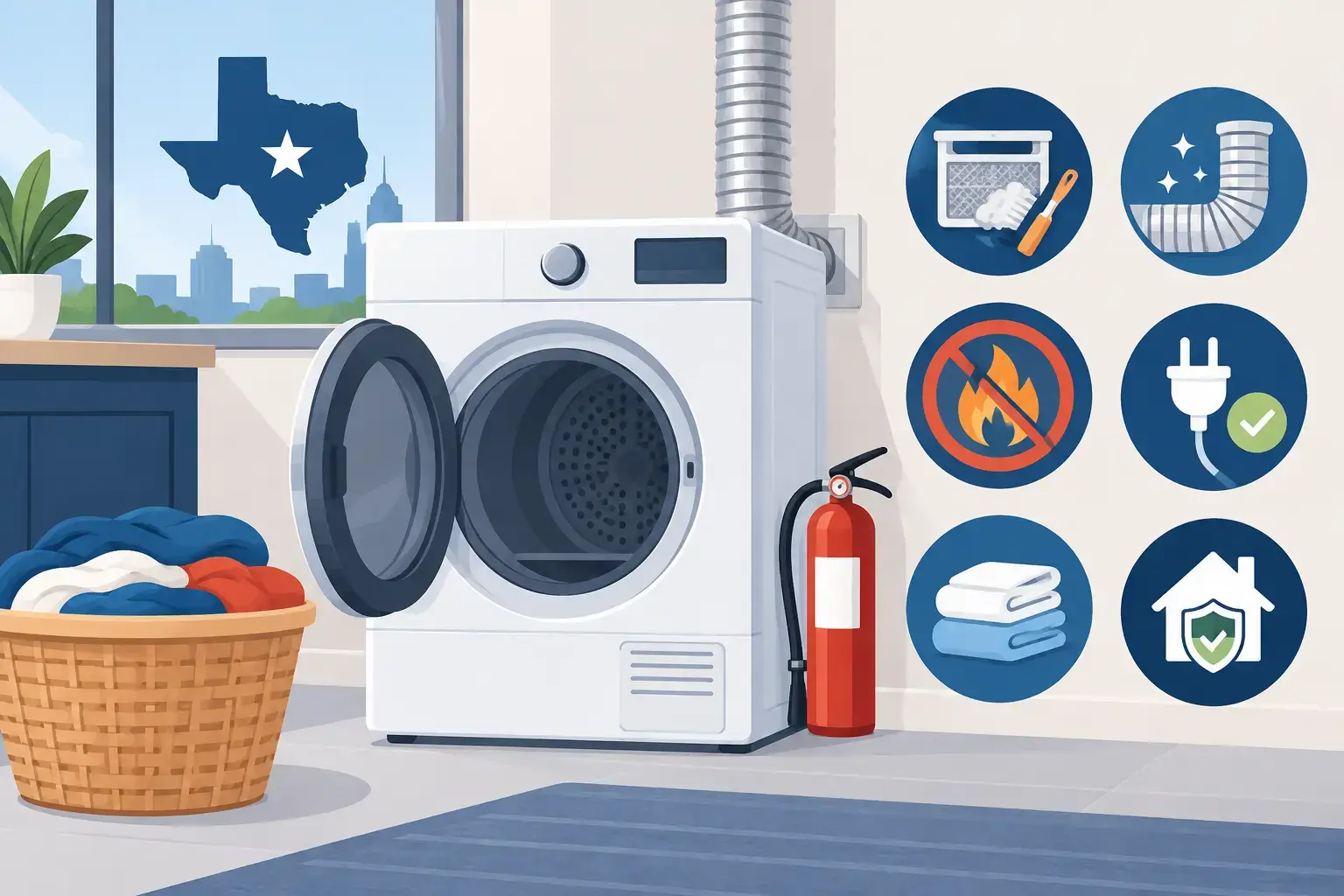
A dryer that takes two or three cycles to dry a normal load is not just frustrating. It can be a warning that heat and lint are building up where they should not. These dryer fire prevention tips help Texas homeowners spot common risks early, protect their families, and keep a hard-working appliance running efficiently.
Why Dryer Fires Start
Most dryer fires begin with a simple problem: restricted airflow. Every load sheds lint, and while the lint screen catches a large portion of it, some fibers still move into the dryer cabinet, vent pipe, and exterior vent hood. Over time, lint can collect around heating components or create a blockage that traps hot, moist air.
The risk rises when a dryer is forced to work harder. Long vent runs, crushed transition ducts, disconnected piping, bird nests, and exterior dampers that will not open can all prevent heat from escaping. In North Texas, dust, storm debris, and seasonal pests can add to the blockage outside.
A clean lint screen alone does not confirm that the full system is safe. The screen is the first line of defense, but the vent path from the laundry room to the exterior of the home needs regular attention too.
10 Dryer Fire Prevention Tips Every Homeowner Should Follow
1. Clean the lint screen after every load
Remove lint before starting another cycle, not just when the screen looks full. A thin layer can reduce airflow and make the dryer run hotter. Once a month, wash the screen with warm water and mild dish soap, then let it dry completely before reinstalling it. Fabric softener and dryer sheet residue can leave a nearly invisible film that limits airflow.
2. Check the area behind and around the dryer
Lint, dust, and stray clothing can accumulate behind the appliance, especially in tight laundry rooms. Carefully pull the dryer forward periodically and vacuum the floor, wall, and accessible areas around the unit. Keep paint, cleaning chemicals, boxes, and other combustible materials away from the dryer.
Do not stack items on top of the appliance or crowd the space around it. Your dryer needs room for proper ventilation and safe operation.
3. Use the right vent material
The short duct connecting the dryer to the wall should be made of rigid or semi-rigid metal. Flexible plastic or foil-style ducting can sag, tear, trap lint, and overheat. It may be inexpensive, but it is not a good trade-off for fire safety or dryer performance.
Rigid metal ductwork offers the smoothest interior surface and the best airflow. If your vent run travels through an attic, wall, crawl space, or roof, professional inspection is especially valuable because hidden sections are harder to evaluate safely.
4. Avoid crushing or kinking the dryer vent
Pushing the dryer tightly against the wall can flatten the transition duct. Even a partial pinch restricts exhaust flow, extends dry times, and raises temperatures. Leave enough room behind the appliance so the vent can make a gentle connection without sharp bends.
If your laundry room is unusually shallow, a periscope-style metal vent connection may help create a safer fit. The best solution depends on the layout, so avoid forcing a standard duct into a space where it does not fit correctly.
5. Make sure the outside vent flap opens
While the dryer is running, check the exterior vent hood. You should feel warm air moving out and see the damper flap open freely. If there is little or no airflow, stop using the dryer until the cause is identified.
A blocked exterior hood can be caused by lint buildup, insect screens, landscaping, nesting material, or a damaged damper. Screens may seem like a smart way to keep pests out, but fine mesh can trap lint quickly. A properly designed hood with a functioning flap is generally a safer choice.
6. Do not leave the dryer running when you leave or sleep
It is tempting to start a load before work or overnight, especially for busy families. But dryers produce heat and should be running only when someone is awake and available to notice unusual smells, sounds, or performance changes.
If you smell burning, see smoke, or notice the dryer becoming unusually hot, turn it off, unplug it if it is safe to do so, and call for qualified help. Do not assume the odor will disappear with the next load.
7. Dry only laundry that is safe for the machine
Items exposed to gasoline, cooking oil, solvents, alcohol, or other flammable substances can ignite from heat, even after washing. Follow garment care labels, and air-dry questionable items outdoors when appropriate. Towels, bedding, and pet blankets can also shed substantial lint, so clean the screen carefully after bulky loads.
Avoid overloading the drum. Clothes need room to tumble so heat and moisture can move out through the vent system. Overstuffing reduces drying performance and puts extra strain on the appliance.
8. Watch for warning signs of a clogged vent
A dryer vent problem is often visible before it becomes dangerous. Pay attention if clothes take longer to dry, the laundry room feels hot or humid, the dryer exterior is very hot, or you notice a musty smell after a cycle. Excess lint around the dryer, a vent flap that does not open, or unusually high utility bills can also point to poor exhaust flow.
These symptoms can sometimes be caused by an appliance issue rather than a vent blockage. Either way, continuing to run the dryer without identifying the cause can create more damage and more risk.
9. Have the dryer vent professionally cleaned on a regular schedule
For many homes, annual dryer vent cleaning is a practical baseline. Homes with large families, frequent laundry loads, long vent routes, multiple pets, or a vent that exits through the roof may need service more often. There is no single schedule that fits every property, which is why an inspection matters.
Professional cleaning reaches beyond the lint screen and accessible duct. Trained technicians can remove buildup from the full vent path, check for disconnections or crushed sections, and verify that exhaust is moving properly outside. On Time Home Experts provides professional dryer vent cleaning for homeowners who want a safer, more efficient system without guessing at what is hidden behind the wall.
10. Keep the dryer maintained, not just the vent
The appliance itself needs attention. Follow the manufacturer’s maintenance instructions, and have worn belts, faulty sensors, damaged heating components, and electrical issues addressed by a qualified appliance professional. Gas dryers also require special care because combustion gases must vent correctly.
Do not attempt to take apart electrical or gas components unless you are properly trained. Cleaning visible areas is a homeowner task. Diagnosing internal heating, wiring, or gas problems is not a place to cut corners.
Dryer Fire Prevention Tips for Older Homes and Remodels
Older homes can have dryer vents that were installed before current safety expectations, while remodeled homes may have longer or more complicated vent routes than the original design. A laundry room moved to an interior location may require multiple turns or a long run to reach an exterior wall. Every added bend can slow airflow and collect lint.
If you are renovating, ask whether the dryer vent route is as short and straight as practical. A direct exterior exit is usually easier to maintain than a route through an attic or roof. This does not mean every existing long vent must be replaced immediately, but it does mean it deserves closer inspection and a maintenance plan.
For homeowners with gas dryers, make sure the exhaust vent and gas connection are both evaluated separately. The dryer vent carries moisture and lint outside. It is not a substitute for proper gas appliance installation or combustion safety checks.
When to Schedule Service Right Away
Some dryer problems should not wait for your usual maintenance appointment. Schedule prompt service if the dryer stops producing normal exhaust airflow, cycles run much longer than usual, lint is visible around the vent outlet, or the machine has a burning smell. A recent roof repair, pest issue, storm, or exterior remodeling project can also affect the vent termination and create an unexpected restriction.
A well-maintained dryer should dry clothes efficiently, vent warm air outdoors, and operate without excessive heat or odors. Taking action when something changes can prevent a small airflow issue from becoming an expensive repair or a serious fire hazard.
Your laundry routine should make home life easier, not add another safety concern. A few consistent habits, plus professional help when the vent is overdue or the warning signs appear, can keep your dryer working safely for the loads that matter most.