



A wet carpet can go from a manageable cleanup to a costly restoration problem faster than most homeowners expect. In North Texas, a burst supply line, overflowing appliance, roof leak, or storm-related water intrusion can leave moisture beneath the carpet even after the surface feels dry. Avoiding common carpet flood cleanup mistakes in the first day can protect your floors, indoor air quality, and household budget.
The goal is not simply to remove visible water. Proper flood cleanup means identifying the water source, stopping moisture from spreading, drying every affected layer, and knowing when contaminated materials must be removed. Here are the mistakes that put Dallas-Fort Worth homes at greater risk.
1. Waiting to Start the Drying Process
The first and most expensive mistake is waiting to see whether the carpet will dry on its own. Carpet fibers may look better after a few hours, but the carpet pad, subfloor, baseboards, and wall cavities can still hold substantial moisture.
Mold growth can begin when wet materials remain damp for roughly 24 to 48 hours. Texas heat and humidity can make the problem worse, especially in rooms with limited ventilation. A musty smell, discoloration along baseboards, or dampness returning after the air conditioner shuts off are signs that moisture remains below the surface.
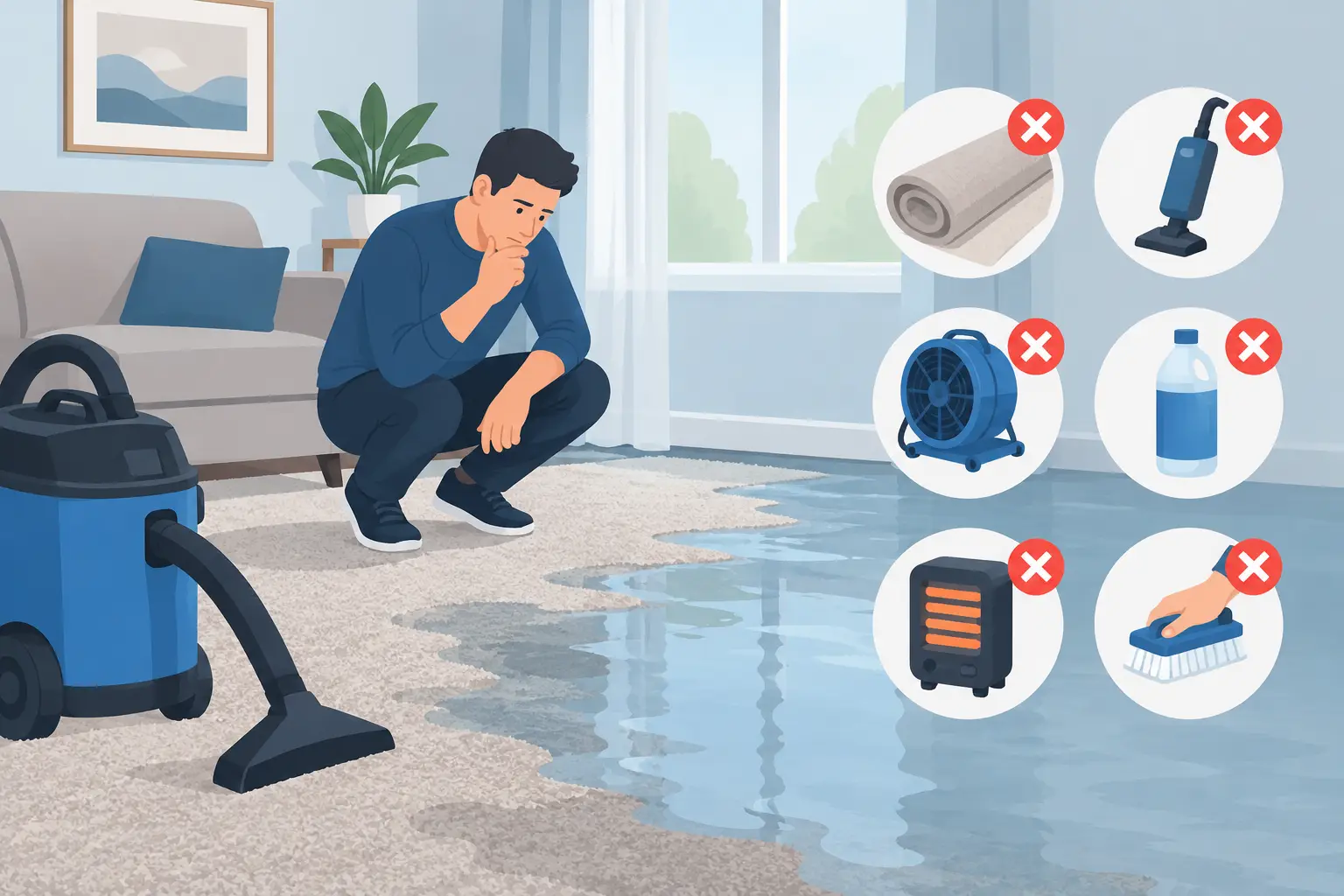
As soon as it is safe, stop the source of water and begin removal. Move lightweight furniture, pick up loose items, and use towels only for small areas. For a room-sized flood, household fans and a shop vacuum are rarely enough to dry the pad and subfloor correctly. Fast professional extraction and moisture testing are usually the safer choice.
2. Treating Every Type of Water the Same
Not all floodwater is safe to handle. A clean-water supply line leak is very different from water that came from a toilet backup, sewer line, outdoor flooding, or a drain overflow.
Clean water may allow for quicker restoration if it is addressed immediately. Gray water, such as water from some appliances or drains, can contain contaminants and becomes more hazardous over time. Black water from sewage or outside floodwater can carry bacteria, viruses, chemicals, and other harmful contaminants. In those situations, trying to save saturated carpet and padding is often not worth the health risk.
Do not let children or pets walk through contaminated water. Avoid using a standard household vacuum, which can spread contaminants and damage the equipment. When the water source is uncertain, treat it cautiously and have the affected area assessed by trained restoration professionals.
3. Leaving Wet Carpet Padding in Place
Carpet padding acts like a sponge. It may absorb a large volume of water while the carpet above it appears only slightly damp. This is why one of the most frequent carpet flood cleanup mistakes is extracting the top of the carpet while leaving the padding untouched.
In many flooding situations, wet padding needs to be removed and replaced. It is inexpensive compared with carpet, but difficult to dry thoroughly once saturated. Leaving it in place can trap moisture against the subfloor, create odors, and encourage mold growth where you cannot see it.
Whether padding can be saved depends on the amount of water, the category of water, the type of pad, and how quickly the cleanup begins. A qualified technician can use moisture meters and lifting techniques to determine what is wet beneath the carpet instead of guessing from the surface.
4. Using Too Much Heat to Dry the Room
It is understandable to want the room dry as quickly as possible. However, blasting a wet carpet with high heat can create uneven drying, raise indoor humidity, and potentially damage carpet backing, wood trim, or nearby materials.
Effective drying depends on controlled airflow, dehumidification, and proper extraction. Air movers direct air across wet surfaces, while commercial dehumidifiers remove moisture from the air so it does not settle back into the room. This combination works more effectively than simply turning up the thermostat or opening windows during humid weather.
If outdoor air is muggy, opening doors and windows can actually add moisture to your home. The right approach depends on current weather conditions, the size of the affected area, and the materials involved.
5. Forgetting About Baseboards, Walls, and Furniture
Water does not stop at the edge of the carpet. It can wick upward into drywall, absorb into baseboards, collect under furniture, and travel beneath adjoining flooring. A homeowner may dry the center of the room while missing the moisture that causes the real damage around the perimeter.
Check for swelling, peeling paint, soft drywall, warped baseboards, and damp furniture legs. Remove area rugs, boxes, and stored belongings from the wet area. Do not place wet furniture back on the carpet until both the furniture and flooring are completely dry.
Wood furniture can stain damp carpet, and metal legs may rust. If heavy furniture cannot be moved, protective blocks may prevent further contact, but drying still needs to occur underneath it. A thorough cleanup evaluates the whole affected zone, not only the obvious puddle.
6. Using a Home Vacuum or Rental Machine for a Major Flood
A wet-dry vacuum can help with a small spill, but it is not a full flood-restoration system. Rental carpet cleaners and consumer vacuums are designed for routine cleaning, not for extracting gallons of water from carpet, padding, and subfloor materials.
They may leave significant moisture behind, especially along seams and edges. They can also create a false sense that the job is finished because the carpet looks cleaner or feels less wet. Without moisture readings, there is no reliable way to confirm that hidden materials have reached a safe drying level.
For a limited spill on clean carpet, prompt extraction and air circulation may be sufficient. For water that has spread across a room, reached the pad, or sat overnight, professional equipment and inspection are a better investment than repeated DIY attempts.
7. Applying Fragrance Instead of Solving the Odor
Air fresheners, scented powders, and heavy deodorizing sprays may cover a musty odor for a few hours. They do not remove the moisture or microbial growth causing it.
A persistent odor after a flood usually means something remains wet, dirty, or contaminated. It may be the carpet pad, the backing of the carpet, the subfloor, or damp drywall behind a baseboard. Adding fragrance can make it harder to identify the source and may irritate people with allergies, asthma, or chemical sensitivities.
The solution is source removal and complete drying. Once moisture and contamination have been properly addressed, appropriate cleaning and deodorizing can help restore the room without masking an unresolved problem.
8. Waiting Too Long to Call for Help
Many homeowners delay because they are concerned about cost or hope the carpet will recover on its own. That delay can turn a straightforward extraction job into carpet replacement, drywall repair, mold remediation, and more time away from the room.
Calling early does not always mean every material must be removed. It means a professional can assess the damage while more options are still available. The best outcome depends on the water source, how long materials were wet, and whether moisture has spread beyond the carpet.
For Dallas-Fort Worth homeowners, On Time Home Experts can help address water-affected carpet with fast, professional service and a clear explanation of what your home needs. A trained team can evaluate the condition of the carpet, padding, and surrounding areas so you are not left making a costly decision based on appearance alone.
What to Do While You Wait
If the water is clean and it is safe to enter the area, shut off the water source if possible, move valuables to a dry location, and keep people and pets away from the wet room. Take photos for insurance documentation before moving damaged items. If water is near electrical outlets, appliances, or your electrical panel, do not enter the area until it is safe to do so.
Do not pull up carpet contaminated by sewage or outdoor floodwater without proper protective equipment. Avoid placing wet items in a closed garage or closet, where they can develop mold and odors. When in doubt, protect your family first and let trained professionals determine the safest path forward.
Quick action after a flood is not about panicking. It is about preventing a hidden moisture problem from becoming a lasting problem in the home you work hard to maintain.