




A hard Texas rain can expose a gutter problem in minutes. Water spilling over the edge, pooling near the foundation, or streaking down exterior walls is more than an eyesore. It can lead to roof damage, wood rot, landscape erosion, and moisture concerns around your home. When homeowners compare gutter cleaning versus gutter guards, the right answer is rarely an all-or-nothing choice. It depends on the trees around your home, the age and condition of your gutter system, and how much maintenance you are prepared to manage.
Gutter Cleaning Versus Gutter Guards: The Main Difference
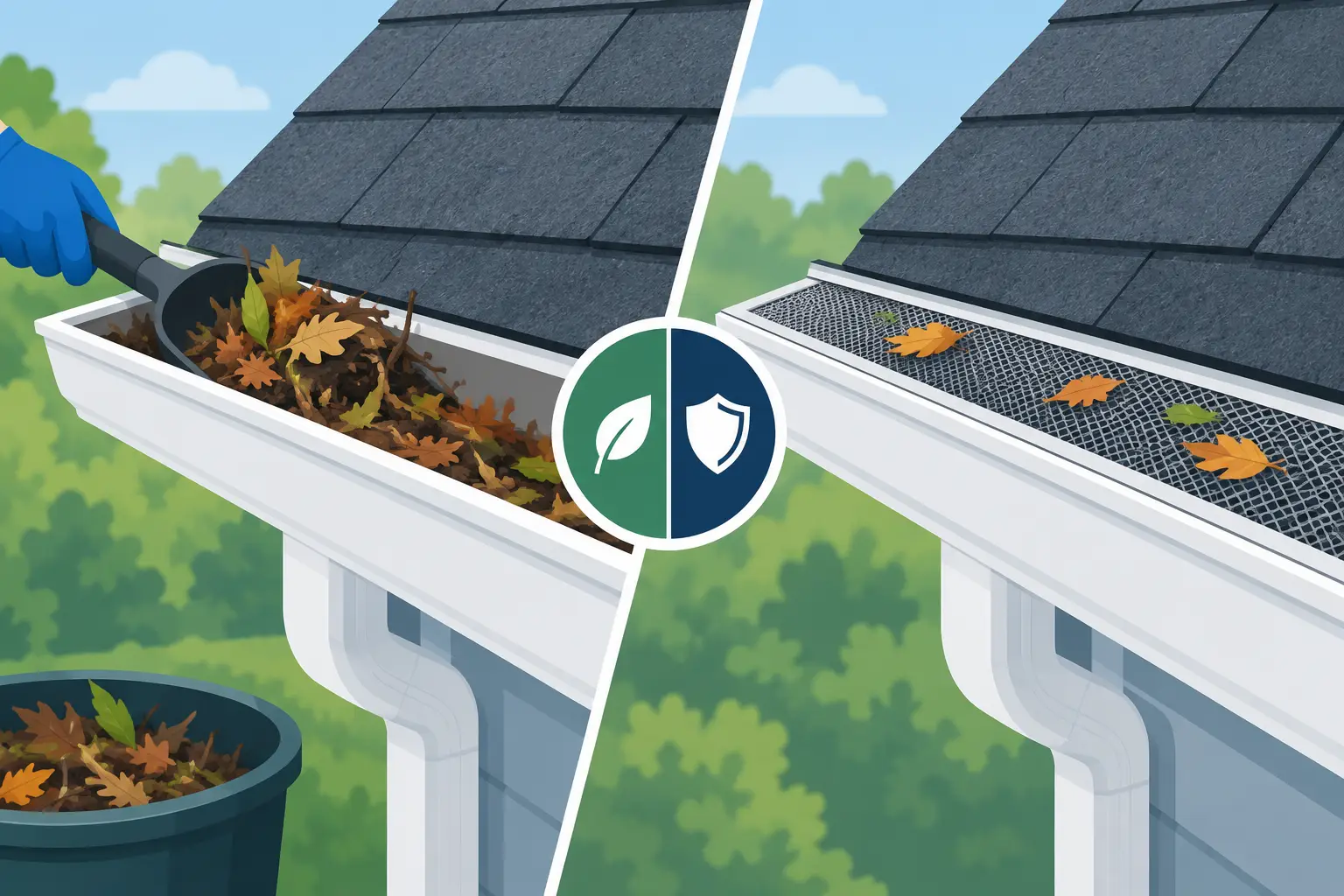
Gutter cleaning removes leaves, twigs, roof grit, and other debris that has already collected in your gutters and downspouts. It is a necessary maintenance service for nearly every home, whether it has guards or not. Clean gutters allow rainwater to travel through the system and discharge away from the home as intended.
Gutter guards are covers, screens, or inserts installed over the gutter channel. Their purpose is to reduce how much debris enters the gutters in the first place. A quality guard can limit the buildup of larger leaves and branches, but it does not make a gutter system maintenance-free.
Think of cleaning as the hands-on maintenance your drainage system needs, while guards are a preventive upgrade that may reduce how often heavy cleanings are needed. Both can be valuable, but they solve different parts of the problem.
Why Clean Gutters Matter for Texas Homes
North Texas weather puts gutters through a demanding cycle. Spring storms can bring fast, heavy rainfall. Summer winds carry leaves, seed pods, and shingle grit into gutter channels. Fall leaf drop can quickly pack gutters with debris, while winter freezes can create added stress where standing water is trapped.
When a gutter is clogged, water takes the path of least resistance. That may mean running behind the gutter, soaking fascia boards, spilling over entryways, or collecting near the foundation. In the Dallas-Fort Worth area, where intense rain can arrive quickly, a partially blocked downspout can be enough to cause overflow.
Professional gutter cleaning also gives homeowners a chance to identify issues that are easy to miss from the ground. Loose hangers, separated joints, sagging sections, rust, and damaged downspout connections all affect performance. Cleaning a damaged gutter without correcting the underlying issue only delays the next problem.
What Gutter Guards Can Do Well
Gutter guards can be a practical investment for homes surrounded by mature trees or properties where debris returns quickly after cleaning. They are especially helpful when large leaves, small branches, and roof debris repeatedly clog open gutters.
A properly selected and correctly installed guard can reduce the volume of debris that enters the gutter channel. This may mean fewer major cleanouts, less standing organic material, and a lower likelihood of downspouts becoming packed with leaves. Guards can also make it harder for birds and pests to nest inside open gutters.
The best guard for one home is not automatically the best guard for another. Mesh screens, surface-tension covers, and foam-style inserts perform differently depending on roof pitch, gutter shape, nearby trees, and the type of debris common on the property. Fine mesh may block small debris effectively, for example, but pollen, roof grit, and seed material can still collect on top and require occasional brushing or rinsing.
Installation quality matters just as much as guard style. Guards that are poorly fitted can interfere with water flow, pull away during storms, or create areas where debris catches along the roof edge. Before adding guards, the existing gutters should be securely attached, properly pitched, and free of leaks.
The Limits of Gutter Guards
The biggest misconception about gutter guards is that they eliminate maintenance forever. No guard can stop every form of buildup. Small particles, shingle granules, pine needles, pollen, and windblown dirt can still find their way into the system. Debris can also accumulate on top of guards and block water from entering during a downpour.
Guards do not repair old or undersized gutters. If water regularly overshoots the gutter during heavy rain, the issue could involve poor gutter pitch, an undersized system, roof-valley runoff, or clogged downspouts. Covering the gutter will not correct those problems.
They can also make neglected gutters harder to inspect. A guard may hide buildup beneath the surface until water begins overflowing. That is why homes with guards still benefit from periodic professional checks, particularly after storm season or significant leaf drop.
Which Option Costs Less Over Time?
Routine gutter cleaning has a lower upfront cost because you pay for the service as needed. For many homes with limited tree coverage, scheduling cleaning once or twice a year is the most practical and cost-effective approach. It keeps the system functioning without investing in an upgrade that may not be necessary.
Gutter guards require a larger initial investment. Their value improves when a home needs frequent cleaning due to heavy tree coverage or difficult roof access. If guards reduce the need for repeated deep cleanings and help prevent clogs during major storms, they can be worthwhile over the long term.
Cost should not be the only decision point. A low-cost guard that traps debris, restricts water flow, or is improperly installed can create more work instead of less. Likewise, delaying basic cleaning to save money can result in far more expensive fascia, roof, siding, or foundation repairs.
How to Choose for Your Property
Start with the condition of your current gutter system. If gutters are leaking, sagging, pulling away from the fascia, or overflowing in clear areas, repair or replacement may be needed before considering guards. A guard is an accessory to a functioning drainage system, not a substitute for one.
Next, consider your tree coverage. A newer home with few nearby trees may only need scheduled cleaning. A home beneath oaks, pines, or other heavy-dropping trees may benefit from guards after the gutters and downspouts are cleaned and inspected.
Roof design also matters. Multi-level roofs, steep slopes, and valleys can direct a large volume of water into a small gutter area. These homes may need targeted gutter improvements, larger downspouts, or more frequent service regardless of whether guards are installed.
Finally, be realistic about maintenance. Climbing a ladder with tools and wet debris is not a safe weekend project for many homeowners. Professional service helps ensure gutters are cleared, downspouts are checked, and visible concerns are addressed without putting you at risk.
A Practical Maintenance Plan
For most DFW homeowners, the most reliable approach is scheduled cleaning combined with periodic inspection. Clean open gutters at least once or twice a year, and more often if your property has significant tree cover. Check them after major storms, especially if you see overflow, water stains, or displaced gutter sections.
If recurring debris is a constant issue, consider gutter guards as part of a broader gutter maintenance plan. Have the system cleaned first, make needed repairs, and choose a guard suited to the home rather than relying on a one-size-fits-all promise. Even with guards, plan for professional inspections so minor blockages and damage do not become costly surprises.
On Time Home Experts can help homeowners evaluate gutter buildup, drainage concerns, and visible system damage with straightforward recommendations and professional service. The goal is not to sell an unnecessary upgrade. It is to keep rainwater moving away from the areas of your home that are most expensive to repair.
The best next step is simple: look at how your gutters performed during the last heavy rain. If water overflowed, downspouts failed to drain, or debris is visible from the ground, address it before the next storm tests your home again.