




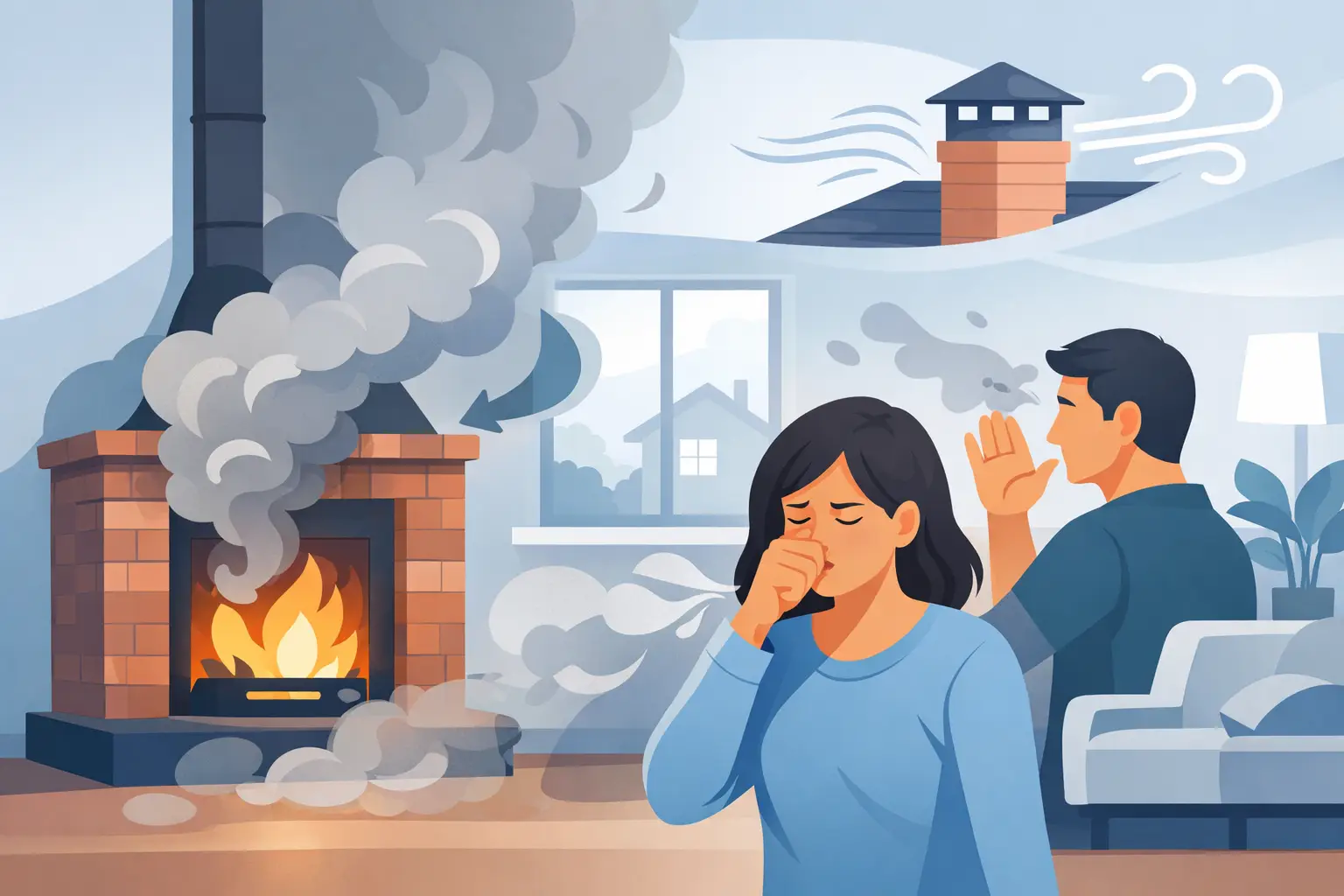
A fireplace should make your living room feel warm and inviting, not fill it with a sharp, smoky odor that sends everyone reaching for a window. If you need to stop fireplace smoke entering home, start by treating it as more than a comfort problem. Smoke inside the house can affect indoor air quality, leave soot on walls and furnishings, and signal a chimney or ventilation issue that needs attention.
A little smoke when first lighting a fire can happen, especially during a cold Texas morning. Ongoing smoke, however, is not something to ignore. The right solution depends on whether the issue is poor draft, a closed damper, wet firewood, a blockage, or pressure changes inside the home.
Why Fireplace Smoke Comes Back Into the House
Your chimney works by using warm air to create an upward pull called draft. As the fire heats the flue, smoke and combustion gases should rise through the chimney and exit above the roofline. When that airflow is weak, restricted, or moving in the wrong direction, smoke can spill from the firebox into the room.
Cold air in the flue is a common reason. Before a fire starts, the chimney can act like a column of cold, heavy air pushing downward. This is especially noticeable after a fireplace has not been used for months. A fire that is built too quickly can create more smoke than the cold flue can move upward.
Other causes may be more serious. Creosote buildup, animal nests, leaves, damaged chimney components, or a blocked chimney cap can all limit airflow. Fireplace smoke may also enter the home when powerful kitchen exhaust fans, bathroom fans, clothes dryers, or a tightly sealed home create negative air pressure. In that situation, the house may pull air down the chimney instead of allowing it to rise.
8 Ways to Stop Fireplace Smoke Entering Home
1. Confirm the damper is fully open
This sounds simple, but it is one of the most frequent reasons for a smoky fireplace. The damper is the metal plate that opens the path from the firebox to the flue. If it is closed or only partly open, smoke has nowhere to go except back into the room.
Before lighting a fire, use a flashlight to look upward from the firebox if you can safely do so. You should be able to see an open path into the flue. If the damper handle is difficult to move, will not stay open, or appears damaged, do not force it. A chimney professional can inspect and repair the mechanism.
2. Warm up a cold flue first
A cold chimney needs a moment to establish upward airflow. Before adding larger logs, light a small amount of dry kindling or a rolled piece of newspaper near the back of the firebox, close to the flue opening. Keep the damper fully open and watch whether the smoke begins to rise.
Some homeowners use a fireplace lighter or fire starter for this step. The goal is to gently warm the air in the flue, not create a large, smoky fire immediately. Once the draft is moving upward, build the fire gradually with kindling and small dry pieces of wood.
3. Burn only seasoned, dry firewood
Wet or unseasoned wood produces excessive smoke, burns poorly, and creates more creosote in the chimney. Wood should be properly seasoned, stored off the ground, and protected from rain while still allowing airflow around the stack.
Dry firewood usually has cracks at the ends, feels lighter than freshly cut wood, and makes a sharper sound when pieces are knocked together. Avoid burning treated lumber, painted wood, cardboard, trash, or construction scraps. These materials can release harmful fumes and leave deposits that create chimney safety problems.
4. Build a smaller, hotter fire
Overloading the firebox is a common mistake. A large pile of logs can restrict airflow and produce a burst of smoke before the chimney draft is strong enough to handle it. Start with a modest fire using kindling, small split logs, and adequate space between pieces.
Make sure the grate is positioned correctly and ash is not piled high beneath it. A thin layer of ash is normal, but too much can limit the air that feeds the fire. Better airflow helps wood burn hotter and cleaner, which reduces the chance of smoke rolling into the room.
5. Reduce negative pressure in the home
Modern homes are often sealed tightly for energy efficiency. That is good for comfort and utility costs, but it can affect fireplace performance when several exhaust appliances are running. A range hood, dryer, bath fan, or whole-house ventilation system may pull enough indoor air out to reverse chimney draft.
Try turning off nearby exhaust fans before lighting the fireplace. If the problem improves when you crack open a nearby window slightly, negative pressure may be a contributing factor. This does not mean you should rely on an open window every time you use the fireplace. It means your home and chimney may need a professional assessment to identify a lasting ventilation solution.
6. Check for visible obstructions around the fireplace
Look for obvious issues at the firebox opening, such as a misplaced fireplace screen, a decorative log arrangement blocking airflow, or excessive ash. From outside, you may be able to see whether the chimney cap is visibly damaged, tilted, or covered with debris.
Do not climb onto the roof or reach deep into the chimney to investigate. Chimney systems can contain sharp metal edges, unstable masonry, and hidden blockages. Birds, squirrels, and other animals may nest in chimney tops, particularly when fireplaces sit unused through much of the year.
7. Schedule chimney and fireplace cleaning
Creosote is a dark, sticky, or crusty material created when wood smoke cools inside the chimney. It can restrict the flue and is highly flammable. Even homeowners who use their fireplaces only occasionally can develop buildup, especially if they burn damp wood or have repeated draft problems.
Professional chimney and fireplace cleaning removes combustible deposits and allows the technician to check for blockages, damaged liners, cracked fireboxes, loose masonry, and cap issues. A proper inspection is more than a quick sweep. It helps identify the reason smoke is entering your home before the issue turns into a larger repair or fire risk.
8. Have the chimney design evaluated if the problem continues
Sometimes the chimney is clean and the damper is open, yet smoke still enters the house. In those cases, the issue may involve chimney height, flue size, cap design, nearby rooflines, tall trees, or wind patterns around the home.
This is particularly possible after a roof renovation, addition, or major HVAC upgrade. Changes to the home can alter airflow in ways that affect draft. A qualified professional can determine whether the chimney needs a different cap, flue repair, draft correction, or another targeted improvement.
When Smoke Is a Safety Concern
Stop using the fireplace and arrange an inspection if smoke enters the room every time you light a fire, if you smell smoke when the fireplace is not in use, or if you see black soot staining around the opening. These signs can point to a blocked flue, downdraft, or venting failure.
Carbon monoxide is another concern because it has no color or smell. Every home with a fireplace should have working carbon monoxide alarms, ideally near sleeping areas and according to the manufacturer’s placement instructions. If an alarm sounds or anyone experiences headache, dizziness, nausea, confusion, or unusual fatigue while a fire is burning, leave the home and contact emergency services.
Never try to solve persistent smoke problems by closing doors, covering vents, or using room sprays to hide the odor. Those steps do not fix the source and can make indoor air conditions worse.
Professional Help for Dallas-Fort Worth Fireplaces
Dallas-Fort Worth homeowners may use their fireplaces in short bursts during cold weather, which makes it easy to miss a developing chimney issue until the first fire of the season. A professional cleaning and inspection before regular use gives you a clearer picture of the fireplace’s condition and helps protect your home from soot, odors, creosote, and avoidable fire hazards.
On Time Home Experts provides professional chimney and fireplace cleaning with trained, insured technicians and straightforward service. If your fireplace is smoking, a proper inspection can separate a simple draft issue from a blockage or maintenance concern that should not wait.
Your fireplace should add comfort to your home, not compromise the air your family breathes. Address the cause early, use clean dry wood, and let a trained professional evaluate any smoke problem that does not disappear after basic safety checks.