





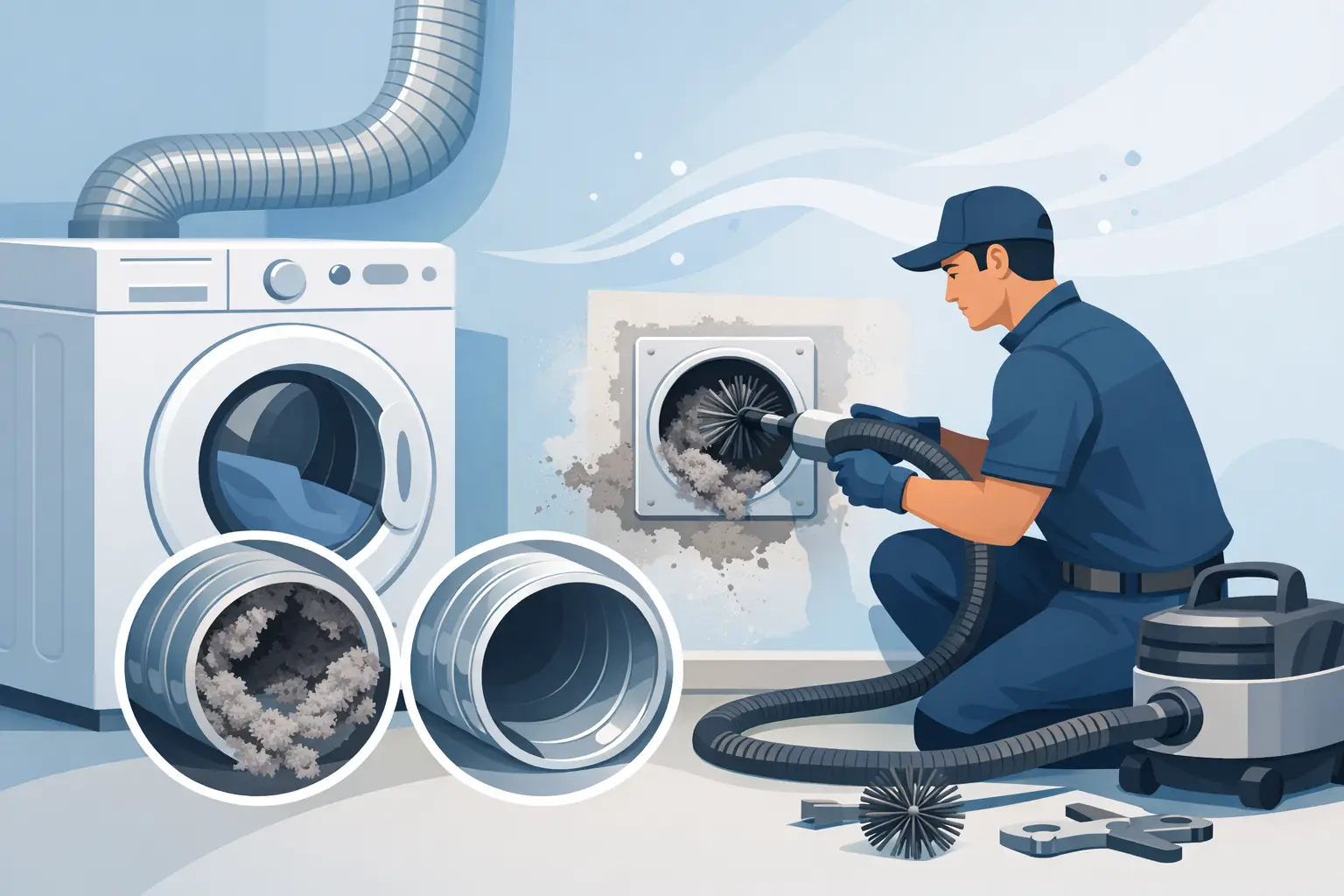
A load of towels that used to dry in one cycle but now needs two or three is more than an everyday annoyance. It can be one of the first signs that your dryer vents are restricted by lint, debris, or a damaged vent line. For Texas homeowners, especially those managing busy family laundry routines, a slow dryer can signal a preventable safety and efficiency issue.
Lint is highly combustible, and your dryer creates heat every time it runs. When hot, moist air cannot move freely through the vent to the exterior of your home, the dryer has to work harder. That extra strain can raise utility costs, wear down the appliance, and increase the chance of overheating.
Why Dryer Vents Matter for Your Home
Your dryer’s lint screen catches some fibers, but it cannot catch everything. Fine lint passes through the screen and gradually collects inside the vent line, particularly at turns, long runs, and the outside termination cap. Dust, pest nests, leaves, and moisture can add to the blockage over time.
A properly working dryer vent removes heat, lint, and humid air from the laundry area. When that pathway is clear, clothes dry more efficiently and the dryer operates closer to the way it was designed. When it is blocked, the appliance may run longer, feel unusually hot, or leave clothes damp at the end of the cycle.
This is not only an appliance problem. Excess humidity in a laundry room can contribute to musty odors and moisture concerns around walls, floors, or cabinetry. In a home where the laundry area is near bedrooms, closets, or conditioned living space, that extra heat and moisture can make the area less comfortable.
Warning Signs Your Dryer Vent May Be Clogged
Homeowners do not need to wait for a complete blockage before taking action. The most common warning sign is longer drying time, especially with heavier loads such as towels, jeans, sheets, and bedding. If the dryer used to handle those loads without trouble, a change in performance deserves attention.
Other signs include clothes that are very hot after a cycle, a burning or dusty smell, visible lint around the exterior vent opening, or a laundry room that feels hotter and more humid than usual. You may also notice that the exterior vent flap does not open properly while the dryer is running. That can mean airflow is weak or the flap is stuck by lint and debris.
Some warning signs call for faster action. Turn off the dryer and arrange a professional inspection if you smell something burning, see signs of scorching near the dryer connection, or find that the appliance repeatedly shuts off mid-cycle. These issues do not automatically mean there has been a fire, but they should not be ignored.
What Makes a Dryer Vent More Likely to Clog
Every household produces lint, but some vent systems need more frequent attention than others. A large family, frequent laundry loads, pet hair, and thick fabrics all increase lint buildup. Homes with long vent runs, multiple bends, or a vent route that travels through an attic, crawl space, or wall cavity can also be harder to keep clear.
The vent material matters as well. Rigid metal ducting is generally the preferred option because it supports stronger airflow and is easier to clean thoroughly. Flexible foil or plastic-style materials can sag, tear, trap lint, and create more resistance. Plastic or vinyl ducting should not be used for dryer exhaust because it is not designed to handle dryer heat safely.
A crushed transition hose behind the dryer is another common problem. Homeowners sometimes push the appliance too close to the wall after moving or cleaning behind it. That can pinch the connection and restrict airflow immediately, even if the rest of the vent line is relatively clean.
How Often Should Dryer Vents Be Cleaned?
For many homes, annual dryer vent cleaning is a sensible maintenance schedule. That said, the right timing depends on your household and the vent system. A home with one or two people who do a few loads each week may have different needs than a household with children, pets, and daily laundry.
Consider scheduling service sooner if drying times have increased, you recently moved into a home with an unknown maintenance history, or your vent system is long and complex. Property owners and landlords should also keep dryer vent maintenance on the regular maintenance calendar, especially when appliances are used heavily between tenants.
Cleaning the lint screen after every load is still essential, but it is not a replacement for cleaning the vent. The screen protects the dryer and improves airflow at the appliance, while professional vent cleaning addresses the buildup farther down the exhaust path.
Why Professional Dryer Vent Cleaning Is Worth It
A basic homeowner check can help identify obvious concerns. You can look behind the dryer for a crushed hose, clean the lint screen, and make sure the outside vent cover is not visibly blocked. But a full cleaning can involve navigating a long concealed duct, removing compacted lint, checking joints and connections, and confirming that air is exhausting outdoors as it should.
Professional technicians use purpose-built equipment to remove debris from the vent system without treating the job like a simple vacuuming task. They can also identify issues that cleaning alone will not fix, such as disconnected sections, improper materials, damaged vent covers, or a vent route that creates recurring airflow problems.
The goal is not to sell unnecessary work. It is to give homeowners a clear picture of what is happening inside a system they cannot fully see. A trustworthy service provider should explain the condition of the vent, discuss any safety concerns in straightforward language, and provide transparent recommendations before additional work is performed.
Simple Habits That Help Between Cleanings
A few routine habits can reduce strain on your dryer. Clean the lint screen before or after every load, and wash the screen occasionally with warm water and mild soap if it has a film from dryer sheets or fabric softener. That residue can reduce airflow through the mesh even when the screen looks clean.
Avoid overloading the dryer, since tightly packed loads take longer to dry and create more lint. Check the exterior vent cover periodically for leaves, nests, and damage, particularly after storms or seasonal weather changes. If you notice the cover is missing or stuck shut, have it repaired promptly so the dryer can exhaust properly while keeping pests out.
Be cautious with DIY vent-cleaning kits. They can be useful for short, straight, accessible runs, but they may not reach through bends or remove packed lint from a longer system. In some cases, flexible rods can disconnect weak duct joints or get caught in damaged ductwork. If the vent route is not easy to follow, professional service is the safer choice.
A Safer, More Efficient Laundry Room
Dryer vent maintenance is one of those home tasks that is easy to postpone because the system is mostly hidden. Yet the results of a clogged vent are often visible in higher drying times, rising energy use, excess heat, and avoidable fire risk.
For homeowners in Dallas-Fort Worth and surrounding Texas communities, On Time Home Experts provides professional dryer vent cleaning with trained, insured technicians and clear service recommendations. A properly cleaned, inspected vent helps protect your home, supports better appliance performance, and gives you one less household concern to carry into the next laundry day.
If your dryer is taking longer than it should, treat that change as useful information. Addressing airflow early is usually simpler, safer, and more cost-effective than waiting for a complete blockage or an appliance failure.