





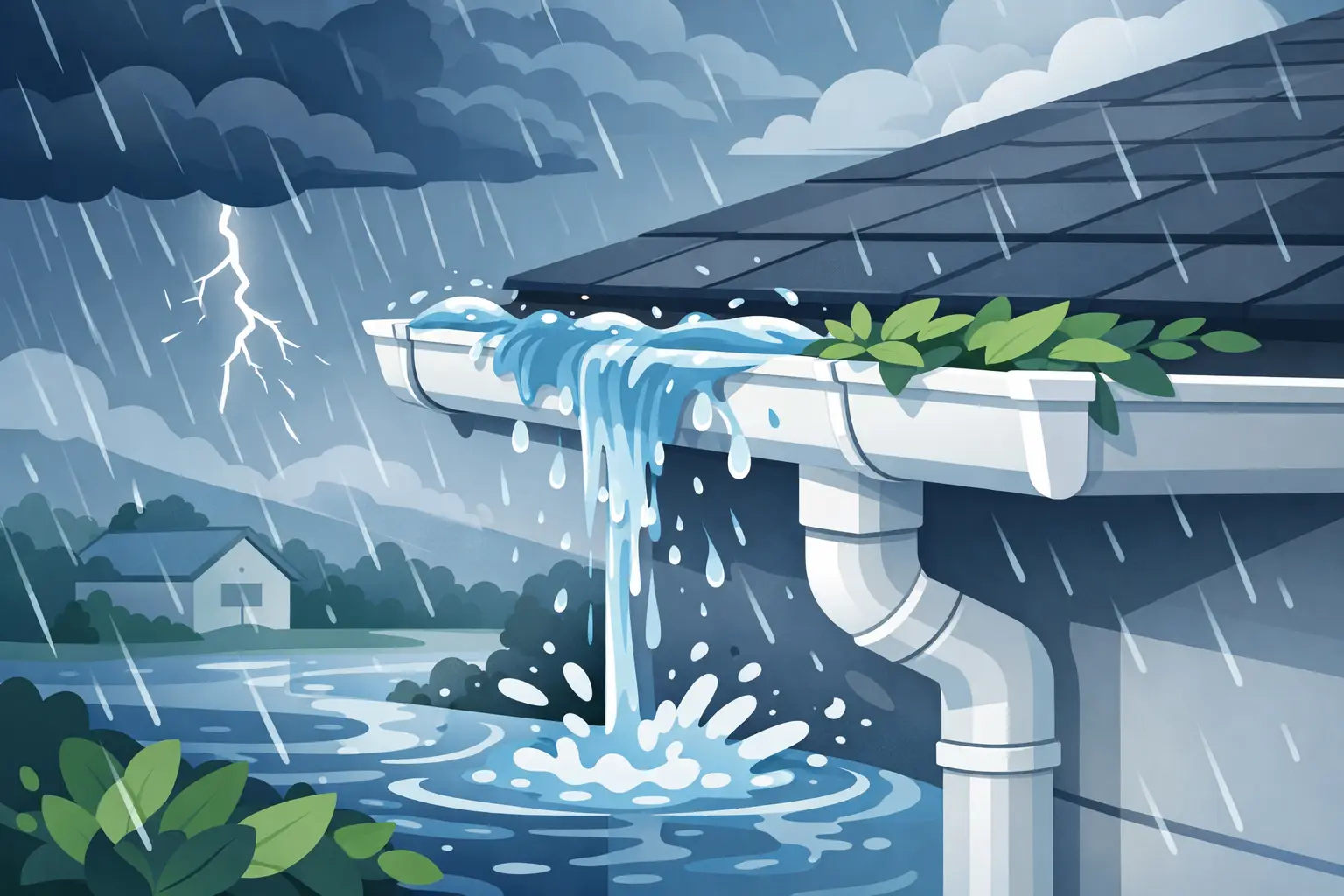
A North Texas thunderstorm can drop a surprising amount of water in a short time. When gutters cannot move that water away from the roofline, it spills over the sides, pounds the soil near the foundation, and can find its way into soffits, walls, and crawl spaces. To prevent gutter overflow during storms, homeowners need more than a quick look from the driveway. They need a clear path for rainwater from the roof to a safe drainage area.
For Dallas-Fort Worth homeowners, this is especially relevant after windy spring storms, heavy summer downpours, and fall leaf buildup. A gutter system may appear fine during a light rain but fail when it is asked to handle a real storm. Addressing small drainage problems before the next weather event is one of the simplest ways to protect your home from expensive water damage.
Why Gutters Overflow in Heavy Rain
Overflow is not always caused by a single clog. Leaves, pine needles, roof grit, seed pods, and shingle granules can collect in the gutter channel and at the downspout opening. Even a small blockage slows the water enough that a fast-moving storm can push it over the front edge of the gutter.
The condition of the gutter system matters just as much. Gutters that pull away from the fascia, sag between hangers, or slope in the wrong direction cannot carry water efficiently. A downspout that is crushed, disconnected, undersized, or blocked underground creates the same problem: water reaches the exit point but has nowhere to go.
There is also a capacity issue. Some older homes have narrow gutters or too few downspouts for the size and pitch of the roof. During routine rain, the system may keep up. During a Texas cloudburst, it may simply be overwhelmed. Larger gutters or additional downspouts can be a practical improvement when cleaning and minor repairs do not solve repeat overflows.
How to Prevent Gutter Overflow During Storms
The best approach is to make sure the entire drainage route works, from the roof edge to the place where water leaves your property. Start with routine cleaning, then check the hardware, downspouts, and discharge area for signs that the system is falling behind.
Keep the gutter channel clear
Gutter cleaning is most effective when it removes more than the leaves sitting on top. Wet debris can form a dense layer at the bottom of the channel, holding water and creating a dam near the downspouts. Roof granules can also accumulate over time, especially on aging roofs, reducing the available space for water.
For many Texas homes, cleaning twice a year is a sensible starting point: once after the heaviest leaf drop and again before the stormier part of spring. Homes under mature trees, near pine trees, or exposed to frequent wind-blown debris may need more frequent service. If water is already spilling over, do not wait for the next seasonal appointment. Clean the system promptly and inspect for a second issue beneath the debris.
Test every downspout
A clean-looking gutter can still overflow if the downspout is blocked. After removing gutter debris, flush each downspout with a hose. Water should move freely and exit at the bottom without backing up at the top. If it drains slowly, the obstruction may be inside an elbow, at the outlet, or in an underground extension.
Avoid forcing sharp tools into a downspout. They can puncture thin metal or loosen connections. A professional can clear stubborn blockages, secure loose sections, and identify whether an underground drain line is the actual source of the backup.
Check slope, fasteners, and seams
Gutters should have a slight, consistent slope toward each downspout. When a section is level or pitched the wrong way, water pools instead of moving out. Standing water adds weight, encourages corrosion, and gives debris time to settle into a blockage.
Look for gutters that visibly sag, pull away from the roofline, or hold water long after rain has stopped. Also inspect seams and end caps for drips or staining. Small leaks may not cause an immediate overflow, but they can direct water behind the gutter or onto siding where it does not belong. Refastening, resealing, or replacing damaged sections early is usually far less costly than repairing rotted fascia or interior water damage later.
Move discharged water away from the foundation
A working downspout is only useful if it sends water far enough away from the house. Water that pours beside the foundation can saturate the soil, contribute to settling, and raise the risk of moisture intrusion. It can also wash away mulch and create muddy areas around walkways.
Extensions, splash blocks, or properly designed buried drainage lines can help direct water toward a suitable drainage area. The right choice depends on your lot, grading, landscaping, and local drainage conditions. Water should not be redirected toward a neighbor’s property or allowed to collect near the home. If your yard stays soggy after storms, the solution may involve both gutter improvements and grading or drainage work.
Inspect the roof edge and nearby trees
Sometimes the water is not entering the gutter cleanly in the first place. Damaged drip edge, bent gutter sections, or roof valleys that send a concentrated stream of water into one spot can cause water to shoot over the gutter. This often shows up as a repeated overflow in the same location, even after cleaning.
Tree branches can make the problem worse by dropping debris directly onto the roof and scraping shingles during high winds. Trimming branches back from the roofline reduces leaf buildup and helps protect the roof. It is not necessary to remove every tree near the home, but branches hanging directly over gutters deserve attention.
Are Gutter Guards the Answer?
Gutter guards can reduce the amount of leaves and larger debris that enter a gutter, but they are not a maintenance-free solution. Fine roof grit, seeds, and small organic material can still collect on top of certain guard styles or pass through them. Guards also cannot correct poor slope, damaged hangers, undersized gutters, or a clogged downspout.
They tend to make the most sense for homes with ongoing leaf buildup and a gutter system that is otherwise in good condition. Before installing them, make sure the gutters are properly cleaned, secured, and sized for the roof. A guard added over an existing drainage problem can make inspections more difficult without fixing the cause.
Signs You Need Professional Gutter Service
Homeowners can often spot obvious leaves and check a downspout discharge from the ground. Climbing ladders, walking roof edges, and working near power lines are different matters. Wet gutters and storm-damaged roofing create real fall hazards, and a minor repair can reveal issues that are not safe to diagnose from a ladder.
Professional service is a smart choice when you notice any of these warning signs:
- Water cascading over the gutter edge during normal rain
- Gutters sagging, separating from the fascia, or showing standing water
- Overflow concentrated at roof valleys or near one downspout
- Peeling paint, soft wood, stains, or mold around the soffit and exterior walls
- Soil erosion, pooling water, or recurring moisture near the foundation
A trained technician can clean the system, clear downspouts, assess gutter pitch, and recommend repair or replacement based on the condition of your home. For busy homeowners, this also provides peace of mind that the work is completed safely and that problems are not being hidden by a layer of leaves.
On Time Home Experts helps homeowners protect their property with professional gutter cleaning and replacement services delivered by trained, insured technicians. Clear pricing and efficient service make it easier to handle a necessary maintenance task before it turns into a water problem.
The next time rain is in the forecast, take a moment to watch where the water goes. A gutter system that carries water cleanly away from the roof and foundation is doing quiet but valuable work for your home.