




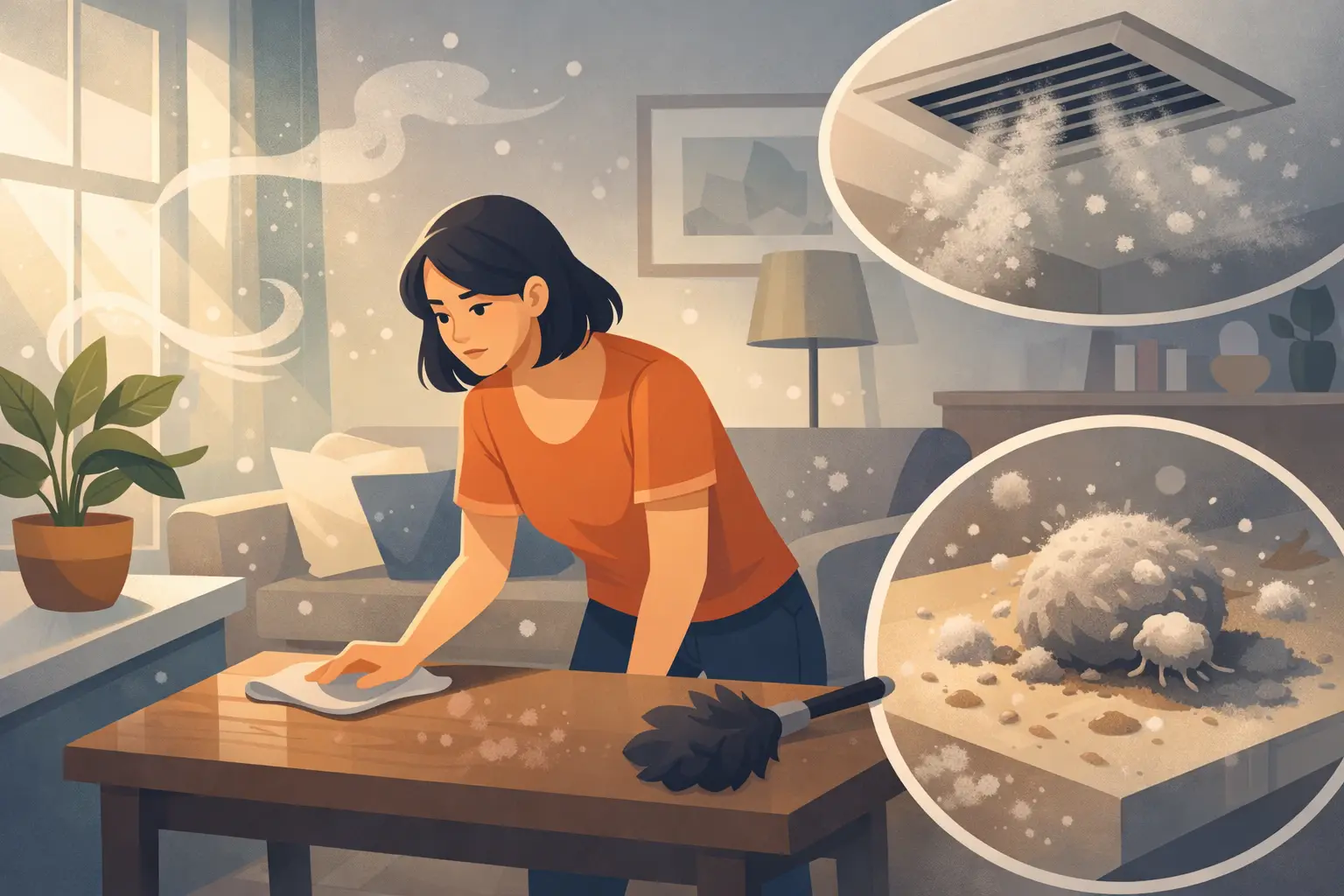
You wipe the coffee table, vacuum the floor, and by the next day there is already a fresh layer of dust on everything. If you keep asking, why is my house so dusty, the answer is usually not that you are cleaning wrong. In most homes, dust builds up because something is feeding it, moving it, or pulling it in faster than your cleaning routine can keep up.
That matters for more than appearance. Excess dust can make a home feel stuffy, aggravate allergies, and signal bigger maintenance issues like leaking ductwork, poor filtration, dirty vents, or insulation problems. In Texas homes, where HVAC systems work hard for much of the year, those hidden issues can show up as dusty furniture, dusty vents, and air that never feels quite clean.
Why is my house so dusty even after cleaning?
Dust is not one single thing. It is a mix of tiny particles that can include fabric fibers, pet dander, dead skin cells, dirt tracked in from outside, pollen, and bits of insulation or debris from inside the home. That is why some dust looks gray and soft while some feels gritty.
When dust comes back quickly after cleaning, one of two things is usually happening. Either your home is generating more particles than normal, or air movement is spreading those particles around over and over again. Often, it is both.
A house with shedding pets, carpeting, heavy foot traffic, and frequently opened doors will naturally create more dust than a smaller home with hard floors and fewer occupants. But if the amount feels excessive, it is worth looking past the obvious and checking the systems that affect indoor air quality.
The most common reasons a house gets dusty fast
Your air filter is clogged, cheap, or the wrong fit
Your HVAC filter is one of the first places to look. If it is overloaded with debris, installed incorrectly, or too low-quality for your household needs, dust can keep circulating through the system. A filter that looks close enough in size but does not fit tightly can also let air bypass the filter entirely.
There is a trade-off here. A higher-efficiency filter can catch more particles, but if it is too restrictive for your system, it may reduce airflow. That is one reason filter selection should match the equipment, not just the goal of trapping more dust.
Ductwork is dirty or leaking
Air ducts do not create dust on their own, but they can absolutely help distribute it. If ducts contain buildup, or if there are gaps and leaks in the system, your HVAC may pull in particles from attics, wall cavities, or other areas that should stay separate from your breathing air.
This is a common issue in older homes and in homes that have had remodeling work. Construction debris, insulation dust, and long-term buildup can keep recirculating every time the system runs.
You have attic or insulation issues
If your home has deteriorating insulation, attic air leaks, or gaps around recessed lights, vents, and access points, fine particles can find their way indoors. Homeowners sometimes notice this as unusually fast dust buildup on surfaces near vents or along the edges of rooms.
In Texas, hot attics and long cooling seasons can make these problems more noticeable because the HVAC system runs often. The more air moves, the more chances particles have to travel.
Carpet and upholstery are holding and releasing debris
Soft surfaces trap dust well, but they do not hold it forever. Every step across a carpet and every time someone sits on a sofa, some of that material gets released back into the air. Bedrooms, living rooms, and high-traffic hallways are usually the biggest contributors.
This does not mean carpet is always a problem. It means carpet needs regular deep cleaning, especially in homes with kids, pets, or allergy concerns.
Pet dander and hair add up quickly
Even well-groomed pets contribute to dusty homes. Hair, dander, tracked-in dirt, and outdoor allergens all increase what settles on floors and furniture. If your home feels dusty no matter how often you clean, pets may be part of the reason, even if the dust does not look like fur.
Doors, windows, and gaps are pulling in outdoor dust
If your home is not sealed well, outside dust can enter through door gaps, aging weatherstripping, window leaks, and poorly sealed attic or crawl space openings. North Texas weather does not always help. Wind, dry conditions, and seasonal pollen can push a lot of fine particles toward the home.
This is one reason some houses get dramatically dustier during certain times of year. If your dust problem spikes in spring, summer, or windy stretches, outdoor infiltration may be a major factor.
Why is my house so dusty near the vents?
Dust around supply vents often points homeowners toward the HVAC system, and that is usually the right place to investigate. Sometimes the cause is simple, like normal airflow pushing dust toward a wall or ceiling area where it becomes visible. But heavy buildup around vents can also suggest dirty ductwork, a poor filter seal, or excess particles inside the system.
You may also be seeing what looks like dust but is actually dark streaking from airborne particles sticking to surfaces because of humidity, static, or air movement patterns. The fix depends on the source. Repainting over the vent area will not solve much if the system is still circulating debris.
Cleaning habits help, but they do not fix root causes
A lot of homeowners respond to dust by cleaning more aggressively. That is understandable, but technique matters. Dry dusting with a feather duster or low-quality cloth often just moves particles into the air so they can settle again. Vacuuming without a good filter can do the same thing.
Use damp dusting methods when possible, vacuum with proper filtration, and wash bedding regularly. Those steps help. But if the home is still getting dusty fast, there is likely a system issue behind it.
This is where many households get stuck. They are working harder, but the house is still producing the same problem every day.
What can make dust worse in Texas homes?
In the Dallas-Fort Worth area and other Texas communities, long HVAC run times are part of the picture. Air conditioning systems move a lot of air for much of the year, which means any weakness in filtration, duct condition, or home sealing gets amplified.
Dry spells can increase outdoor dust. High pollen seasons can add fine particles that settle indoors. Homes with attics that are under-insulated or poorly sealed may also deal with more airborne debris and less stable indoor comfort. If your house feels dusty and hard to cool evenly, those issues may be connected.
When it is time to bring in a professional
If you have changed filters, improved cleaning habits, and still feel like dust wins every week, it is time for a closer look. A professional can help determine whether the problem is coming from dirty ducts, vent contamination, insulation issues, poor airflow, or leakage in the system.
That matters because the right solution depends on the real source. A filter upgrade may help one home. Another may need duct cleaning, dryer vent service, attic insulation improvements, or a broader indoor air quality assessment. Guessing can waste time and money.
A trustworthy company should explain what they find in plain language, show you where the problem is, and recommend only the services that fit your home. No hidden charges and no vague answers.
How to reduce dust and keep it under control
The best approach is part cleaning, part maintenance. Replace HVAC filters on schedule, make sure they fit correctly, and use a filter level your system can handle. Keep up with vacuuming and deep cleaning of carpets and upholstery. Seal obvious leaks around doors and windows. Groom pets regularly and clean bedding often.
Just as important, have the home systems checked when dust seems excessive or unusual. Ductwork, vents, attic insulation, and airflow problems are not always visible, but they can affect your home every day.
For many homeowners, the biggest improvement comes when they stop treating dust as just a housekeeping annoyance and start treating it as an indoor air quality issue. That shift leads to better comfort, cleaner surfaces, and a healthier home overall.
If you are tired of cleaning the same rooms over and over with little to show for it, the good news is that dust problems usually have a cause you can identify and improve. A cleaner home often starts behind the walls, above the ceiling, and inside the systems working every day to keep your family comfortable.