




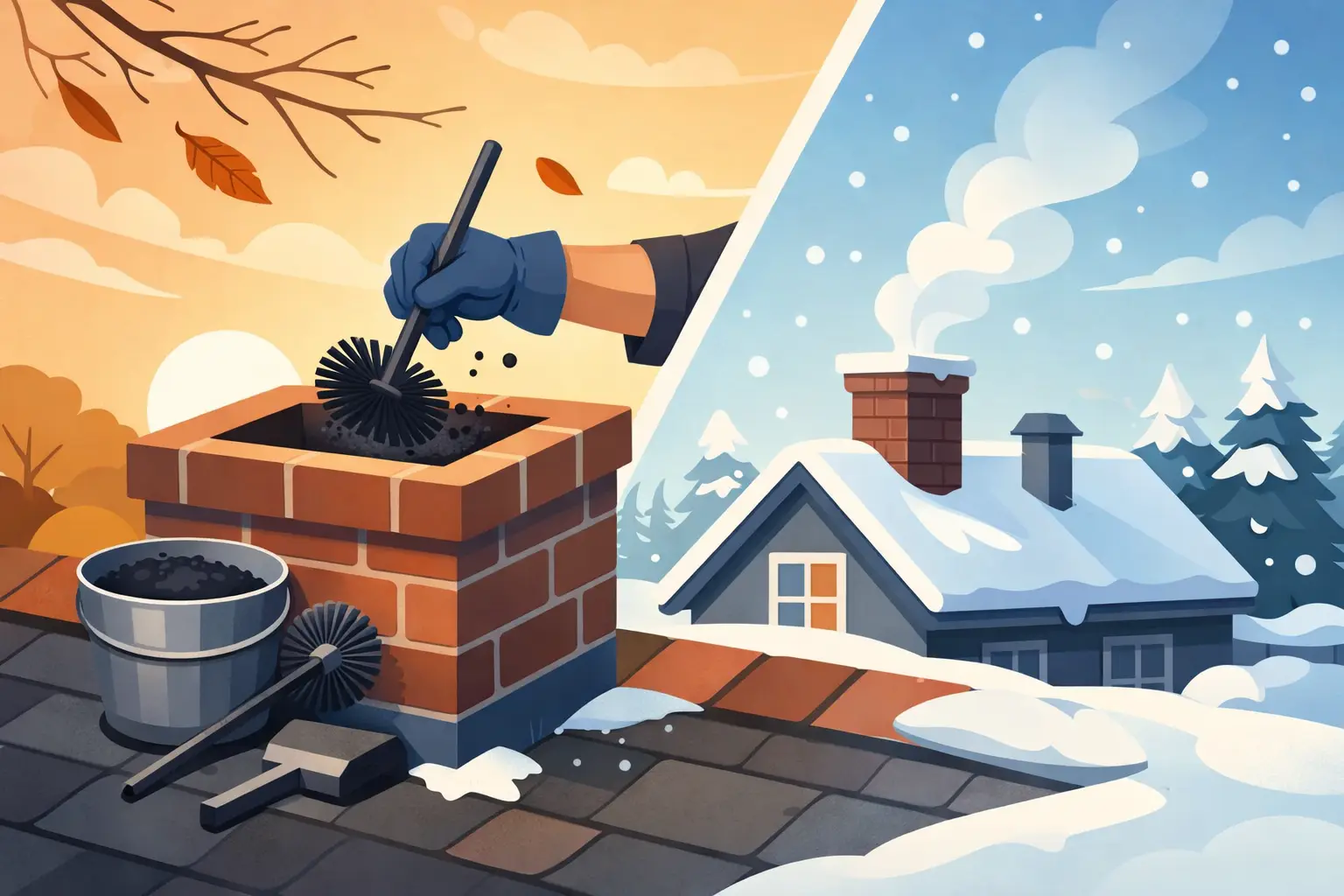
The first cold night of the season has a way of exposing problems fast. You light a fire, and suddenly there is a smoky smell indoors, weak draft, or soot dropping into the firebox. That is exactly why chimney cleaning before winter should be part of your home maintenance plan, not an afterthought.
For many Texas homeowners, the fireplace may sit unused for months and then go from idle to active as soon as temperatures drop. That long gap gives soot, creosote, dust, and even animal debris time to build up inside the flue. When the system is not clean, the fireplace can become less efficient and more dangerous right when your family wants warmth and comfort.
Why chimney cleaning before winter is worth doing early
A dirty chimney is not just a housekeeping issue. It is a fire and ventilation issue. As wood burns, it creates byproducts that rise through the chimney. One of the biggest concerns is creosote, a dark, sticky, highly flammable residue that can cling to the inner walls of the flue. The more buildup you have, the higher the chance that a fireplace fire could turn into a chimney fire.
Cleaning the chimney before winter also helps your fireplace vent the way it should. Good airflow matters because smoke, gases, and combustion byproducts need a clear path out of the home. If that path is restricted, you may notice smoke backing into the room, lingering odors, or a fireplace that is harder to keep burning evenly.
There is also a timing advantage. Scheduling service before the first real cold snap usually means you can address problems before peak season. If a technician finds a blockage, damaged cap, cracked flue liner, or signs of moisture intrusion, you have time to deal with it before the fireplace becomes something you rely on.
What builds up inside a chimney over time
Most homeowners know soot exists, but soot is only part of the story. Creosote is usually the bigger concern because it forms in layers and can become glazed and difficult to remove if ignored too long. Even a chimney that looks fine from the firebox can have significant buildup farther up the flue.
Debris is another common issue. Leaves can blow in through a damaged or missing chimney cap. Birds sometimes nest in chimneys, and small animals can also find their way inside. Those blockages can narrow airflow and create unpleasant odors, especially if moisture gets involved.
If your fireplace has not been used much, that does not always mean the chimney is clean. Dust, cobwebs, nesting material, and old residue from past seasons can still create problems. In some homes, especially after storms or long dry spells followed by rain, moisture and debris together can accelerate deterioration.
Signs your chimney may need attention now
Sometimes the warning signs are obvious. You may smell a strong smoky or musty odor near the fireplace, notice black residue around the opening, or see bits of debris falling into the firebox. In other cases, the signs are more subtle, such as a fire that struggles to stay lit or smoke that enters the room when the damper is open.
A visible dark coating inside the flue is another clue. So is any recent history of animal activity, water stains near the chimney, or a fireplace that has not been professionally cleaned in more than a year. If you cannot remember the last service, that alone is a good reason to have it checked before the season starts.
Safety is the biggest reason homeowners schedule service
The main goal of chimney cleaning is simple: reduce avoidable risk. Chimney fires can start quietly and spread damage where homeowners cannot see it right away. Even if a fire does not break out into the room, heat and flame inside the flue can damage the liner and surrounding structure.
Ventilation safety matters just as much. A blocked or restricted chimney may not move smoke and gases out properly. That can affect indoor comfort and indoor air quality. If your family uses the fireplace regularly during colder months, maintaining a clean path for exhaust is part of protecting the home.
This is one area where waiting rarely helps. Buildup usually does not improve on its own, and problems discovered in the middle of winter can be more stressful to fix. Early service gives you more control and fewer surprises.
Why professional chimney cleaning makes a difference
Some home maintenance tasks are realistic for DIY homeowners. Chimney cleaning is usually not one of them. The challenge is not only removing visible soot. It is reaching the full venting system safely, identifying dangerous buildup, and spotting damage that an untrained eye can miss.
Professional technicians use the right brushes, vacuums, and inspection tools to clean the system thoroughly while containing mess inside the home. Just as important, they know what normal wear looks like and what points to a larger issue. A cracked liner, loose masonry, damaged damper, or poor draft pattern may not be obvious until someone trained sees it up close.
There is also a practical side to hiring a professional team. Busy homeowners want the job done correctly the first time, without guesswork and without dragging soot through the living room. A qualified service provider helps you move into the season with more confidence and less disruption.
Chimney cleaning before winter and overall home efficiency
Fireplace performance affects more than ambiance. When a chimney vents properly, fires burn more consistently and the room stays more comfortable. When venting is poor, you may lose heat, deal with smoky air, or avoid using the fireplace altogether because it feels like a hassle.
That matters in homes where comfort and efficiency are already priorities. Homeowners in the Dallas-Fort Worth area often think about insulation, duct cleanliness, and airflow throughout the year. The chimney is part of that bigger picture. A neglected fireplace system can work against the clean, safe, and efficient home environment you are trying to maintain.
It is also worth remembering that fireplace systems vary. A wood-burning fireplace has different cleaning demands than a gas fireplace with venting components. Masonry and prefabricated systems can have different trouble spots too. That is why a one-size-fits-all approach does not work. The right service depends on what kind of system you have, how often you use it, and whether past maintenance has been consistent.
What to expect from a chimney service appointment
A professional visit typically starts with an inspection of the accessible parts of the fireplace and chimney system. The technician looks for buildup, blockages, visible damage, and signs that the chimney is not venting correctly. If cleaning is needed, specialized tools remove soot and creosote while controlling dust and debris.
If the technician finds a larger issue, such as water damage or structural wear, they should explain it clearly and recommend the next step. That straightforward communication matters. Homeowners should know what is routine, what is urgent, and what can be planned for later.
This is where trust really counts. A dependable company will focus on safety, honest recommendations, and clear pricing rather than adding confusion. For homeowners who value convenience and professional service, that peace of mind is a major part of the job.
When to schedule and how often it should be done
The best time to schedule chimney cleaning before winter is early fall or even late summer if your calendar fills quickly. That gives you flexibility before seasonal demand increases and before the first cold front makes fireplace problems feel urgent.
As for frequency, annual inspection is a smart baseline for most homes, especially if you use a wood-burning fireplace. Some chimneys need cleaning every year, while others depend on lighter use and may have different timing. It really comes down to usage, fuel type, and the condition of the venting system. If your fireplace is active every winter, yearly service is the safer habit.
For Texas homeowners, seasonal maintenance often gets pushed back because winter use may feel occasional compared to colder parts of the country. But even occasional use can become risky if the chimney has been sitting with hidden buildup or blockage. A quick professional check before the season is usually far easier than dealing with smoke problems or emergency repairs later.
If your fireplace is part of how your family stays comfortable when temperatures drop, treat it like the safety system it is. A clean chimney supports better airflow, lowers fire risk, and helps your home feel ready for the season ahead. That is why many homeowners trust a professional team like On Time Home Experts to handle the job with care, clear pricing, and no unnecessary hassle. A little attention before winter can make every fire you light feel a lot more dependable.