




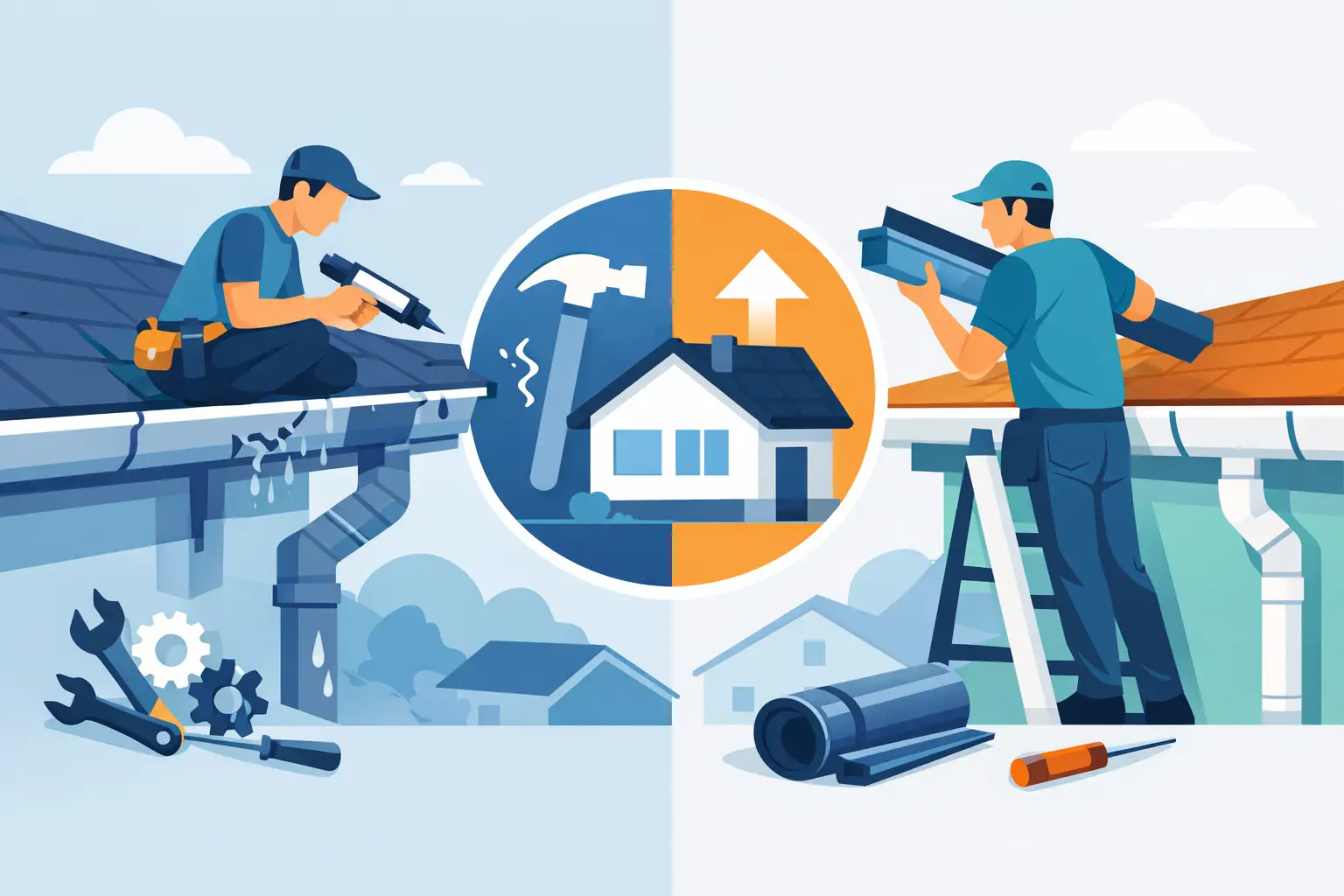
A small gutter problem rarely stays small for long. What starts as a drip at one corner can turn into fascia rot, foundation staining, landscape erosion, or water pooling near your home after the next Texas storm. That is why homeowners often start by asking about gutter repair vs replacement cost – because the right choice is not just about today’s bill, but about avoiding a larger one later.
For most homes, repair costs less upfront, while replacement often delivers better long-term value when damage is widespread. The challenge is knowing where that line is. A loose section, minor seam leak, or a few damaged hangers may be worth fixing. But if your gutters are sagging in multiple areas, pulling away from the roofline, rusting through, or constantly clogging because of poor pitch, replacement may save you money over time.
Gutter repair vs replacement cost: what changes the price
There is no single flat rate that fits every house. The final number depends on the material, the length of the run, the height of the roofline, and how easy the system is to access. A one-story home with a short damaged section is a much simpler job than a two-story home with several problem areas and rotted fascia underneath.
Material plays a big role. Aluminum gutters are common because they are affordable and resist rust fairly well. Steel can be tougher, but it is heavier and may corrode over time. Copper costs much more, so repairs and replacement both come at a premium. If your existing system is older or made from a less common material, matching pieces may also raise the cost.
Labor matters too. Gutter work can look straightforward from the ground, but proper slope, fastening, and water flow are what determine whether the system actually protects the home. If technicians need to remove debris, reset sections, replace fascia components, or work around steep rooflines, the price goes up because the job takes more time and care.
When repair is the smarter investment
Repair makes the most sense when the damage is limited and the rest of the system is still doing its job. If you have one leaking seam, a downspout that has come loose, or a section that took a hit during a storm, a targeted fix is often enough. In those cases, you are paying to restore function without replacing materials that still have years of life left.
Another good repair scenario is newer gutters with isolated installation issues. Sometimes the gutters themselves are fine, but the pitch is slightly off in one section, or the brackets were spaced too far apart. Correcting those problems can improve drainage and extend the life of the entire system without the cost of a full replacement.
Repairs can also be a practical short-term move if you are budgeting for larger exterior work. If the gutters only need a few corrections to get through another season safely, a professional repair can buy you time. The key is being honest about whether it is a temporary patch or a durable solution.
That said, cheap repairs are not always cheap in the long run. If you are paying for service every rainy season because the same problems keep coming back, those repair invoices start adding up fast.
Common problems that are usually repairable
Leaking joints, detached downspouts, loose hangers, minor sagging, and small holes are often repairable. Cleaning-related issues can also look worse than they are. In many cases, overflowing water is caused by debris buildup rather than failed gutters, especially if the system has not been maintained regularly.
If the underlying structure is sound, a professional can often reseal joints, secure brackets, improve slope in a section, or replace a short damaged run without touching the rest of the system.
When replacement makes more financial sense
Replacement becomes the better value when damage is widespread, recurring, or tied to aging materials. If the gutters are rusted through, cracked in several places, separating at multiple seams, or pulling away from the house across long runs, repairs can quickly turn into a cycle of short-lived fixes.
The same is true if water damage has spread beyond the gutters. Rotting fascia boards, stained siding, soil washout, and moisture issues near the foundation are signs the system has not been protecting the home properly. At that point, replacing the gutters may be only part of the job, but it is still the right foundation for stopping the problem.
Older sectional gutters are another common replacement candidate. Because they have more seams, they tend to develop more leak points over time. Seamless gutters usually cost more upfront than a basic repair, but they reduce the number of joints where future leaks can start. For many homeowners, that improves performance enough to justify the investment.
Signs your gutters are near the end
If you see repeated leaks in different areas, frequent clogs despite cleaning, visible corrosion, nails or fasteners on the ground, or gutters separating from the fascia, replacement should be seriously considered. Gutters that overflow even when they are clean may also be undersized or poorly designed for the roof’s water load.
A professional inspection is especially helpful here because surface symptoms do not always tell the whole story. What looks like a simple gutter issue may involve fascia damage, roof runoff problems, or drainage concerns at ground level.
The hidden costs homeowners forget
When comparing repair and replacement, many people focus only on the visible gutter work. That is understandable, but it misses the larger risk. The real cost of a failing gutter system is often what happens to the rest of the property.
Water that spills too close to the home can damage flower beds, stain brick, and create muddy areas around walkways. Over time, persistent drainage issues may contribute to wood rot, pest activity, basement or crawl space moisture, and foundation stress. In North Texas, where heavy rain can hit hard and fast, that risk is not theoretical.
This is why the lowest immediate quote is not always the best value. A basic patch that does not correct the root problem may leave your home exposed. A more complete repair or a full replacement may cost more today, but save far more than it costs by preventing exterior damage.
How to decide without overpaying
The best decision usually comes down to three questions. First, how much of the system is actually failing? Second, how old are the gutters? Third, are the current problems isolated, or do they point to a broader design or wear issue?
If less than a small portion of the system is damaged and the gutters are still in good shape overall, repair is often reasonable. If multiple sections are failing or the system is nearing the end of its expected lifespan, replacement is usually the safer financial move.
It also helps to think in terms of ownership plans. If you expect to stay in the home for years, replacement may offer stronger value through better protection and fewer future service calls. If you are solving a short-term issue on an otherwise healthy system, a repair may be all you need.
Professional estimates should be clear and specific. You want to know what is damaged, what is recommended, whether fascia or downspouts are included, and whether the proposed solution addresses the water-flow problem instead of only the visible symptom. Transparent pricing matters because vague estimates make it hard to compare real value.
Why professional work matters for gutters
Gutters are one of those systems homeowners notice only when something goes wrong. But correct installation and repair require more than attaching metal to the roofline. Slope has to be right. Downspouts need to move water far enough away from the house. Fasteners must hold securely without damaging surrounding materials.
A professional team can also spot related issues before they get expensive, from hidden wood rot to problem runoff areas. That is especially valuable for busy homeowners who want the job handled correctly the first time, without hidden charges or repeat service caused by shortcuts.
For homeowners in the Dallas-Fort Worth area, weather adds another layer to the decision. Sudden storms, intense rainfall, and seasonal debris can expose weak gutters quickly. That makes timely repair important, but it also means replacement can be the smarter move when the system has already started to fail in several places.
If you are weighing repair against replacement, think beyond the immediate invoice. The right choice is the one that protects your home, reduces repeat problems, and gives you confidence the next time heavy rain moves in. A good gutter system should quietly do its job and let you forget about it, which is exactly what most homeowners want.