




If your allergies seem worse when the AC kicks on, you are not imagining things. Many homeowners ask, does air duct cleaning help allergies, especially during heavy pollen seasons in Texas when indoor air can feel just as irritating as the air outside.
The honest answer is yes, sometimes – but not in every home, and not for every allergy trigger. Air duct cleaning can help if your ductwork is carrying and recirculating dust, pet dander, debris, or other contaminants. But if the real problem is high humidity, dirty filters, attic air leaks, or mold growth from a moisture issue, duct cleaning alone will not solve it.
That is the part many homeowners miss. Allergies inside the home usually come from a mix of sources, not one single cause. Your ducts may be part of the problem, or they may simply be one place where airborne particles collect.
Does air duct cleaning help allergies in real homes?
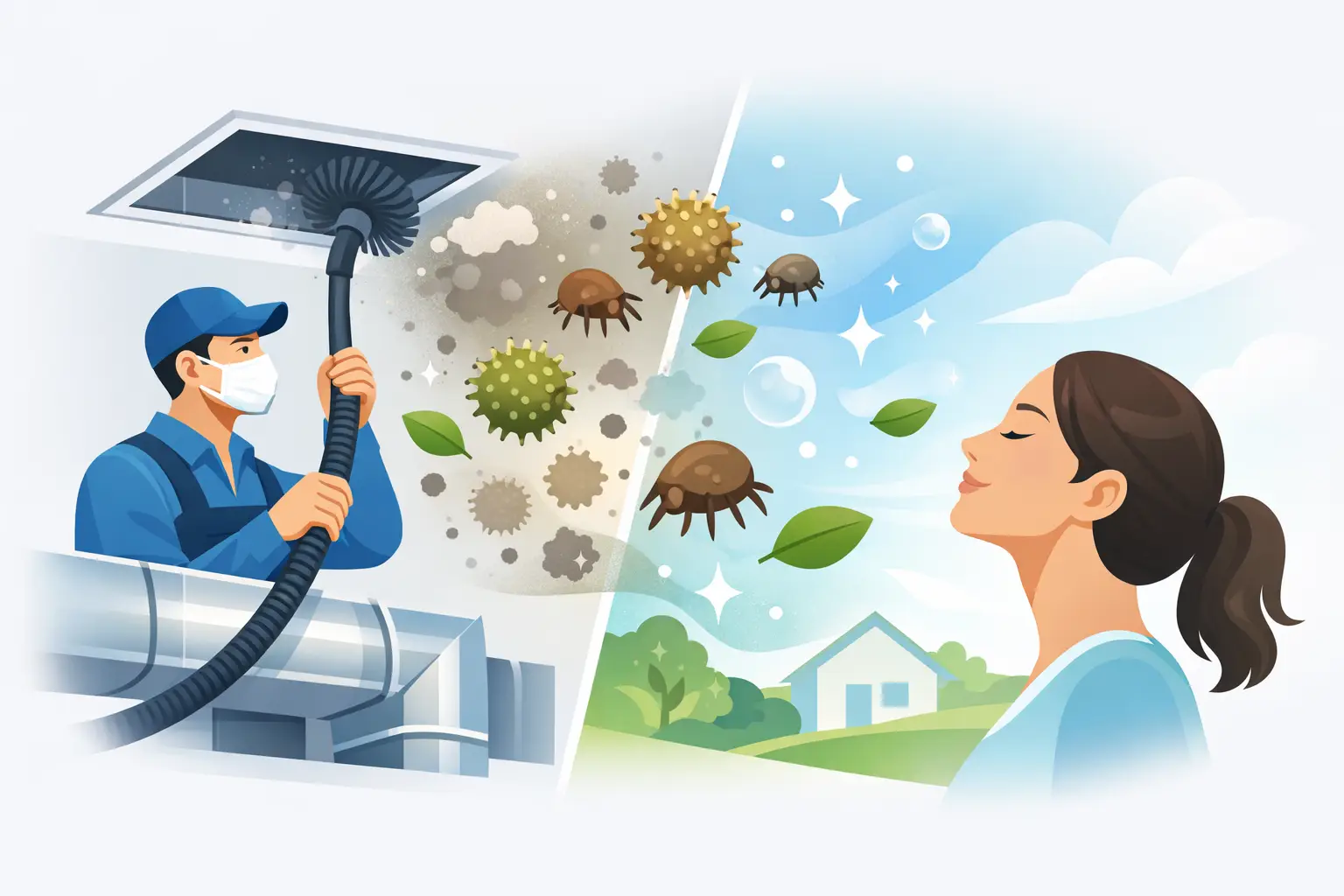
In the right situation, it absolutely can. Your HVAC system pulls air in and pushes it back through supply vents over and over again. If the ductwork has built-up dust, insulation particles, pet hair, or other debris, some of that material can continue circulating through the home.
For people with allergies, that matters. Even if the particles are not visible, repeated exposure can add to sneezing, congestion, itchy eyes, or that dry, irritated feeling many people notice indoors. This is especially true in homes with pets, older duct systems, recent remodeling, or long gaps between HVAC maintenance.
That said, duct cleaning is not a medical treatment and it is not a cure for allergies. It is a home maintenance service that can reduce one possible source of indoor irritants. The best results happen when the ducts are actually dirty and when the cleaning is done professionally with proper equipment.
When duct cleaning is most likely to help
Some homes benefit more than others. If you have lived in your home for years without having the ducts cleaned, there is a good chance there is a meaningful buildup inside. The same is true if you recently bought an older home and do not know the maintenance history.
Homes with pets often see faster accumulation of dander and hair. Families with children, high foot traffic, or carpeted rooms may also deal with more airborne dust. If anyone in the home has allergies or asthma, reducing recirculated particles can make the house feel more comfortable.
Renovation is another common reason. Drywall dust, sawdust, insulation fibers, and construction debris can end up in the duct system during remodeling projects. Even a small renovation can leave fine particles behind that continue to move through the vents long after the work is finished.
You may also want to look at your vents and registers. If you notice dust blowing out, a musty smell when the system runs, or visible debris around vent openings, those are signs the system may need attention.
Signs your ducts may be affecting allergy symptoms
A few patterns tend to show up when duct contamination is part of the issue. If symptoms are worse indoors than outdoors, or worse in certain rooms, your HVAC system may be contributing. If you dust surfaces frequently and they still seem coated again within a day or two, that can point to excessive airborne debris.
Another sign is uneven air quality. One room may feel stuffy, dusty, or irritating while another feels fine. That does not always mean dirty ducts, but it does suggest the ventilation system deserves a closer look.
When duct cleaning may not be the full answer
This is where a trustworthy company should be direct. Not every allergy problem starts in the ductwork.
If your air filter is overdue for replacement, the system may be pushing particles through because filtration is poor. If your home has high humidity, dust mites and mold can become a bigger issue. If there are leaks in the duct system, attic dust or insulation particles may be getting pulled in from unconditioned spaces. And if there is active mold caused by a moisture problem, that source needs to be fixed before cleaning alone will make a lasting difference.
Outdoor allergens also matter in Texas. Pollen comes in every time doors open, shoes come inside, and pets move between the yard and the house. No duct cleaning service can stop seasonal pollen by itself.
That is why the best approach is practical, not exaggerated. Duct cleaning can be valuable, but it works best as part of a bigger indoor air quality plan.
What else helps allergy relief at home?
If you are trying to reduce allergy triggers indoors, a few basics matter just as much as clean ducts. Regularly changing HVAC filters is one of the biggest ones. A good filter helps capture airborne particles before they keep circulating.
Professional HVAC maintenance also matters because airflow problems, dirty coils, or blower buildup can affect how clean and efficient the system stays. Sealing duct leaks can prevent attic dust and contaminants from entering the system. In some homes, attic insulation and ventilation improvements can also reduce excess dust, hot spots, and indoor comfort issues.
For households with pets, routine cleaning of floors, upholstery, and bedding still plays a big role. If there is visible mold, water damage, or persistent musty odor, that should be addressed directly rather than assumed to be a duct issue.
Does air duct cleaning help allergies better than changing filters?
It is not really an either-or decision. Filters protect the system on an ongoing basis, while duct cleaning removes accumulated debris that is already inside. If ducts are heavily contaminated, a clean filter alone will not remove material that has been sitting in the system for years. On the other hand, if the ducts are relatively clean but the filter is neglected, replacing the filter may have a bigger immediate impact.
In many homes, both are worth doing.
What professional duct cleaning should include
If you are considering this service, quality matters. A rushed or incomplete job will not do much for allergies, and in some cases can stir up more dust temporarily if it is done poorly.
Professional duct cleaning should involve proper inspection, specialized equipment, and cleaning of the full system components being serviced – not just a quick vacuum at the vents. Homeowners should expect clear explanations, honest pricing, and no pressure tactics.
That is especially important because indoor air quality services are easy to oversell. A dependable team will tell you whether your ducts truly need cleaning, what they found, and what results are realistic.
For busy homeowners in the Dallas-Fort Worth area, that kind of transparency matters just as much as the service itself. On Time Home Experts focuses on practical solutions that improve home comfort, cleanliness, and safety without making promises that sound too good to be true.
So, is it worth it for allergy sufferers?
If your ducts are dirty, your system is recirculating dust and debris, or your home has pets, renovation residue, or years of buildup, air duct cleaning can absolutely help reduce indoor irritants. Many homeowners notice the home feels fresher, dust settles less quickly, and allergy symptoms are less intense when the system is running.
If the root cause is somewhere else, the benefit may be smaller unless you also address filters, leaks, humidity, or moisture problems. That does not make duct cleaning unnecessary. It just means the right answer depends on what is happening in your home.
A good inspection can usually tell you a lot. Instead of guessing, it helps to have a trained professional look at the condition of your ductwork and explain whether cleaning is likely to make a real difference.
If your home feels dusty, your vents look dirty, or your allergies seem to flare up indoors, it is worth taking seriously. Cleaner air starts with finding the source, not chasing a one-size-fits-all fix.