



A wet carpet can go from inconvenient to unhealthy faster than most homeowners expect. When flooding, a slab leak, a burst pipe, or a storm leaves flooring soaked, carpet cleaning after water damage is not just about appearance. It is about stopping mold growth, protecting indoor air quality, and figuring out whether your carpet can actually be saved.
That decision matters even more in Texas homes, where heat and humidity can speed up drying problems. What looks like a minor water issue on the surface can leave moisture trapped in the carpet pad, subfloor, baseboards, and nearby walls. If that moisture is not handled quickly and correctly, the smell lingers, the backing breaks down, and the affected area can become a bigger restoration project than it needed to be.
Why carpet cleaning after water damage needs fast action
Time is the biggest factor. In many cases, microbial growth can begin within 24 to 48 hours. That does not mean every damp carpet immediately turns into a mold problem, but it does mean delay makes cleanup harder, more expensive, and less predictable.
Water also does not affect all carpets the same way. A small clean-water overflow in one room is very different from stormwater coming in under a door or sewage backup in a hallway. The source of the water, how long it sat, and how deeply it penetrated the carpet system all shape the next step.
For homeowners, this is where professional judgment matters. A carpet may look salvageable, but if the pad is saturated and the water is contaminated, cleaning alone is not enough. Fast extraction, controlled drying, and a clear assessment of what can be restored are what protect the home.
Not all water damage is equal
The type of water involved changes everything. Clean water usually comes from a supply line, sink overflow, or rain that entered before crossing contaminated surfaces. Gray water may contain soap, food residue, or other contaminants from appliances or drains. Black water includes sewage or heavily contaminated floodwater and is the highest-risk category.
If the carpet was affected by black water, replacement is often the safer path. The same may be true for gray water that sat too long. Even with strong cleaning methods, there are situations where restoring carpet is not the responsible recommendation. Homeowners want to save materials when they can, but safety has to come first.
When cleaning may be enough
Professional cleaning and restoration may work when the water source was relatively clean, the problem was caught quickly, and the carpet backing and pad have not deteriorated. In those cases, water extraction, pad inspection, antimicrobial treatment where appropriate, and professional drying can return the carpet to a usable condition.
This is more likely in isolated incidents, such as a fresh washing machine overflow or a small plumbing leak discovered right away. Even then, proper moisture testing is important. A carpet should not be considered dry just because the top fibers feel dry to the touch.
When replacement is the better option
If the carpet has been wet for more than a day or two, if there is a strong musty odor, if contaminated water is involved, or if the pad is holding moisture across a wide area, replacement often makes more sense. Older carpets are also less likely to justify restoration costs, especially if wear, staining, or allergy issues were already present before the damage.
In some cases, homeowners try to save money by only cleaning the visible area. The problem is that the pad underneath may remain wet, and that hidden moisture can create odors and air quality concerns long after the surface looks normal.
What professional carpet cleaning after water damage includes
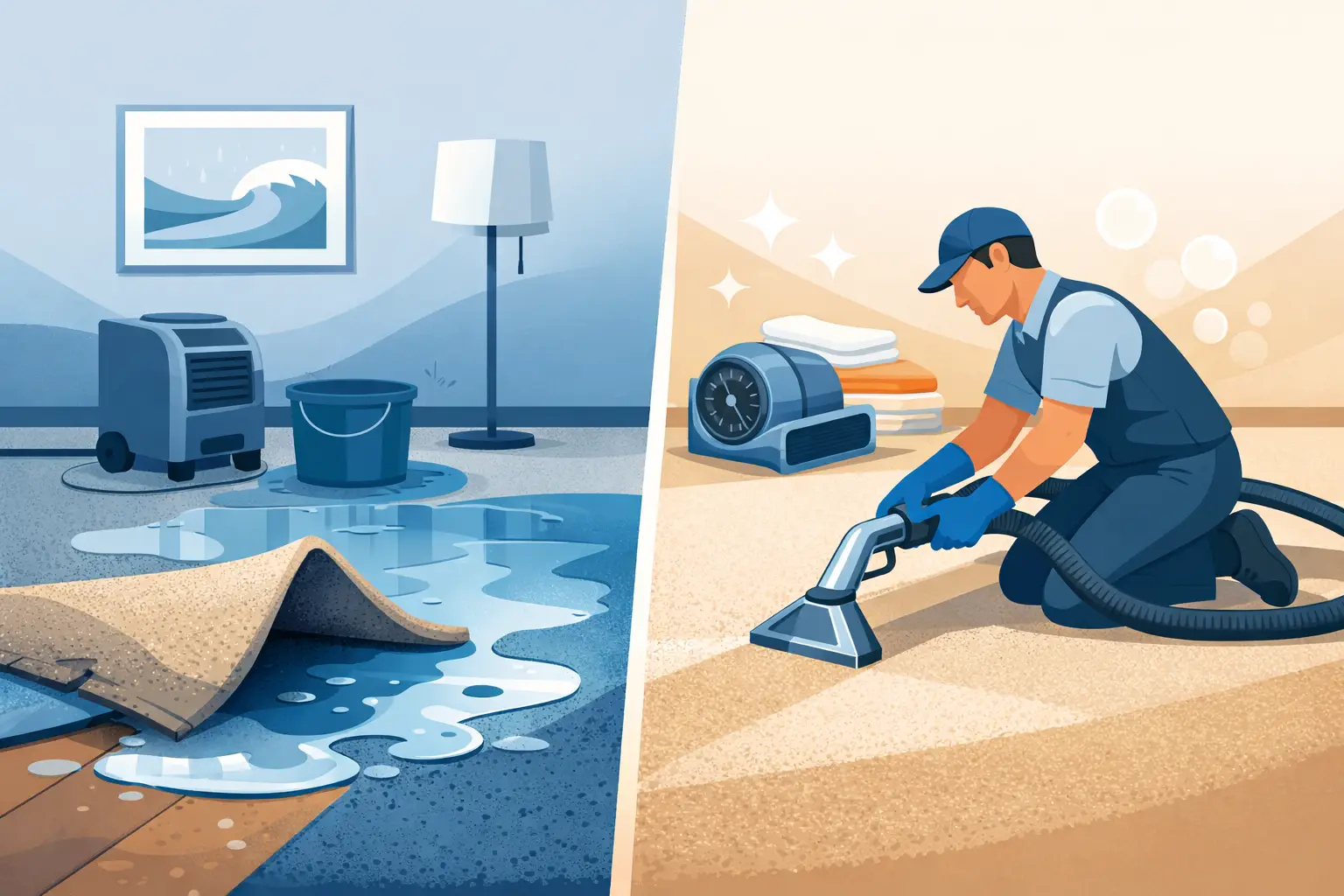
A proper response is more than running a shop vacuum and setting out a few fans. Professional service begins with identifying the water source and the category of contamination. From there, technicians assess the carpet, pad, subfloor, and nearby materials to see how far the moisture spread.
The first major step is extraction. Removing as much water as possible right away gives the carpet the best chance of recovery. High-powered extraction equipment pulls out far more moisture than household tools can manage.
After that, the focus shifts to drying and sanitation. Air movers and dehumidification help reduce moisture levels throughout the affected area, not just at the carpet surface. Depending on the condition, sections of pad may need to be lifted or removed so trapped moisture does not stay sealed underneath. If the situation calls for it, antimicrobial treatment may be used to reduce microbial risk.
Once the carpet is dry and structurally stable, deep cleaning helps remove soil, residue, and odor-causing material left behind by the water event. This part is important, but it should never come before extraction and drying. Cleaning a wet carpet without correcting the underlying moisture problem can make the result look better temporarily while the real damage continues underneath.
The indoor air quality side of the problem
Water-damaged carpet is not only a flooring issue. It can affect the air your family breathes. Damp carpet and padding can support mold growth, bacterial activity, and lingering odors that spread through the room and, in some homes, into the HVAC system.
That matters for families with allergies, asthma, or sensitivity to musty environments. Even if visible mold never appears on top of the carpet, hidden moisture below can still contribute to stale air and ongoing discomfort. Homeowners often notice this as a room that smells off even after the visible water is gone.
This is one reason fast, professional service has value beyond protecting the carpet itself. It helps reduce the chance that a water event turns into a broader indoor air quality problem.
Common mistakes homeowners make
One of the most common mistakes is waiting to see if the carpet dries on its own. Another is assuming that a fan and open windows are enough. In Texas weather, indoor humidity can work against you, especially during storm season. Surface drying can happen while deeper moisture remains trapped.
Another mistake is using heavily scented products to cover odors. If the carpet smells musty after a water event, that smell usually points to an unresolved moisture issue, not a fragrance problem. Odor masking may make the room seem better for a day or two, but it does not fix wet padding or contamination.
Homeowners also sometimes overlook adjacent materials. Baseboards, drywall edges, trim, furniture legs, and nearby rugs can all hold moisture or contamination. A thorough response looks at the whole affected area, not just the center of the wet spot.
How to respond right away
If it is safe, stop the source of the water first. Move furniture and valuables out of the affected area if you can do so without spreading contamination. Avoid walking through contaminated water, and do not use household vacuums on heavily soaked carpet unless they are designed for wet extraction.
Then call for professional help quickly. The earlier the assessment happens, the more options you usually have. This is especially true if the goal is to save the carpet rather than replace it.
A dependable service team should explain what they found, what can realistically be restored, and whether cleaning, drying, partial removal, or full replacement is the safer recommendation. Clear communication matters. No hidden charges and no vague promises should be part of the experience.
Choosing the right help for water-damaged carpet
Homeowners are often under pressure after a leak or flood. That is exactly when professionalism matters most. You want trained technicians, modern equipment, honest pricing, and a team that treats your home with care. You also want a company that understands how carpet condition connects to moisture control and indoor air quality, not just surface cleaning.
For many households, convenience matters too. Working with a provider that understands broader home cleaning and restoration needs can make the process simpler when water damage affects more than one part of the home. On Time Home Experts serves homeowners with that practical, whole-home mindset, helping families protect comfort, cleanliness, and air quality when unexpected damage happens.
The most important thing to remember is simple: wet carpet does not get better with time. The faster you act, the better your chances of saving materials, avoiding odor and mold issues, and getting your home back to normal with less disruption.