




A fireplace should make your home feel warm and comfortable – not put it at risk. Creosote buildup dangers are one of the biggest safety issues tied to wood-burning fireplaces, and many homeowners do not realize there is a problem until they notice smoke, strong odors, or signs of restricted airflow.
If you use your fireplace during Texas cold snaps, holiday gatherings, or even just a few times each season, creosote can start collecting inside the chimney faster than expected. That sticky, dark residue is more than a cleaning issue. It is a fuel source sitting inside your venting system, and under the right conditions, it can ignite.
What Is Creosote and Why Does It Form?
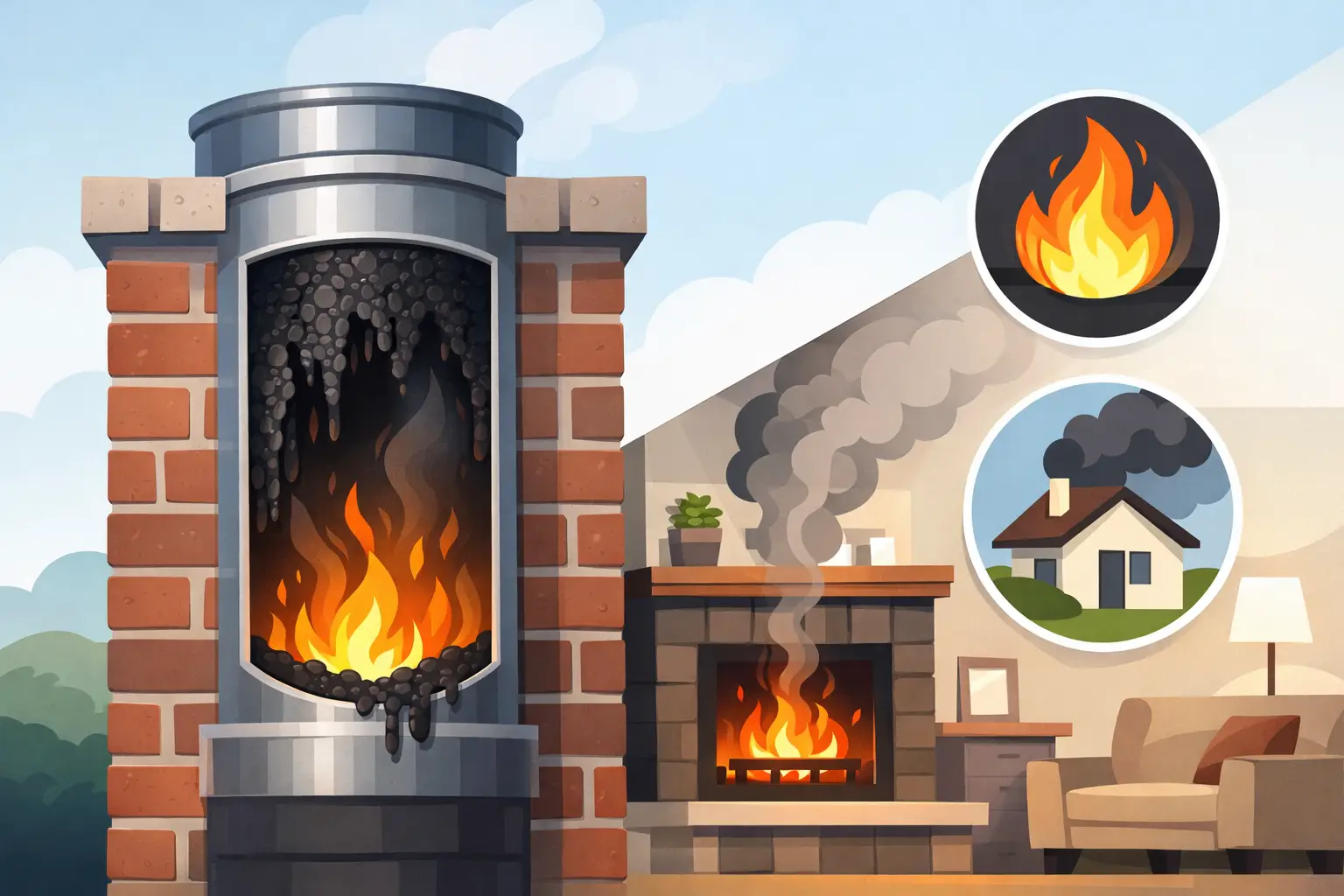
Creosote is a byproduct of burning wood. As smoke rises through the chimney, it carries gases, particles, moisture, and unburned compounds. When those materials cool inside the flue, they condense and cling to the chimney walls.
A little soot may not sound alarming, but creosote is different. It can start as a flaky or dusty layer, then turn into a thicker, tar-like coating. In more severe cases, it hardens into a glazed deposit that is difficult to remove and much more dangerous.
Several factors affect how quickly it builds up. Burning unseasoned wood creates more smoke and moisture. Low-temperature fires leave behind more residue than hot, efficient burns. Poor draft, restricted airflow, and an improperly sized flue can also make buildup worse. Even a fireplace that seems to be working fine may be collecting creosote where you cannot see it.
The Real Creosote Buildup Dangers
The biggest reason homeowners should take creosote seriously is simple – it can cause a chimney fire. Creosote is highly combustible. If enough of it accumulates and the flue temperature rises, the residue can ignite and send intense heat through the chimney system.
Some chimney fires are loud and obvious, with cracking sounds, popping, heavy smoke, or flames visible from the top of the chimney. Others burn more quietly and still damage the liner, masonry, and surrounding structure. In either case, the fire may spread or leave the chimney unsafe to use afterward.
Creosote buildup dangers are not limited to fire risk. Heavy accumulation can narrow the flue and interfere with proper ventilation. That means smoke, gases, and combustion byproducts may not exit the home as they should. Instead, they can spill back into your living space, bringing unpleasant odors, staining, and potential health concerns.
Poor venting can also expose your household to carbon monoxide. While creosote itself is not carbon monoxide, a blocked or restricted chimney can contribute to unsafe combustion conditions. That is one reason fireplace maintenance is about more than keeping things tidy. It is about protecting indoor air quality and making sure your system works safely.
Warning Signs You Should Not Ignore
A chimney does not need to be completely blocked to show signs of trouble. In many homes, the early clues are easy to miss or easy to explain away.
One common sign is a strong smoky or campfire-like odor coming from the fireplace, especially when the weather turns humid or rainy. That smell often means creosote deposits are sitting inside the flue. If the odor seems stronger than usual, the buildup may be getting worse.
Another warning sign is smoke entering the room when you start or use a fire. Sometimes this points to drafting problems, but creosote restriction can be part of the issue. Dark flakes or debris in the firebox may also indicate deposits are breaking loose inside the chimney.
You may also notice that fires are harder to keep burning, or that your fireplace is not venting as efficiently as it once did. In more advanced cases, the inside of the chimney may show thick black buildup that looks shiny, sticky, or hardened. That glazed appearance is especially concerning because it is more flammable and harder to remove with basic brushing.
Why Some Homes Face Higher Risk
Not every fireplace builds up creosote at the same rate. Usage habits matter. A home that burns wood several times a week through the winter will naturally need more attention than one that uses the fireplace once or twice a year.
The type of wood matters too. Fresh-cut or damp firewood creates excess smoke and moisture, which speeds up creosote formation. Softwoods can also contribute to faster buildup because they tend to burn quickly and produce more smoke if not managed properly.
Home design and maintenance history also play a role. Older chimneys, damaged liners, poor airflow, and deferred cleanings all increase risk. In the Dallas-Fort Worth area, many homeowners do not run their fireplaces every day for months at a time, so it is easy to assume the system is fine. But even seasonal use can create dangerous buildup, especially if the chimney has not been professionally inspected.
Why DIY Is Not the Best Answer
It is understandable to wonder whether a chimney log or store-bought brush can solve the problem. The truth is, those options have limits. They may loosen light residue in some situations, but they do not replace a full inspection and professional cleaning.
One issue is visibility. Most creosote forms above the fireplace in parts of the flue you cannot properly inspect from the living room. Another issue is severity. If the buildup has become thick or glazed, standard DIY tools often will not remove it effectively. In some cases, trying to handle it yourself can leave dangerous material behind while giving you a false sense of security.
Professional chimney cleaning is designed to identify what is happening throughout the full venting path, not just the section you can reach. A trained technician can also spot liner damage, blockages, animal nesting, moisture issues, and signs of previous chimney fires that a homeowner may never notice.
How Often Should a Chimney Be Cleaned?
There is no one-size-fits-all answer, but annual inspection is the right baseline for most homeowners. If you burn wood regularly, you may need cleaning more often depending on how much buildup is found.
A chimney does not have to look visibly dirty from the fireplace opening to be unsafe. That is why waiting for obvious symptoms is not the best approach. Preventive service is usually faster, less disruptive, and less expensive than dealing with fire damage, smoke problems, or major repairs later.
For busy homeowners, regular maintenance is really about reducing surprises. You want your fireplace ready when temperatures drop, not creating safety concerns during the one week of the year you need it most.
The Value of Professional Fireplace and Chimney Care
When a chimney is professionally cleaned and inspected, you get more than a cleaner flue. You get peace of mind. The system can vent more effectively, odors may improve, and your fireplace can operate the way it was designed to.
That matters for safety, but it also matters for comfort and home protection. Smoke stains, lingering odors, and hidden damage can all become more expensive if ignored. Addressing creosote early helps protect the chimney structure, nearby building materials, and the air your family breathes.
For homeowners who already juggle HVAC upkeep, dryer vent cleaning, insulation needs, and other home maintenance tasks, it helps to work with a company that understands how these systems connect. On Time Home Experts serves homeowners with practical, safety-focused service that keeps essential parts of the home cleaner, safer, and working efficiently.
What to Do If You Suspect Creosote Buildup
If your fireplace smells unusually smoky, vents poorly, or has not been inspected in a long time, do not keep using it and hope for the best. Continued use can add more buildup and increase the chance of ignition.
The safest next step is to schedule a professional chimney inspection and cleaning. A qualified technician can assess the amount and type of buildup, check for damage, and recommend what needs to happen before the fireplace is used again. If there are repairs needed, finding them early can prevent a much bigger issue later.
A fireplace should be a comfort, not a question mark. When you treat creosote as a serious safety issue instead of a minor nuisance, you protect your home, your air, and the people inside it. That kind of maintenance is never wasted effort.