




That smoky smell in the living room after the fire is out is easy to shrug off once. When it keeps happening, it usually means something in the chimney system is no longer venting the way it should. Many homeowners miss the early signs your chimney needs cleaning because the fireplace still seems to work. The problem is that chimneys can keep functioning while buildup, blockages, and draft issues quietly increase fire and air quality risks.
A dirty chimney is not just a cosmetic issue. Soot, creosote, animal nests, and debris can affect how smoke leaves your home, how safely your fireplace burns, and how much stress your system puts on indoor air. In North Texas, where fireplaces may sit unused for long stretches and then get heavy use during colder snaps, problems can build up faster than many homeowners expect.
Common signs your chimney needs cleaning
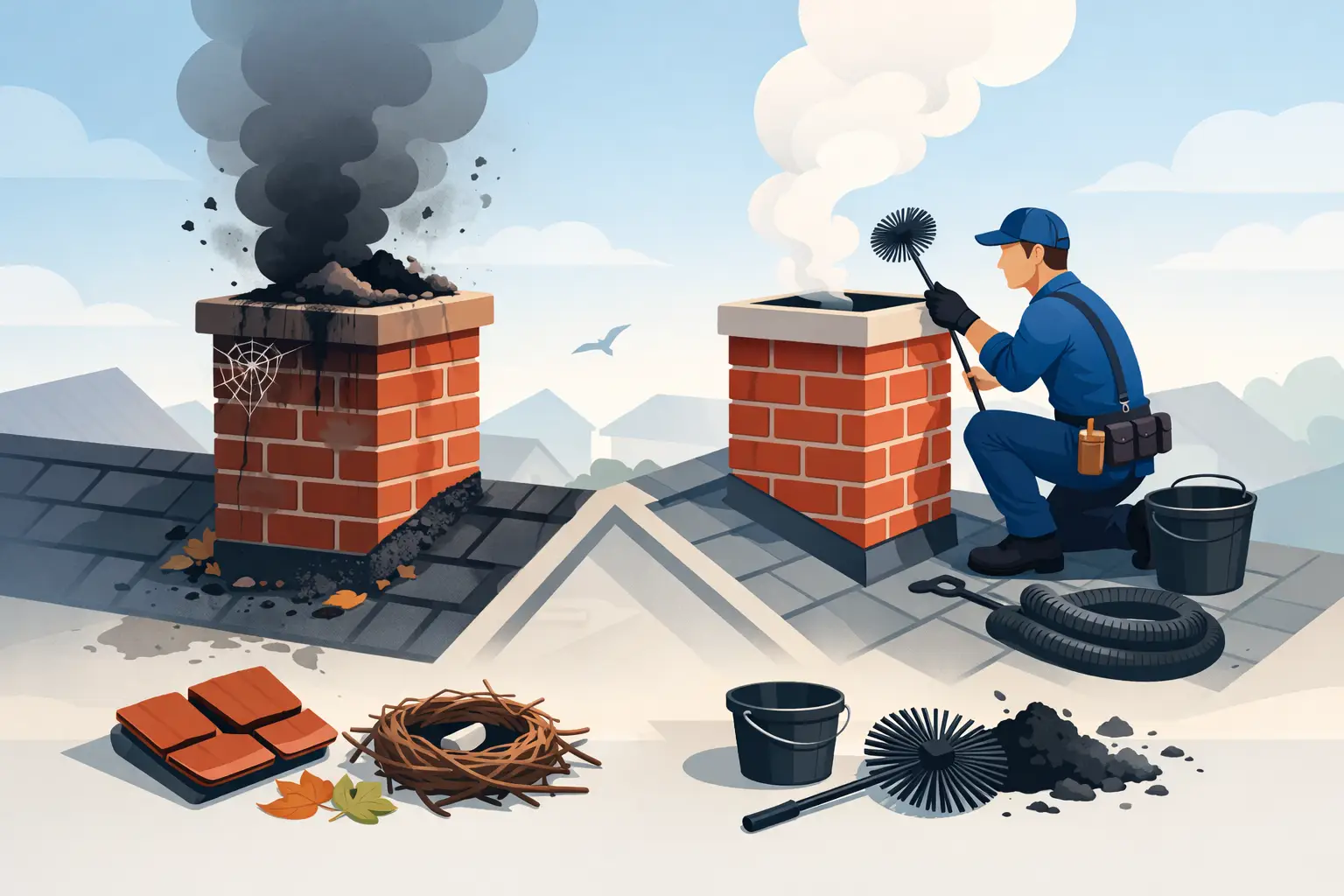
One of the most obvious warning signs is a strong burnt or campfire-like odor coming from the fireplace even when you are not using it. That smell often points to creosote buildup. Creosote is a dark, tar-like residue created when wood smoke cools and sticks to chimney walls. It is highly flammable, and the more it accumulates, the greater the fire risk becomes.
Another sign is smoke entering the room when you light a fire. A little smoke at startup can happen, especially if the flue is cold, but it should clear quickly. If smoke keeps pushing back into your living space, the chimney may be restricted by soot, creosote, or debris. It can also mean the draft is weak, which should not be ignored.
You may also notice black, oily-looking stains around the fireplace opening. This is often a clue that your chimney is producing or holding onto excess creosote. If the residue looks thick, shiny, or hardened, that is especially concerning because glazed creosote is harder to remove and more dangerous than light soot.
Falling debris inside the firebox is another red flag. Bits of soot, flue material, or nest material in the fireplace can signal a blockage or deterioration higher up in the system. If you hear scratching, chirping, or rustling, there may even be animals or nesting materials in the chimney. That creates both a fire hazard and a ventilation problem.
What creosote buildup actually means
Creosote is the reason chimney cleaning matters so much. It forms naturally when wood burns, but the amount depends on what you burn, how dry the wood is, and how hot the fire gets. Slow, smoky fires and unseasoned wood tend to create more buildup. So does infrequent cleaning.
There is some variation in how creosote appears. At first, it may look flaky and dry. Later, it can become sticky, tarry, or shiny. The more advanced it gets, the more difficult it is to remove and the more likely it is to ignite. A chimney fire can start inside that buildup and spread heat to surrounding materials before homeowners realize what is happening.
This is why a fireplace that still lights and burns is not necessarily a safe fireplace. Performance and safety are not always the same thing.
Subtle problems homeowners often overlook
Some of the signs your chimney needs cleaning are easy to miss because they do not always look dramatic. If your fires seem harder to start than they used to be, or if they burn sluggishly and produce more smoke than normal, airflow could be restricted. A partial blockage can change the behavior of the entire fireplace.
You might also notice more soot than usual on the damper or around the hearth. A little soot is expected with wood-burning fireplaces, but heavy accumulation in visible areas often means there is even more hidden higher up. White staining on exterior chimney masonry can also point to moisture issues, which often go hand in hand with venting problems and neglected maintenance.
Another overlooked issue is worsening indoor air quality after fireplace use. If family members notice throat irritation, headaches, or stronger odors after a fire, the chimney may not be exhausting smoke and combustion byproducts properly. That matters even more in homes already dealing with allergy or air quality concerns.
When a chimney problem becomes urgent
Some chimney issues should move from the to-do list to a service call right away. If you smell a strong sharp odor from the fireplace during humid weather, that often means creosote and moisture are combining inside the flue. If the smell is getting stronger, buildup may be significant.
If smoke pours into the room, if you see thick black residue, or if you suspect birds or animals are inside the chimney, stop using the fireplace until it is inspected. The same goes for any signs of a past chimney fire, such as cracked flue tiles, unusual popping sounds, or charred debris. These are not situations to watch and wait on.
A chimney cap can reduce some outside debris and animal entry, but it does not replace cleaning. Even capped chimneys need routine service because soot and creosote still accumulate with normal use.
How often should a chimney be cleaned?
It depends on how often you use the fireplace, what type of fuel you burn, and how cleanly the system has been operating. A fireplace used only a handful of times a year will not build residue at the same rate as one used throughout winter. That said, low use does not guarantee a clean chimney. Long periods of inactivity can make room for nesting, moisture intrusion, and hidden deterioration.
A good rule for homeowners is to have the chimney inspected regularly and cleaned whenever buildup reaches a level that affects safe operation. Waiting for obvious problems usually means the system is already overdue. Preventive service is safer, less stressful, and often less costly than dealing with smoke damage or fire risk later.
For many families, the best time to schedule service is before the colder season starts. That way, the fireplace is ready when temperatures drop, and you are not trying to book cleaning during the busiest stretch of the year.
Why DIY chimney cleaning is usually a bad trade-off
It is understandable to want to handle home maintenance yourself, but chimney cleaning is one of those jobs where the trade-off rarely works in your favor. The visible portion of the fireplace tells only part of the story. Hazardous buildup often sits higher in the flue, and without the right equipment and training, it is easy to miss problem areas.
There is also the matter of identifying damage versus dirt. A homeowner may brush out some soot and assume the job is done, while cracked liner sections, excessive creosote, or blockages remain in place. Professional chimney service is not just about sweeping. It is about evaluating whether the whole venting path is safe and functioning the way it should.
For busy homeowners, hiring a trained team is also the practical choice. You get a cleaner result, a clearer picture of the chimney’s condition, and less mess inside the house.
What professional chimney cleaning should give you
A proper chimney cleaning should leave you with more than a cleaner firebox. You should have confidence that smoke can vent correctly, residue has been removed as thoroughly as possible, and any visible concerns have been pointed out clearly. Good service is straightforward. No hidden charges, no vague explanations, and no guesswork about what your home needs.
That is especially valuable if your chimney is part of a bigger home health picture. Fireplace soot, poor venting, and hidden debris do not stay neatly contained in one spot. They can affect odor, cleanliness, and indoor comfort in ways that homeowners feel throughout the house.
If you have noticed any of the signs your chimney needs cleaning, it is better to act while the fix is still simple. On Time Home Experts helps homeowners protect their homes with professional, fast, and efficient service designed to keep fireplace systems safer and cleaner.
A clean chimney gives you something every homeowner wants more of – confidence when you light the next fire.